What if a classical voice could sharpen a modern event’s identity rather than make it feel more formal? For planners, blending classical music with modern events is less about choosing familiar repertoire and more about shaping a moment that belongs to the occasion. A live soprano can bring cinematic presence to a runway, luxury gala or private gathering. Considered styling and timing help the performance feel at home within the event’s visual language.
It is understandable to worry that the wrong placement or presentation could interrupt the evening’s rhythm. With thoughtful curation, however, vocal artistry can complement the atmosphere, create a cultural statement and give guests a moment of emotional resonance. The key is to align the performance with your event objective, rather than treating it as an elegant addition without a defined role.
This guide explores how to choose a performance moment, format and atmosphere, from a 3 to 5 minute Luxury Opening Moment to a longer centerpiece. You’ll also find practical points to discuss with an artist, including event flow, visual identity and the details that shape a tailored experience. Catwalk Opera, led by international soprano Monika Spruch, brings this perspective to luxury events around the world.
Key Takeaways
- Blending classical music with modern events works best when the live performance reflects your event’s visual identity, audience and purpose.
- Decide whether the performance should open the occasion, mark a transition or serve as a centerpiece, then fit its timing to the event flow.
- Match the setting to a confirmed format: the Signature Fashion Opera Experience, Luxury Opening Moment or Private Royal Recital.
- Brief the artist on your audience, setting, tone, schedule and event objective to support thoughtful creative direction.
- Discuss duration, repertoire and production arrangements directly with Catwalk Opera, led by international soprano Monika Spruch.
Why blend classical music with modern events?
You may worry that classical music will make a contemporary event feel overly formal. That risk is less about the music itself than about giving it no clear purpose. A live vocal performance can fit a modern concept when its timing, presentation and relationship to the setting are considered deliberately. It need not occupy the whole evening. One well-judged moment can offer a distinctive cultural statement while allowing the event to retain its pace.
Blending classical music with modern events means curating live classical artistry in dialogue with the event’s design, audience and purpose, rather than adding music simply to fill silence. The distinction is intention: the performance has a defined role in the experience, whether it signals an opening, marks a change in mood or draws focus to a particular moment.
What does blending classical music with modern events mean?
Classical vocal artistry can complement contemporary architecture, fashion, lighting and event design without imitating them. The voice brings its own visual and emotional presence; styling and placement help it belong to the scene. Contemporary classical music also encompasses a range of approaches, as outlined in this overview of 21st-century classical music, including influences from other musical traditions and multimedia.
Consider a fashion presentation where a live vocal moment frames an entrance or transition. The performance is not simply continuous background sound; it becomes part of the sequence and helps direct attention. At a luxury gala, a host might instead place the performance at a specific point in the evening, giving it focus without defining every moment that follows.
Can classical music suit a contemporary audience?
Yes, when the presentation serves the event objective and suits its audience and setting. A contemporary audience does not require the entire evening to adopt a formal concert atmosphere. Introduce a live performance as a distinct, considered moment, then let the event continue in its established style. The aim is not to impose tradition, but to give the artistry a fitting place within the wider experience.
For planners, this means considering more than repertoire alone. Ask what guests should notice, how the performance relates to the event’s visual identity and where it belongs in the schedule. A concise, purpose-led appearance may feel more natural than music that runs without a clear connection to the occasion. With thoughtful curation, classical artistry can complement a modern event while preserving its individual character.
How live classical performance works with modern event design
A live vocal performance can feel integral to a contemporary event when its artistic presence is considered alongside the setting, styling and desired atmosphere. The voice brings a human focal point; the surrounding design gives that moment visual context. A considered palette, fashion-forward presentation or distinctive setting can support the creative direction without requiring the performance to imitate it.
A performance moment reinforces an event’s visual identity when its presentation and placement express the same creative intention as the surrounding design. For a luxury gala, that might mean aligning the performance’s tone with the evening’s character. At a fashion presentation, the artist’s appearance and timing can be discussed in relation to the collection and show sequence. These choices can make the performance a cultural statement that expresses brand values beyond entertainment alone.
How music and visual storytelling can reinforce one another
Start with the atmosphere you want guests to experience, then consider how vocal artistry can complement it. Share the event’s creative direction, setting and visual identity with the artist, and discuss how the performance should relate to them. Do not assume wardrobe, staging or other presentation details. Agree on the approach with the artist and event team so the artistic choices feel coherent and appropriate.
Where a live vocal moment can sit in the event flow
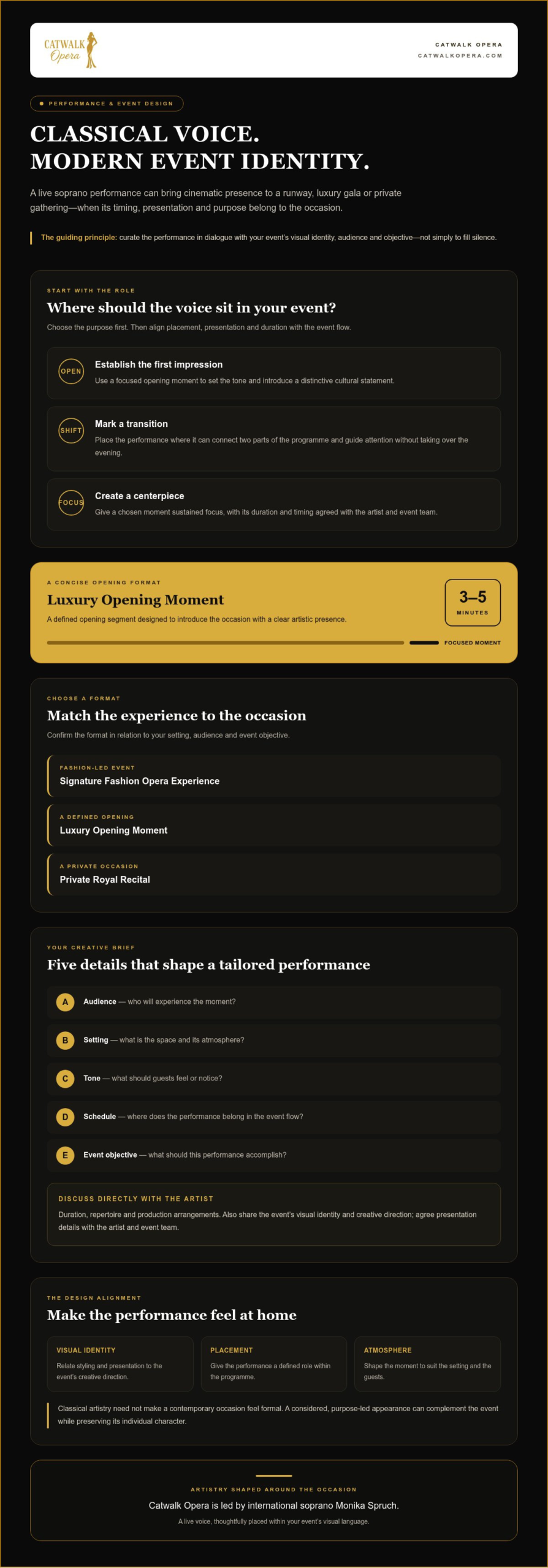
Let the event objective guide placement. An opening establishes the first impression; a transition connects two parts of the programme; a centerpiece gives a particular moment sustained focus. Each serves a different purpose, so confirm the intended role, duration and timing with the artist and event team rather than treating the formats as interchangeable.
- Opening: A Luxury Opening Moment lasts 3 to 5 minutes, offering a concise introduction to the event.
- High-impact moment: A 10 to 15 minute performance can give a defined point in the programme greater emphasis.
- Centerpiece: A full centerpiece may span 20 to 30 minutes, allowing the performance to hold a more prominent place in the occasion.
As you plan, consider what guests will be doing immediately before and after the performance. A moment designed for close attention may need a different place in the schedule than one intended to bridge programme segments. Confirm duration, repertoire, creative direction and production arrangements directly with the artist, then align them with the event team’s schedule.
For a fashion-led opening, explore the Luxury Opening Moment as one defined format, then discuss how its presentation and timing could fit your event’s creative direction.
Choose a classical music format that fits your event
The right format depends on what you want the performance to do. When blending classical music with modern events, weigh the occasion, intended atmosphere and place of live vocals in the programme. A brief opening, a central artistic feature and an intimate recital serve distinct purposes. Use the comparison below as a starting point, then confirm the specific format and arrangements with the artist.
| Event context | Intended atmosphere | Possible performance role | Confirmed format to consider |
|---|---|---|---|
| Fashion presentation | Fashion-forward and visually considered | Introduce or complement the presentation | Signature Fashion Opera Experience |
| Luxury gala | Refined and celebratory | Open the evening or provide a defined artistic feature | Luxury Opening Moment, or a centerpiece planned with the artist |
| Corporate occasion | Aligned with the event’s purpose and identity | Mark an opening or anchor a selected moment | Luxury Opening Moment, or another agreed performance role |
| Intimate private gathering | Personal and exclusive | Bring guests together around a live performance | Private Royal Recital |
When an opening moment or centerpiece may be appropriate
Choose an opening when you want music to introduce the occasion at a defined point. The Luxury Opening Moment lasts 3 to 5 minutes. A longer feature may suit an event designed around a central artistic moment: high-impact moments usually last 10 to 15 minutes, while a full centerpiece may span 20 to 30 minutes. Decide whether the performance should introduce, punctuate or anchor the occasion, then confirm its duration and placement with the artist.
How to match performance format to the occasion
For fashion-focused planning, the Signature Fashion Opera Experience is a confirmed format to explore. Discuss its fit and creative direction in relation to your presentation rather than making assumptions; see this fashion opera performance guide for further context. For an intimate, exclusive gathering, consider the Private Royal Recital. Discuss the setting, audience and desired atmosphere to determine whether it suits the occasion.
Luxury galas and corporate events can have very different rhythms and objectives, so treat the table as a guide, not a fixed prescription. Confirm the intended role, duration and event-specific arrangements directly with the artist. For broader selection considerations, consult this luxury event soprano guide.
Plan a live classical performance around your event objective
A considered brief helps a live performance complement your event rather than compete with it. For planners blending classical music with modern events, the best starting point is the intended outcome: what should the performance contribute, and where can it sit naturally in the occasion?
- Set the event objective: Define whether the performance should open a runway, mark a transition or create a central artistic moment.
- Choose the moment: Identify where it belongs in the schedule and how its duration will work with the wider event flow.
- Discuss creative direction: Share the event theme, visual identity, atmosphere and the experience you want guests to have.
- Confirm logistics: Align event-specific arrangements, timing and responsibilities with the artist and relevant event team.
Before making an inquiry, prepare your event purpose, audience, setting, preferred duration, creative direction, schedule and intended performance role. This gives the artist a clear foundation for discussing a tailored approach.
What should you discuss with a soprano before booking?
Explain the event’s purpose, who will attend, the setting and the tone you want to create. Discuss your preferred performance duration and where the appearance should sit in the programme. Describe the event theme and visual direction, then ask how the performance might be tailored to them. Treat repertoire and other creative choices as a discussion, not an assumption, and confirm event-specific arrangements with the artist and event team.
A precise brief supports bespoke curation while leaving room for the artist’s expertise. For example, clarify whether guests will be seated or moving through the space at the intended performance time, if known, and what follows in the schedule. These details help the team assess how the performance can fit the occasion.
When should you begin planning an international performance?
Catwalk Opera recommends securing a booking at least three to six months before your event. For international luxury events, retain the separate recommendation to plan six to twelve months ahead. Lead time and availability can depend on the specific event and destination, so confirm them directly. For an overseas engagement, raise travel coordination and the international visa timeline early with the relevant parties. This is a planning consideration, not legal advice; verify destination-specific requirements through appropriate channels.
Once your objective and brief are clear, inquire about a tailored performance and confirm current availability, duration and arrangements for your event.
How Catwalk Opera brings classical music into modern events
Catwalk Opera is an international luxury performance concept led by soprano Monika Spruch. Its work brings operatic artistry and high-fashion presentation into dialogue with an event’s purpose and atmosphere. For planners blending classical music with modern events, the distinction lies in bespoke curation: rather than selecting stock music alone, you can discuss a live performance shaped around your occasion’s theme, duration and visual direction.
A tailored vocal performance can serve as both an artistic presence and a considered element of event design. The creative conversation can explore how the performance should relate to the setting and the values you want the occasion to express, without assuming a particular repertoire, staging or wardrobe. For a brand-focused perspective, read how a soprano elevates a brand launch.
What makes Catwalk Opera suited to a bespoke event concept?
International vocal artistry and fashion-forward presentation offer a distinctive option for luxury galas, fashion events, corporate occasions and private gatherings. Bespoke curation lets you consider the performance in relation to your event’s identity, rather than treating music as a separate layer. Discuss the specific creative direction and arrangements with the artist and event team so the performance suits the occasion rather than relying on assumptions.
Catwalk Opera’s confirmed formats offer different starting points:
- Luxury Opening Moment: a defined opening format lasting 3 to 5 minutes.
- Signature Fashion Opera Experience: a format for fashion events, with event-specific creative direction to be discussed.
- Private Royal Recital: an option for private gatherings, with details shaped in discussion with the artist.
The appropriate choice depends on your event objective, intended atmosphere and the performance’s place in the programme. Share these considerations with Catwalk Opera to explore which confirmed format may suit your brief.
How to take the next step with Catwalk Opera
To begin an inquiry, prepare your event date, destination, objective and the role you envision for the performance. Include relevant details about the setting, theme and schedule. Catwalk Opera accepts a limited number of premium bookings per month, so an early inquiry gives you an opportunity to check current availability and discuss event-specific details. For international engagements, confirm timing and coordination requirements directly.
For a considered next step, discuss a bespoke performance for your event, including the format, creative direction and arrangements suited to your occasion.
Shape a performance that belongs to your event
Blending classical music with modern events begins with a clear intention. Decide whether a live vocal performance should introduce the occasion, mark a transition or hold focus as a centerpiece, then align its format and presentation with your event’s atmosphere and visual identity. A considered brief helps the artistic choices feel connected to the experience you want to create.
Catwalk Opera, led by international soprano Monika Spruch, curates performances for luxury galas, fashion events, corporate occasions and private gatherings. Its Luxury Opening Moment, Signature Fashion Opera Experience and Private Royal Recital offer distinct starting points for a conversation about your event objective. Client materials state international availability and insurance and liability coverage; confirm current availability and event-specific arrangements directly.
As you prepare your inquiry, share the date, destination, audience, creative direction and intended role of the performance. These details give the artist a foundation for discussing a bespoke approach suited to your occasion. Discuss a bespoke performance for your event and begin shaping a live moment with clarity and creative purpose. Your event can bring classical artistry into a contemporary setting with confidence and distinction.
Frequently Asked Questions
Can classical music work at a modern event?
Yes. Classical music can feel at home in a modern event when its role and presentation suit the occasion. Blending classical music with modern events means considering the live performance alongside the event’s purpose, audience and visual identity. You might position a vocalist as an opening moment, a transition or a centerpiece, rather than continuous background music. Discuss timing and creative direction with the artist and event team.
How do you blend classical music with fashion events?
Connect the performance to the presentation’s creative direction and event flow. Share the collection’s mood, visual identity, schedule and intended audience with the artist, then discuss how a live vocal moment might complement the event without assuming specific staging, wardrobe or repertoire. Catwalk Opera’s Signature Fashion Opera Experience is a confirmed format to explore. Agree on event-specific creative choices and arrangements with the artist and production team.
What type of classical performance suits a luxury gala?
The right format depends on your gala’s objective and schedule. A Luxury Opening Moment can introduce the evening, while a longer performance may suit a central artistic feature. Catwalk Opera’s available formats include the Luxury Opening Moment, Signature Fashion Opera Experience and Private Royal Recital. Discuss the gala’s atmosphere, audience and intended performance role with the artist to determine which confirmed option may fit.
How long should a live classical performance be at an event?
Choose a duration that matches the performance’s role and the event flow. Catwalk Opera’s Luxury Opening Moment lasts 3 to 5 minutes. High-impact moments usually last 10 to 15 minutes, while a full centerpiece may span 20 to 30 minutes. These are format references, not a substitute for confirming your event’s needs. Discuss the preferred duration, schedule and arrangements directly with the artist.
How far in advance should I book a soprano for an international event?
For an international luxury event, plan on the recommendation to book six to twelve months ahead. Catwalk Opera also recommends securing a booking at least three to six months before the event, so confirm which timeline applies to your date and destination. Check current availability early, and discuss travel coordination and the international visa timeline with the relevant parties. Verify destination-specific arrangements directly.
What should I include in an inquiry for a live opera performance?
Include your event date, destination, occasion, audience, setting and schedule. Describe the event objective, desired atmosphere, visual direction and where you hope the performance will sit in the programme. If you have a preferred duration or format, mention it while remaining open to discussion. These details help the artist assess how a performance may be tailored. Confirm repertoire, availability and event-specific arrangements directly with the artist.