What if one carefully curated performance could become the defining image of your event, rather than simply another item on the programme? The benefits of hiring a solo performer begin with artistic focus: one singular presence can shape the atmosphere, draw attention at a considered moment and complement the visual language of a luxury occasion.
As a planner or host, you want entertainment that suits the setting and creates a lasting impression without interrupting event flow. A solo performance can offer that balance, creating an elegant focal point while leaving room for conversation, ceremony or a runway presentation. Its impact comes not from scale alone, but from the precision of its placement and presentation.
This article explores how a solo artist can serve your event objective, from a Luxury Opening Moment to a Signature Fashion Opera Experience or Private Royal Recital. You’ll discover how bespoke curation can bring vocal artistry and visual direction into harmony, helping you create a distinctive moment suited to your guests and setting.
Key Takeaways
- The benefits of hiring a solo performer depend on how well the format serves your event objective, audience and programme scale.
- Compare solo live performance, ensembles and recorded music by their visual presence, role in the programme and scope for creative curation.
- Plan with intention by defining your audience, setting, visual direction and the moment you want the performance to create.
- Thoughtful placement can help a live performance welcome guests, mark a transition or anchor a central moment.
- Discover how Catwalk Opera’s bespoke approach can align artistic identity with the direction of a luxury event.
Benefits of Hiring a Solo Performer for a Luxury Event
As a planner, your first decision is not simply how much entertainment to include. It is what scale and atmosphere will best serve the event objective. A solo performer is one principal live artist creating a focused performance moment. This is not a larger production in miniature. It is a distinct artistic choice, with the artist’s presence, sound and visual presentation composed for the occasion.
That focus can give a thoughtfully designed room a clear point of attention without competing with its architecture, décor or programme. A solo vocalist, for example, can bring a dramatic, human presence to a ballroom or fashion setting, allowing the performance to feel integrated with the event’s visual identity.
Music can influence how an occasion feels and is remembered. The article on Music and emotion provides context for this relationship. For a luxury event, the practical consideration is how well the chosen artistic moment complements the atmosphere you want to create.
A clear focal point for guests
One featured artist can draw attention to a planned moment, such as an entrance, a welcome or a transition between programme segments. Vocal presence gives that moment an immediate human dimension, while considered styling and placement can echo the room’s palette, lighting and design language. The performance becomes a focal point that belongs to the setting rather than feeling added to it.
This differs from continuous background entertainment. Instead of providing an ongoing layer throughout the gathering, a focused performance gives you a deliberate point of emphasis. Place it where it can support event flow, the sequence and timing of activities, while allowing the rest of the programme to retain its own character.
A performance shaped around your event objective
Your event objective should guide the performance’s role. At a luxury gala, you might use a solo appearance to establish an atmosphere of ceremony; at a charity ball, it could give a particular moment added artistic presence. For a brand event, the performance can become a cultural statement, an artistic choice that conveys identity beyond entertainment.
Begin with the character of the gathering, then consider how the artistic concept can express it. A refined, cinematic presentation may suit a formal evening, while a fashion-forward approach may align more naturally with a runway or luxury brand launch. Bespoke curation connects vocal artistry and visual direction to the occasion, rather than relying on a generic selection.
A solo performance can unite artistic presence, visual design and programme purpose in one carefully placed moment. For you as host or planner, that is one of the central benefits of hiring a solo performer: a distinctive focal point shaped around the event, not simply added to it.
How a Solo Performance Shapes Atmosphere, Event Flow and Visual Identity
A live performance can do more than contribute to a room’s ambience. Placed with intention, it can change the programme’s pace, signal a new phase of the evening or become its central artistic feature. For planning purposes, event flow means the sequence and timing of activities during a gathering, with smooth transitions between segments. Place the performance to support that sequence, not compete with it.
From arrival moment to centerpiece
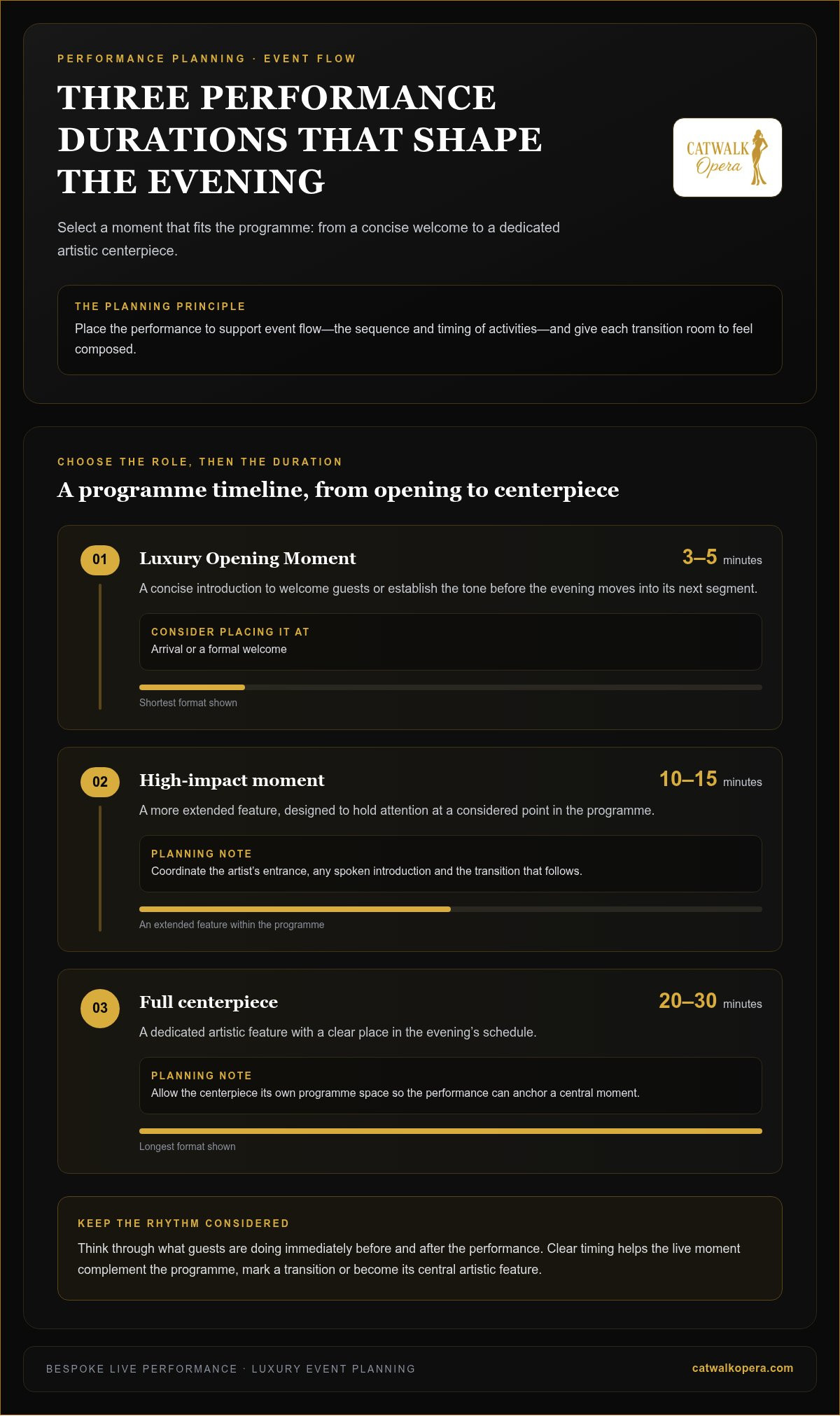
A Luxury Opening Moment is designed as a concise introduction, lasting three to five minutes. It can welcome guests or establish the tone before the evening moves into its next segment. A high-impact moment usually lasts 10 to 15 minutes, while a full centerpiece might span 20 to 30 minutes. These formats give you distinct ways to shape the performance’s presence within the programme.
Consider what guests are doing immediately before and after the performance. A brief opening may suit an arrival or formal welcome, while a longer centerpiece needs a dedicated place in the evening’s schedule. Clear timing helps you coordinate the artist’s entrance, any spoken introductions and the transition to the next activity. A planned performance can give event flow a graceful point of focus while preserving the rhythm of the occasion.
A cultural statement that reflects the occasion
A cultural statement is an artistic choice that conveys a brand’s values or identity beyond mere entertainment. In a fashion setting, couture presentation and live vocal artistry can be considered alongside runway styling, lighting and the character of the venue. At a luxury gala or brand event, the same attention to visual language can help the performance feel integral to the occasion, rather than a separate feature.
For you as planner, curation begins with the impression the event should leave. A polished, classical presentation may complement a formal setting; a fashion-forward interpretation may better suit a runway or luxury brand launch. The artist’s visual presence, repertoire and position in the programme can be aligned with that direction. Catwalk Opera’s Signature Fashion Opera Experience brings vocal artistry and fashion-led presentation together. Explore the Signature Fashion Opera Experience as an example of a performance concept shaped for a considered visual setting.
The benefits of hiring a solo performer include the ability to place a performance precisely: as a welcome, a transition or a defining centerpiece. With the duration and visual direction selected to suit your programme, the live moment can contribute to a coherent atmosphere from arrival through the evening’s final scenes.
Solo Performer, Ensemble or Recorded Music: Which Format Fits?
Choosing between a solo live performance, an ensemble and recorded music is a question of fit, not a universal hierarchy. Begin with your event objective: do you want one artist to command a defined moment, several performers to create a fuller musical presence, or a planned soundtrack woven into the programme? The venue’s atmosphere and the experience you intend for guests can help clarify the choice.
Use this comparison as a starting point. Each format can serve a distinct role in a well-considered event.
| Format | Visual focus | Event-flow role | Creative curation | Programme scale |
|---|---|---|---|---|
| Solo live performance | One principal artist creates a clear visual and vocal focal point. | Can be placed as a welcome, transition or featured moment. | Can be tailored around the event’s artistic direction and setting. | Well suited to an intimate gathering or a defined feature within a larger programme. |
| Ensemble performance | Several performers contribute to a shared stage presence. | Can form a substantial musical segment within the programme. | Can bring multiple musical parts together in a coordinated presentation. | May suit a programme that calls for a broader group performance. |
| Recorded music | Provides sound without a live artist as the visual focal point. | Can accompany planned portions of an event, such as guest arrival or intervals. | Offers a selected soundtrack rather than a live, artist-led interpretation. | Can serve as a discreet musical layer across different parts of the programme. |
When a solo live performance is the considered choice
A solo artist can be a natural choice when you want one carefully placed performance to carry a distinct artistic identity. In private recitals and other intimate, curated gatherings, a single performer can hold the room’s attention through a unified vocal and visual presence. This focused scale suits an event where the performance is intended to be a central feature, rather than one element in a larger musical arrangement.
The benefits of hiring a solo performer are especially relevant when your creative direction calls for a recognisable principal artist. A luxury soprano’s live presence can be considered alongside the room, styling and programme, giving you a personal, composed performance moment.
When another format may better serve the programme
An ensemble may be a better fit when your programme calls for multiple performers or musical parts, or when a larger collective presence is central to the intended atmosphere. Recorded music, by contrast, can provide a planned sound without introducing a live vocal focal point. Neither choice diminishes the occasion; each creates a different relationship between music, guests and setting.
For your decision, weigh the programme’s scale, the venue’s atmosphere and the role music should play. If the event calls for one featured artist and a distinct live moment, a solo performance may align with that intention. If the brief centres on a group sound or a consistent soundtrack, another format may be the more considered choice.
How to Plan a Solo Performance Around Your Event
A well-planned solo performance begins with a clear brief, followed by the practical choices that give it a natural place in your programme. Define what you want the moment to express before considering its duration, presentation or timing. This keeps the artistic concept connected to your event objective and gives each planning decision a shared point of reference.
- Set the event objective. Decide whether the artist should open the occasion, introduce a transition or anchor a centerpiece. At a high-profile corporate gala, you might seek a poised opening; at a charity ball, a featured performance could contribute to the evening’s ceremonial character. For a fashion event, consider how live artistry can sit alongside the creative direction.
- Describe your audience and setting. Consider who will be present, the character of the venue and the atmosphere you want to establish. A private gathering calls for a different sense of scale from a formal gala or runway presentation. These details help define whether the performance should feel intimate, theatrical or fashion-forward.
- Establish the visual direction. Identify the colours, styling and design cues that shape the event. Share the intended mood and visual context so the artist’s presentation can be considered in relation to the room and occasion. Bespoke preparation can align vocal artistry and appearance with your event’s identity, rather than treating the performance as an interchangeable programme item.
- Choose the performance’s role and duration. A concise opening, a transition between programme segments and a full centerpiece each require a different placement. Select a duration that lets the performance fulfil its purpose while respecting the wider schedule. Consider what guests will be doing immediately before and after, so the moment has room to register without interrupting the evening’s rhythm.
- Coordinate timing and practical details. Place the performance in the running order and plan how the programme will move into and out of it. For an international engagement, account for the international visa timeline, the period required to secure work permits for artists traveling abroad for performances. Include this consideration in your event preparations without assuming a fixed processing duration.
Once the brief is defined, consider your choices as a whole: objective, audience, setting, visual direction and placement. This gives the artist a meaningful creative framework while helping you preserve a composed event flow. The benefits of hiring a solo performer are most apparent when the performance feels purposefully integrated with the occasion, rather than fitted into the programme as an afterthought.
If you are shaping a refined live moment for your event, explore the luxury event soprano guide for further direction on aligning vocal artistry with your setting and creative brief.
How Catwalk Opera Makes Solo Performance Feel Bespoke
Catwalk Opera is the luxury performance concept led by international soprano Monika Spruch. Its approach treats a solo appearance as a complete artistic moment, not a smaller version of a larger production. Vocal artistry, presentation and placement are considered in relation to your event’s character, helping the performance feel connected to the occasion’s identity.
A performance concept shaped for the occasion
Bespoke curation differs from selecting stock-licensed music because the creative direction can be shaped around your event rather than chosen from a general catalogue. For a fashion-led evening, that may mean considering the soprano’s visual presence alongside the runway’s silhouettes and the room’s atmosphere. For a private or corporate gathering, the performance concept can be guided by the occasion’s tone and purpose. The aim is artistic coherence, with the live moment reflecting the event rather than sitting apart from it.
Catwalk Opera’s tailored live experiences include the Luxury Opening Moment, the Signature Fashion Opera Experience and the Private Royal Recital. Each offers a different context for a solo performance, from a concise opening to a fashion-focused presentation or an intimate recital. You can explore the guide to hiring a luxury event soprano for further perspective on aligning vocal artistry with your event’s creative direction.
This approach is especially suited to an event that calls for a distinctive cultural statement. Rather than relying on a soundtrack alone, you can bring together the artist’s voice, styling and role in the programme as parts of one creative decision. Monika Spruch’s international experience informs a performance concept designed for high-profile corporate, fashion and private events.
A considered next step for your event
Catwalk Opera performs internationally. For an international luxury event, allow a lead time of six to twelve months when booking an international soprano. This gives you room to shape the performance brief and account for the international visa timeline as part of your planning.
As you prepare your enquiry, consider the event’s purpose, setting, audience and desired performance role. A clear creative brief helps focus the discussion on the details that make the performance personal to your occasion, including its visual direction and place in the programme.
If you are planning a luxury gala, fashion event or private gathering, enquire about a bespoke live performance shaped around your event. Share the atmosphere you wish to create and the role you want the artist to play to begin a considered conversation about the right performance concept for your occasion.
Design the Moment That Defines Your Event
Your next decision can be to identify the one moment that should carry the occasion’s creative intent. Consider what you want guests to see, hear and take away, then let that intention guide how a live performance fits the setting. The benefits of hiring a solo performer come into focus when the artistic choice feels deliberate, rather than simply filling a space in the programme.
For a host or planner, that begins with a clear creative brief covering the atmosphere, visual direction and role you have in mind. Catwalk Opera’s performances include insurance and liability coverage, a practical consideration alongside the artistic brief. With the purpose of the moment defined, you can shape a performance that feels distinctive to your event and aligned with its character.
Bring your creative direction to life with a performance shaped for the occasion. Enquire about a bespoke performance for your event and take the next step towards an elegant, individually considered experience.
Frequently Asked Questions
What are the main benefits of hiring a solo performer for an event?
The benefits of hiring a solo performer include having an artist whose interpretation can be shaped around your event’s creative brief. This can help you create a more individual experience than a standard soundtrack. Before planning, prepare a short note on the occasion’s tone, audience and any programme cues the artist should know. A focused brief gives the performance a clear context and keeps artistic decisions aligned.
Is a solo performer suitable for a luxury gala?
Yes. A solo performance can suit a luxury gala when its artistic style complements the formality and character of the evening. Consider the relationship between the repertoire, the atmosphere you want to create and the event’s sequence of formalities. For example, you might place a performance within the dinner programme or around a moment of recognition. The key is to ensure the artistic presentation feels appropriate to the occasion and its guests.
Can one solo performer create a memorable event moment?
Yes. A solo artist can give an occasion a distinctive live element through expressive interpretation and a personal connection with the material. To make the moment feel intentional, consider what guests will see and hear as it begins, and how it relates to the occasion’s story. A carefully chosen piece can reflect a celebration, a welcome or a brand’s character without requiring the performance to carry the entire programme.
How does a solo performer compare with recorded music?
A solo performer brings live interpretation, while recorded music offers a consistent sound that can accompany a planned sequence. Think about whether you want the musical element to respond to the atmosphere in the room or remain uniform throughout. Recorded music can maintain continuity between programme elements; a live artist offers the expressive presence of a performer interpreting the material in the moment. The right choice depends on the role music should play.
How long should a solo performance be at an event?
Choose a duration that fits the programme’s purpose and the attention you want to give the performance. A brief appearance may suit a tightly timed schedule, while a longer feature needs a clear place in the running order. Include time for any introduction and the transition that follows, and consider whether guests will be seated, arriving or moving between spaces. These details help the performance feel considered within the full evening.
How far in advance should I book a solo performer for an international event?
Begin planning early, especially when the artist will travel internationally. Allow time to align the event date, destination, creative brief and travel arrangements, and to account for the international visa timeline. Build these considerations into the wider production schedule rather than leaving them until the programme is finalised. An early brief also gives you time to refine the intended presentation and coordinate it with the event team.
What should I consider when choosing a solo performer for a brand event?
Consider how the artist’s style and presentation relate to your brand’s character, audience and creative direction. Decide what the performance should communicate, then assess whether its musical language and visual expression feel coherent with the event’s identity. For a product introduction, for instance, you might want the performance to echo the brand’s mood without distracting from the product narrative. A precise brief helps make that relationship clear.