What if the music at your next event did more than fill the pauses? It could carry the brand story from the first arrival to the final moment. For planners and hosts, creating an immersive brand experience with music means aligning sound with the visual language, purpose and event flow, rather than selecting a soundtrack in isolation.
The challenge is making the music, styling and programme feel like parts of the same composition, while giving guests a memorable focal moment that fits the occasion. This guide shows you how to shape music around your event objective, compare recorded sound with live performance, and place each musical moment with intention.
From a luxury brand launch or fashion presentation to a private celebration or gala, a considered musical direction can bring cinematic presence to the guest experience. Led by international soprano Monika Spruch, Catwalk Opera brings opera, cinematic sound and high-fashion presentation together in tailored performance experiences.
Key Takeaways
- Begin with your event objective: define what you want guests to feel, remember or associate with your brand.
- Make creating an immersive brand experience with music a deliberate part of the guest journey, aligning sound with your visual identity and key moments.
- Use recorded music to sustain atmosphere, or consider live performance when the event calls for a distinctive focal moment.
- Map the event flow before placing musical cues, so transitions and reveals feel considered rather than disruptive.
- Explore how Catwalk Opera combines opera, cinematic sound and high-fashion presentation in a bespoke artistic experience.
Creating an Immersive Brand Experience with Music Starts with the Event Objective
Before choosing a musical style, define what the occasion should accomplish. Do you want guests to encounter a new collection, understand a house’s identity or settle into a particular atmosphere? The answer determines music’s role, from a discreet welcome to a live vocal moment that gives a reveal its own artistic signature. Without a clear objective, even an elegant soundtrack can feel disconnected from the event.
Creating an immersive brand experience with music means shaping a coherent guest encounter through intentional sensory choices. Music should belong to the brand narrative, not arrive as a final layer after the setting and programme are settled. Consider how melody, vocal character and performance style will sit alongside the space, visual language and occasion. Music and Emotion offers useful context for thinking about how musical choices can influence the feeling a moment conveys.
A concise definition: Immersive musical curation aligns a brand’s identity with sound and performance to shape how guests experience its story.
Translate the event objective into a cultural statement
Different objectives call for different artistic choices. An awareness event may benefit from a recognisable sonic character that supports the brand’s presence. A product introduction may call for a carefully timed musical reveal, while an atmosphere-setting occasion might suit a more restrained sound that leaves conversation and visual details in focus.
Start with the brand’s established values, then decide what guests should feel, remember or associate with it. A cultural statement communicates identity through artistic choices, not simply through a logo or spoken message. At a fashion presentation, for example, a poised operatic phrase paired with couture styling could express heritage and modernity. Another brand may call for a subtler musical language. The choice should feel native to the brand, not borrowed for effect.
Understand the audience before selecting the sound
Audience expectations are shaped by context. Whether hosting a luxury gala, entertaining VIP clients with Formula 1 corporate hospitality packages, or presenting a couture collection, each setting creates a different relationship between guests, performers and the programme. Consider the event’s purpose, setting and formality, then choose a musical presence proportionate to the occasion. This is more useful than making assumptions about guests based on age, background or status.
Trace the guest’s experience from arrival through the main event and its closing moments. Ask where sound should welcome, focus attention or give the room space to breathe. If guests arrive while talking, a restrained musical texture may suit the welcome. If you are introducing a collection, a distinct live moment can give the reveal a clear point of emphasis. These are planning prompts, not a fixed sequence. Let the event objective guide your decisions.
Once you have defined the intended response and audience context, music becomes a deliberate expression of the brand rather than an atmospheric afterthought. That clarity gives you a practical foundation for aligning sound with the event’s visual identity and story.
How Music Connects Brand Identity, Emotion and the Guest Journey
With the event objective clear, consider how sound can carry the brand’s visual language through the room. Musical style, tempo and vocal character each contribute a different quality. A measured classical phrase may complement architectural restraint, while a contemporary operatic interpretation can suit a fashion-forward presentation. The aim is not to make every element identical, but to let music, lighting, staging and design feel part of the same carefully composed world. This is central to creating an immersive brand experience with music.
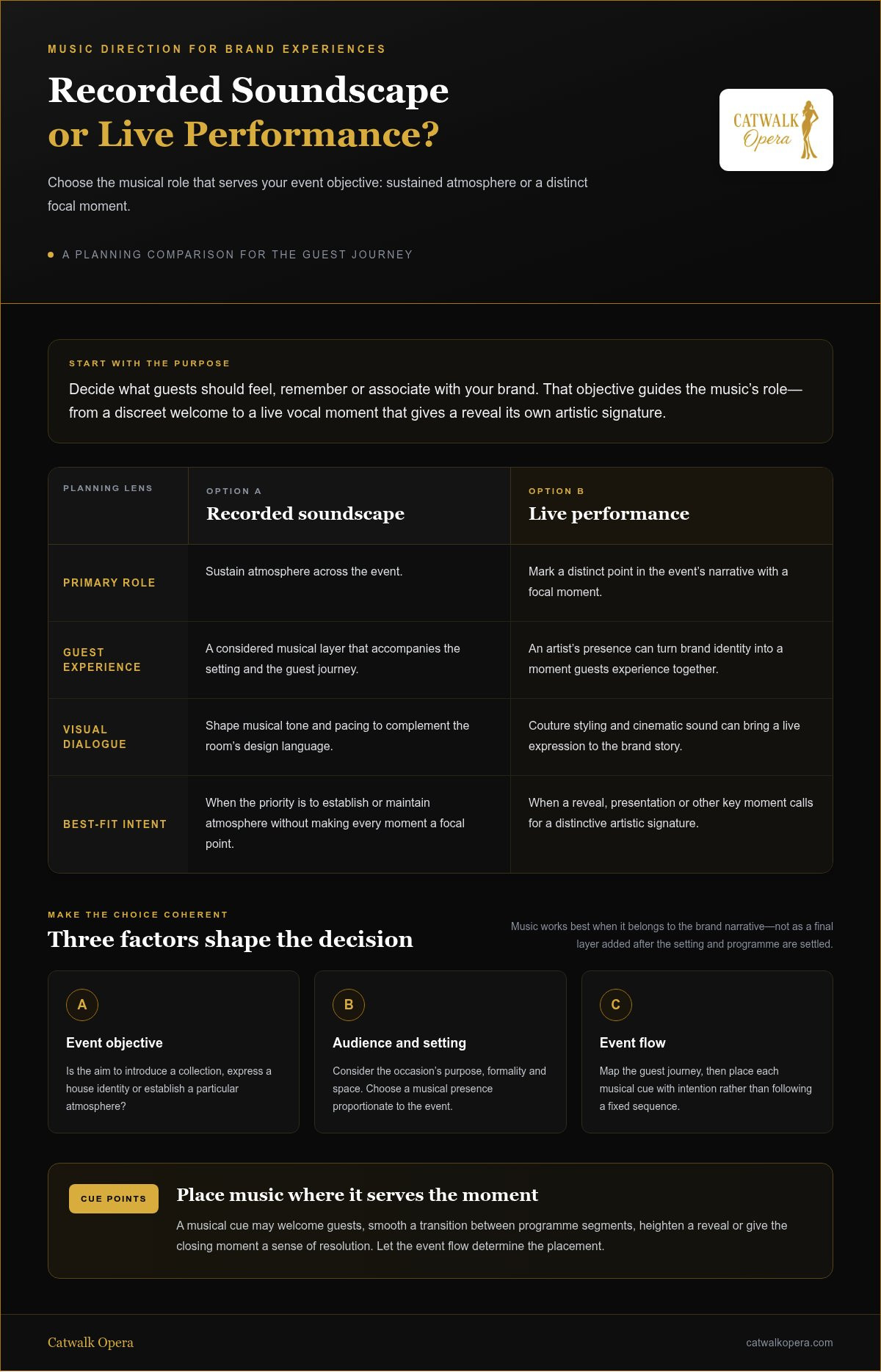
Placement matters as much as selection. A soundscape can establish atmosphere, while a live performance can mark a distinct point in the event’s narrative. A musical cue might welcome guests, smooth a transition between programme segments, heighten a reveal or give the closing moment a sense of resolution. Place each cue in response to the event flow, rather than following a fixed sequence.
Shape atmosphere through deliberate musical choices
Begin with the room and its design language. Does the setting call for intimacy or scale? Does the visual palette feel restrained, dramatic or sculptural? Select musical tone and pacing to complement those qualities. Contrast can also be intentional: a delicate vocal line against a striking runway image may create a more nuanced impression than sound that simply mirrors the visual intensity.
Keep music in dialogue with the other sensory layers. Lighting directs focus, staging defines where attention rests, and fashion presentation gives the experience visual movement. A bespoke musical choice can support these elements without competing with them. Review transitions as well as the principal moment, so the atmosphere remains considered as guests move, gather or pause.
Make each musical moment feel connected
Think of musical moments as parts of one composition. A consistent vocal style or restrained level of intensity can connect separate stages without making them feel repetitive. If the programme moves from welcome to presentation, a carefully placed transition can preserve the mood while signalling a change in the experience.
A focal performance gives the brand story a live expression. An artist’s presence, couture styling and cinematic sound can turn an abstract identity into a moment guests experience together. The performance need not dominate the occasion. Its role is to create emphasis, then leave space for the event to continue. For planners considering live artistry, Catwalk Opera’s bespoke performance experiences bring vocal performance and high-fashion presentation into a tailored event setting.
Emotional ROI describes the lasting impressions and shared memories associated with an experience, not a guaranteed commercial result. You can support that value by making each cue purposeful, visually aligned and proportionate to the occasion. When music belongs to the story, it helps create a more coherent event, from the opening atmosphere to the final note.
Recorded Soundscape or Live Performance: Which Fits Your Brand Experience?
Choosing between recorded music and live artistry is not about deciding which is universally better. The right format depends on your event objective, the role sound should play and how much attention you want a musical moment to hold. A playlist can maintain a refined atmosphere during an arrival or transition. A live performer can bring a reveal or centerpiece into sharper focus through presence, interpretation and visual artistry.
Use this comparison to identify what each approach contributes to the guest experience:
| Consideration | Recorded soundscape | Live performance |
|---|---|---|
| Primary role | Sustains mood across a space or programme segment. | Creates a distinct artistic moment within the event. |
| Guest presence | Offers sound as an atmospheric layer, without a visible performer. | Places an artist in the room as part of the visual and musical experience. |
| Event fit | Useful for arrivals, conversation and transitions that need continuity. | Suited to an opening, reveal or centerpiece that calls for focused attention. |
| Planning emphasis | Curate tone and pacing to complement the setting and brand identity. | Align vocal character, presentation and placement with the event’s creative direction. |
When a recorded soundscape supports the experience
Recorded music can provide continuity as guests arrive, move between spaces or settle into conversation. Choose a playlist direction that reflects the brand’s established tone and the room’s intended mood. Restrained selections may complement a formal reception, while a more cinematic sequence could suit a dramatic setting. The aim is considered atmosphere, not constant attention.
Decide where music should be present and where the room needs space for conversation or an announcement. Recorded sound can work well when the objective is to sustain ambience rather than create a central performance moment. Curate it in relation to the visual design instead of treating it as a separate layer.
When live vocal artistry creates a stronger focal moment
Live performance can give an opening, reveal or centerpiece a singular character. The artist’s presence makes music visible as well as audible, bringing vocal interpretation and styling into the event design. Opera and cinematic sound may suit a refined, fashion-forward setting where a cultural statement should complement the visual language.
Live artistry is not the right choice for every format. If guests need uninterrupted conversation or the event calls primarily for continuous atmosphere, recorded music may serve the objective more naturally. If a particular moment merits focused attention, consider a bespoke vocal performance shaped around its timing, mood and presentation.
When creating an immersive brand experience with music, decide whether sound should accompany the experience or become one of its defining moments. A recorded soundscape can carry atmosphere; a live performance can give the story a visible, human focal point. Either can contribute to a coherent event when chosen with intention, without guaranteeing a particular audience response or business result.
Plan Music Around Event Flow, Visual Design and the Brand Moment
A considered musical plan begins with the event flow, then brings performance, styling and staging into the same creative conversation. Rather than placing a song wherever time allows, decide what each musical moment should contribute: welcome, transition, emphasis or closure. This gives you a practical framework for creating an immersive brand experience with music while keeping the programme coherent and the brand message clear.
Map the event flow before choosing performance placement
Outline the moments that matter to your event. Depending on the format, these may include arrival, welcome, a product reveal, a central presentation and closing. Not every event needs each one. Shape the sequence around the occasion rather than relying on a standard run sheet.
Then decide whether music serves a clear purpose at each point. A restrained welcome may establish atmosphere as guests enter; a pause before a reveal may heighten its sense of occasion; a closing cue may give the gathering a graceful resolution. Leave space for conversation, speeches and transitions that do not need musical emphasis.
Align the performance with the visual language
Once the sequence is clear, align sound and presentation with the event’s design direction. Consider how vocal character and musical style relate to the palette, silhouette and staging. For a fashion-led event, couture presentation and cinematic sound can create an artistic counterpoint to the runway or echo its visual mood with greater restraint. Bespoke curation makes these choices responsive to your event objective rather than borrowed from a generic template.
Review the creative elements together: music, wardrobe, lighting, stage position and the visual treatment of the brand moment. Engaging professional event production teams such as livewireav.co.nz helps ensure audio, lighting and staging work in perfect harmony. Each choice should complement the others, so the performance feels integrated with the wider event design.
Keep the guest experience cohesive
Review the transitions from the guests’ perspective. How will they move from the welcome into the main programme? Is there a natural pause before the focal moment? Does sound support the transition, or compete with a message that needs attention? A well-placed cue can connect event stages; unnecessary cues can dilute the principal moment.
Use this planning sequence to refine the creative:
- Define the event objective and the intended role of music.
- Map the event flow, noting key transitions and focal moments.
- Align musical character and performance placement with the visual design.
- Review the full sequence for continuity, clarity and breathing space.
With the creative direction and programme aligned, shape a live focal moment around the event’s visual language. Discuss a tailored performance for your event and consider how it can complement the occasion.
Bring an Immersive Brand Experience to Life with Catwalk Opera
Catwalk Opera brings opera, cinematic sound and high-fashion presentation together as a curated artistic experience. For a brand event, you can consider the performance alongside the setting, styling and programme, rather than placing it into the schedule as a separate entertainment element. Led by international soprano Monika Spruch, each experience brings live vocal artistry and visual presence to the occasion.
Choose a format that suits the scale and purpose of your event. A brief opening, a substantial centerpiece and an intimate recital each create a different kind of encounter. Consider where guests will be, what the performance should mark and how it will sit within the wider event flow.
Choose the performance format that suits the event
Luxury Opening Moment is a 10-12-minute performance for fashion shows, luxury brand launches and VIP receptions. Its concise format can give an opening or arrival a distinctive artistic signature, with musical and visual choices curated to complement the event’s direction.
Signature Fashion Opera Experience is a 20-30-minute centerpiece for luxury galas, hotels and corporate celebrations. Its fuller format brings opera, cinematic sound and fashion presentation into a more expansive part of the programme, with the performance integrated into the event rather than treated as an interruption.
Private Royal Recital is a 15-25-minute exclusive recital for intimate VIP gatherings. In a smaller setting, the live vocal performance becomes a close, considered moment shaped to the character of the occasion and its audience.
Make the performance part of the brand story
Each experience is curated around the event’s objective, visual direction and intended atmosphere. A fashion presentation may call for a striking relationship between couture styling and cinematic sound; a formal gala may benefit from a more measured musical presence. The artistic choices should connect to the brand’s identity, making the performance a cultural statement within the wider design.
Catwalk Opera’s recognition includes the International Opera Singer Award – Cannes 2024. As a planner or host, you can consider this distinction alongside the central creative question: which format and presentation belong to your event, and where can they contribute meaningfully to its story?
Take the next step with a considered enquiry
To begin shaping a tailored performance experience, share your event format, objective, visual direction and preferred performance moment. These details help shape an artistic presentation that complements your programme and guest experience. Pricing is available on request.
If you are creating an immersive brand experience with music, discuss your event objective with Catwalk Opera and explore a performance concept curated for the occasion.
Shape Your Next Brand Moment with Intention
Your next event can give the brand story a distinctive live expression, one that feels considered in the room and true to the identity guests encounter. Begin with the moment you want to create, then shape the performance concept around its purpose, setting and creative direction. This is where creating an immersive brand experience with music becomes a meaningful design choice, not simply an addition to the programme.
Catwalk Opera accepts a limited number of premium bookings per month and is available internationally. If you are planning a luxury gala, fashion presentation or private gathering, define the event format, objective and preferred performance moment to shape a tailored experience.
Discuss a tailored performance for your event and begin shaping a musical moment designed for your occasion.
Frequently Asked Questions
How does music create an immersive brand experience?
Music creates immersion when its character and timing belong to the brand’s identity and the occasion, rather than simply filling quiet moments. A restrained instrumental welcome can complement a refined reception, while a distinct vocal cue can mark a collection reveal. When creating an immersive brand experience with music, consider what sound communicates about the brand and how each choice relates to the guests’ journey through the event.
Can live music fit a luxury brand launch?
Yes. Live music can suit a luxury brand launch when its style, presentation and placement serve the event objective. A performance might introduce a new collection or give a product reveal a distinctive focal moment. Catwalk Opera’s Luxury Opening Moment lasts 10-12 minutes and is designed for settings such as brand launches, fashion shows and VIP receptions.
What is the difference between a soundscape and a live performance?
A soundscape is recorded music curated to support atmosphere over a period of time, such as during guest arrival or a reception. A live performance is an in-person artistic moment, with an artist contributing presence and interpretation. The formats serve different purposes: a soundscape may suit a continuous welcome, while live artistry may suit a scheduled reveal. Your programme can use both at different points when that supports the event objective.
How can music express a brand’s values at an event?
Choose musical character, performance style and placement to reflect qualities the brand already communicates through its design and language. A heritage-led identity may call for a different musical expression than a modern couture label. Consider how the choice sits alongside the event’s staging and visual direction. A cultural statement expresses identity through artistic choices, not a promise of measurable sales or a particular audience response.
How do you decide where music belongs in an event flow?
Map the programme first, then identify where music could serve a clear purpose. Mark guest arrival, transitions, announcements and focal moments, and decide whether each needs a musical cue or a quieter interval. A short cue, for example, might signal a shift from reception to presentation. Keep the sequence specific to your format: a private gathering and a runway presentation need not follow the same pattern.
What does emotional ROI mean for a live brand experience?
Emotional ROI describes the intangible value of lasting emotional impact and shared memories created by an experience. For a planner, it can help you consider whether a performance supports the event objective and the impression you hope guests will retain. It is not a financial metric or a guaranteed commercial outcome. Consider whether the musical moment felt true to the brand and suited the occasion.