Scheduling a live performance during a dinner works best when it has a defined place in the evening’s sequence. Set its start around the meal and the occasion, then share a run sheet with the kitchen and event team that allows time for transitions. This helps guests enjoy the performance without making dinner feel interrupted, while giving the artist a clear moment to command the room.
A memorable dinner depends on more than a distinguished performer. The atmosphere, service and entertainment should feel deliberately composed, whether you are hosting an intimate celebration or a formal gala. Plan the sequence, seating and performance format around your guests, then coordinate practical details with the venue and catering team. When each part of the evening supports the next, the performance feels integral to the occasion.
Key Takeaways
- Build a run sheet with timed transitions and contingency buffers, and coordinate it with the kitchen and service team.
- Align seating, dinner service and the performance start so guests can enjoy the meal without missing the main moment.
- Choose the performance format and placement to suit your occasion, audience and event objective.
- Shape the performance length around its role: an opening moment can last 3 to 5 minutes, while a fuller centerpiece may span 20 to 30 minutes.
- Leave breathing room for conversation and transitions so the evening feels composed rather than crowded.
Planning dinner service around the performance
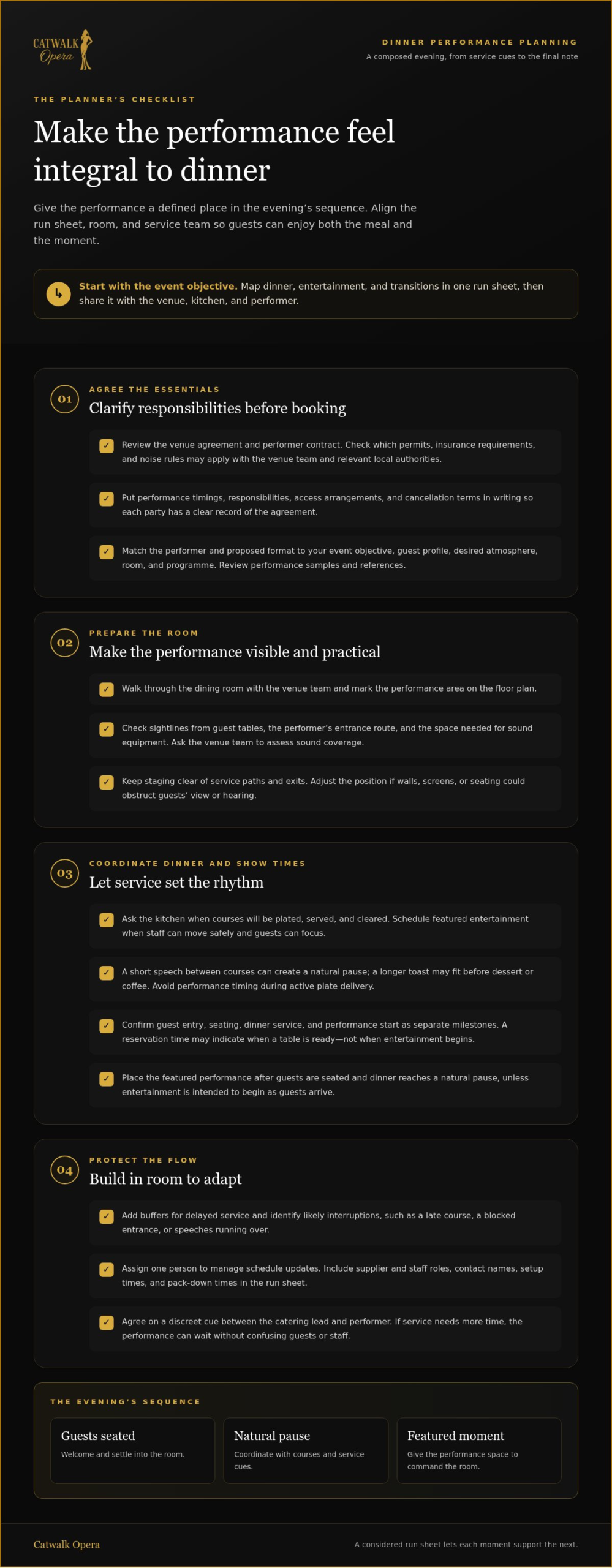
Start with your event objective, then map dinner, entertainment and transitions in one run sheet. Share the sequence with the venue, kitchen and performer so each team knows when to prepare and act.
-
Check contracts, permits, insurance, and noise rules
Review the venue agreement and performer contract, then identify which permits, insurance requirements and noise rules may apply. Requirements depend on the venue and location, so discuss them with the venue team and relevant local authorities. Put performance timings, responsibilities, access arrangements and cancellation terms in writing to create a clear record of what each party has agreed to provide.
- Find and book performers suited to your dinner. Begin with the event objective, guest profile and desired atmosphere, then look for local performers whose style fits. Review performance samples and references, and compare each proposed format with the room and program. Discuss the performance length, setup needs and schedule before booking. Record the agreed scope and timings in writing, then share them with the venue and catering lead.
-
Plan venue, sound, and staging requirements
Walk through the dining room with the venue team and mark the performance area on its floor plan. Check sightlines from guest tables, the performer’s entrance route and the space needed for sound equipment. Keep the staging clear of service paths and exits. Ask the venue team to assess sound coverage, then adjust the position if walls, screens or seating could obstruct guests’ view or hearing. For corporate galas or large dining spaces with complex technical needs, working with specialists like Debut Media AV and Production can help ensure seamless audiovisual support.
- Build the performance around service cues. Ask the kitchen when courses will be plated, served and cleared, then schedule featured entertainment when staff can move safely and guests can focus. A short speech between courses can provide a natural pause; a longer toast may fit before dessert or coffee. Add buffers for delayed service, and avoid scheduling a performance during active plate delivery.
-
Prevent disruptions during dinner service
List likely interruptions, such as a late course, a blocked entrance or speeches running over, and assign one person to manage schedule updates. Share supplier and staff roles, contact names, setup times and pack-down times in the run sheet. Agree on a discreet cue between the catering lead and performer. If service needs more time, that cue allows the performance to wait without confusing guests or staff.
Checking show start and seating times
Schedule the featured performance after guests are seated and dinner reaches a natural pause, unless the event begins with entertainment as guests arrive. Confirm seating and show times, and make arrival instructions match the evening’s actual sequence.
- Ask the venue for separate seating and performance times. A reservation time may indicate when a table is ready, not when entertainment begins. Confirm when guests may enter, when seating starts and whether dinner service begins before the first set. For a private event, list these as distinct milestones in the guest schedule so no one mistakes the invitation time for the performance start.
- Identify the dinner-show format. Some venues serve dinner well before the performance, while others welcome guests as the first set begins. If dinner precedes the show, tell guests when to arrive for the meal and when the main entertainment starts. If the first set begins on arrival, make that clear so guests can plan their journey and settle promptly.
- Choose an arrival time that gives guests room to settle. Arriving early lets guests find their seats, review the menu and place orders without feeling hurried. For a group attending a dinner show, agree to arrive together before seating begins rather than entering separately during the opening performance. Base the invitation on the venue’s stated seating time, not an assumed interval.
- Use wedding timing as a reference, not a fixed template. At wedding receptions, the main evening performance typically begins between 20:00 and 20:30, immediately after dinner and speeches. A reception with extended formalities or a different meal sequence may need another start time. Compare the proposed show start with the actual dinner finish, then give the couple and guests one consistent schedule.
- Make the schedule easy to follow on the day. Put arrival, seating, meal and performance times together in the invitation or event programme. If the venue has several rooms, name the correct entrance or dining space. For a hosted dinner, ask the reception team to repeat the seating time when welcoming attendees. Clear, consistent timing helps guests arrive ready for the experience.
Matching the show to the occasion and group
- Define the event objective before choosing the performance. Decide whether the show should welcome guests, create a central artistic moment or lead into a later activity. At a luxury gala, a featured performance can give the evening a clear focal point. At a private celebration, a more intimate presentation may suit the gathering. Set the intended mood and place in the programme first, then choose a format and timing that support rather than compete with it.
- Shape the experience around the group attending. Consider how guests will be seated, whether they are meeting for the first time and how much of the evening is devoted to conversation. At a corporate dinner, a concise featured moment can draw attention to a shared message. At a family celebration, the performance might mark a personal milestone. With a varied guest list, a clear introduction and a moment everyone can follow from their seats help bring the room together.
- Place awards where guests are most likely to remain engaged. At an awards banquet, some attendees may leave as soon as the ceremony ends, so make the awards the finale rather than the prelude. Schedule entertainment before the ceremony to sustain the room’s energy, then close with recognition and a strong final address. If the event objective is donor recognition at a charity ball, this sequence lets the performance establish atmosphere before attention turns to honorees.
- Use wedding milestones to anchor the reception sequence. A grand entrance can take place approximately 10 to 15 minutes after guests are seated for dinner, creating a defined opening moment. Many wedding receptions open the dance floor between 20:30 and 21:00. Use those milestones to decide whether a performance belongs before dinner, between reception activities or ahead of dancing. This gives the couple’s entrance, live entertainment and celebration distinct roles instead of crowding them together.
- Adapt the plan for special occasions and shared traditions. If guests are celebrating a birthday or anniversary at a dinner show, tell the venue in advance so the occasion can be incorporated into the sequence rather than interrupting a featured performance. For a corporate dinner with award recipients, confirm how names and presentations fit the programme. At a private gathering, choose a moment that lets the guest of honour enjoy the performance without being hurried through the meal.
What performance formats work best during dinner service?
- Choose between atmosphere and a featured moment. Background music can accompany conversation as plates are served, while a featured performance asks guests to focus. At a corporate dinner, a restrained musical backdrop may suit the first course, followed by a distinct live moment. Decide which role matters most, then give each format a clear place in the programme.
- Use a short acoustic set during a natural service window. At a wedding reception, starters often take 20 to 30 minutes to serve and clear, creating a possible opening for a brief acoustic set. Coordinate the exact start with the catering team, since trays, conversations and staff movement can compete with quieter music. Keep the performance suited to the room and let service continue without forcing staff to pause.
- Reserve the central performance for a moment of attention. A featured vocal or instrumental presentation works best when guests are not ordering, listening to speeches or watching active plate service. In a dinner-show format, guests might begin with appetizers or shared dishes, then have the entrée served around the main performance if service timing allows. This makes the entertainment a focal point without requiring the entire meal to stop.
- Match the sound and visual scale to the room. In a private dining room, an intimate acoustic presentation can feel more integrated than a large stage arrangement. A ballroom or fashion-led dinner may call for a more visible focal point, with the performer’s placement aligned to the room design and guest sightlines. Ask the venue to show the planned seating layout, then consider how each table will experience the performance.
- Plan dinner service around the format’s demands. Evening food service at a wedding usually occurs around 21:30 to 22:30, so it can fit during an entertainment break or alongside background music. A focused performance needs a different arrangement from music intended to accompany conversation. Leave room after dinner for guests to socialize, and avoid stacking speeches, service transitions and another featured act immediately together.
Before confirming the running order, bring the kitchen and waitstaff into the planning conversation. Event organisers should coordinate with the kitchen and waitstaff to ensure smooth service transitions. Share when guests are expected to focus on a performance and when plates need to be delivered or cleared, then adjust the sequence if those demands overlap. This helps keep the chosen format compatible with the meal rather than treating entertainment and service as separate plans.
For a dinner-show booking, assess the venue against the event as it will actually run: where guests will eat, how the performance fits into the meal, and whether the room supports that format. Dinner-show guests should choose a venue based on the actual event format rather than booking solely from photos. Ask questions about the intended setup and service flow before deciding, and use images only as a starting point. A venue that looks appealing in photographs may not suit the way guests need to move between dining and watching, so make the format, not the image, the basis of the choice.
How long should a live performance during dinner last?
- Choose the duration according to the performance’s role. A brief opening can establish the mood without competing with dinner, while a centerpiece needs a longer period of focused attention. A Luxury Opening Moment lasts between 3 and 5 minutes. High-impact moments usually last 10 to 15 minutes, while a full centerpiece might span 20 to 30 minutes. Match the length to the event objective, not simply the available space in the schedule.
- Keep a featured moment distinct from background music. A short performance can hold attention between courses or introduce a formal programme. A longer set asks guests to pause conversation and focus on the artist. Decide whether you want a cinematic opening, a concentrated interlude or the evening’s central artistic statement. Set expectations in the run sheet so service and speeches do not compete with that moment.
- Use set breaks to protect the meal’s rhythm. Live sets commonly last 45 to 60 minutes, with breaks in between. For a wedding reception, couples often book two to three hours of live performance, typically divided into two or three sets with breaks. Those formats suit an extended evening better than one uninterrupted performance. Place breaks alongside meal service or social time, and avoid scheduling announcements during the return to the stage.
- Allow each course and transition to shape the schedule. Ask the catering lead when plates will arrive, when service will clear, and where a performance can sit without obstructing staff. A 10 to 15 minute featured moment can fit a defined pause, while a 20 to 30 minute centerpiece needs a protected window. Keep speeches and award presentations separate when they require guests’ attention.
- Choose a finish that leaves the evening room to breathe. After the final note, guests may want time for conversation, dessert or dancing. Avoid placing another formal segment immediately after a long centerpiece. At a wedding reception with several sets, use breaks for service and informal interaction. At a seated gala, a shorter, well-placed performance may create more focus than extending the programme through active dinner service.
Consider the guests’ experience when choosing a performance slot. Event entertainment should be scheduled when guests might otherwise become bored or uncomfortable, rather than when they need to focus on something else such as dinner. That makes the meal’s natural pauses useful opportunities, while keeping the performance clear of moments when guests need their attention elsewhere. For an event dinner, short speeches should be scheduled between courses, so they can be placed alongside the meal without competing with the performance.
Make the run sheet precise enough for the team to coordinate each moment. Include the times for activities and transitions, buffers in case the programme runs over, and setup and pack-down times. These details clarify when entertainment can begin and when the space needs to be ready for what follows. Assign one point of contact to manage updates and liaise with suppliers, so changes caused by a delayed course, speech or performance are communicated consistently.
Catwalk Opera: Luxury Opening Moment
Catwalk Opera’s Luxury Opening Moment can introduce dinner with a refined vocal statement, giving guests a clear transition from arrival to the evening’s program. It suits a host who wants a concise, visually composed performance rather than entertainment during active meal service. For a fashion-led event, the Signature Fashion Opera Experience can align operatic artistry with the event’s visual identity, while a Private Royal Recital is suited to an intimate gathering. Each format offers a distinct way to shape the event flow, so place the performance according to its role, whether as an opening, a central moment or a private recital.
Contact Catwalk Opera to discuss which performance format best fits your dinner.
Shape the Evening Around Its Signature Moment
Once the practical schedule is settled, consider the atmosphere you want guests to remember. A performance can signal a transition, express the character of a gathering or create a shared moment that feels personal. The most effective choice is not necessarily the longest or most elaborate; it is the one that belongs naturally within your event’s story.
When scheduling a live performance during a dinner, let the occasion guide the artistic direction as much as the timetable. A private celebration may call for intimacy, while a formal gala can benefit from a more theatrical presence. Give the performance a clear purpose, then let the room, meal and guest experience support it.
If you are ready to shape that moment with considered artistry, begin planning your event with Catwalk Opera. A thoughtfully designed performance can give your evening its own distinctive signature.
Frequently Asked Questions
How Does Entertainment Fit into My Event Schedule?
Entertainment works best when it serves a defined purpose, such as welcoming guests, marking a transition or creating a shared focal point. For a product announcement, place the performance before the reveal so attention moves naturally to the presentation. At a charity dinner, an artistic interlude can refresh the room between formal segments. Keep featured entertainment separate from moments requiring close attention, including speeches and important event instructions.
What Makes a Dinner Show Worth the Reservation?
A dinner show can make the meal part of a larger evening experience, bringing together the room, menu and live presentation. Before reserving, understand the format: the booking may include a table during entertainment, a set menu or a separate ticket. Consider whether the seating offers your group a comfortable view and suits your plans for conversation. Include dietary needs or special occasions in your arrangements.
How do I schedule a live performance during a dinner event?
To schedule a live performance during a dinner event, first decide what it should accomplish, such as welcoming guests or marking a launch. Choose a format that supports that purpose, then agree on the sequence with the venue and performer. Add cues for the host’s introduction, the performer’s entrance and the transition back to dinner. A written cue sheet makes clear what happens immediately before and after the featured moment.
How can performers coordinate with catering and dinner service?
Coordinate with a brief venue walkthrough and briefing for the catering lead and performer. Identify the performer’s entrance route, equipment position and service areas that must remain clear. Agree on a quiet cue from the catering lead to indicate when the room is ready. Share menu-service details that could affect movement, such as plated courses or shared dishes, so the performance fits the room’s working rhythm.