The invitation and occasion should guide your attire at a diplomatic performance. Etiquette for performances at diplomatic events means following the stated dress code, choosing polished, discreet accessories, and maintaining professional composure.
Formal occasions call for considered choices, and an elegant presentation also reflects the event’s purpose and setting. Your appearance should complement the performance and gathering, not compete with them.
This guide explains how to interpret dress codes, choose appropriate clothing and accessories, and observe professional and seating etiquette. You will have a clearer sense of how to present yourself confidently while keeping the evening’s artistic and diplomatic character in focus.
Key Takeaways
- Let the invitation guide your attire, and weigh the event’s timing and setting when choosing a level of formality.
- Keep jewellery and accessories restrained; rules for hats and decorations can depend on the dress code and occasion.
- Present yourself with care and professional composure so your appearance respects the diplomatic setting and keeps attention on the performance.
- Follow seating arrangements and host cues with discretion, allowing the ceremony and event flow to take precedence.
Decorations, jewellery, hats, and accessories
For greetings, follow the host’s or protocol officer’s directions on titles and introductions. If no specific form is indicated, keep your greeting brief and courteous; do not assume a title or order of precedence. For example, a performer introduced by name can wait for the host’s cue before addressing a dignitary.
For flags, national anthems, and ceremonial music, follow the host’s instructions rather than assuming a universal sequence. Confirm titles, pronunciations, and arrangements with the designated event contact before the program is final. For example, a performer should not add or reposition a national anthem on their own initiative.
A performance program can name host and guest countries using the wording and order approved for the occasion. This keeps acknowledgements consistent with the event’s presentation. If country names appear in the program, share the proposed text with the host or protocol officer for direction before printing.
If a protocol mistake or unexpected disruption occurs, pause and follow the host’s or event manager’s direction. Avoid giving an unscripted explanation while the ceremony is underway. If an introduction is mispronounced, for example, wait for the host’s cue before deciding whether to repeat or correct it.
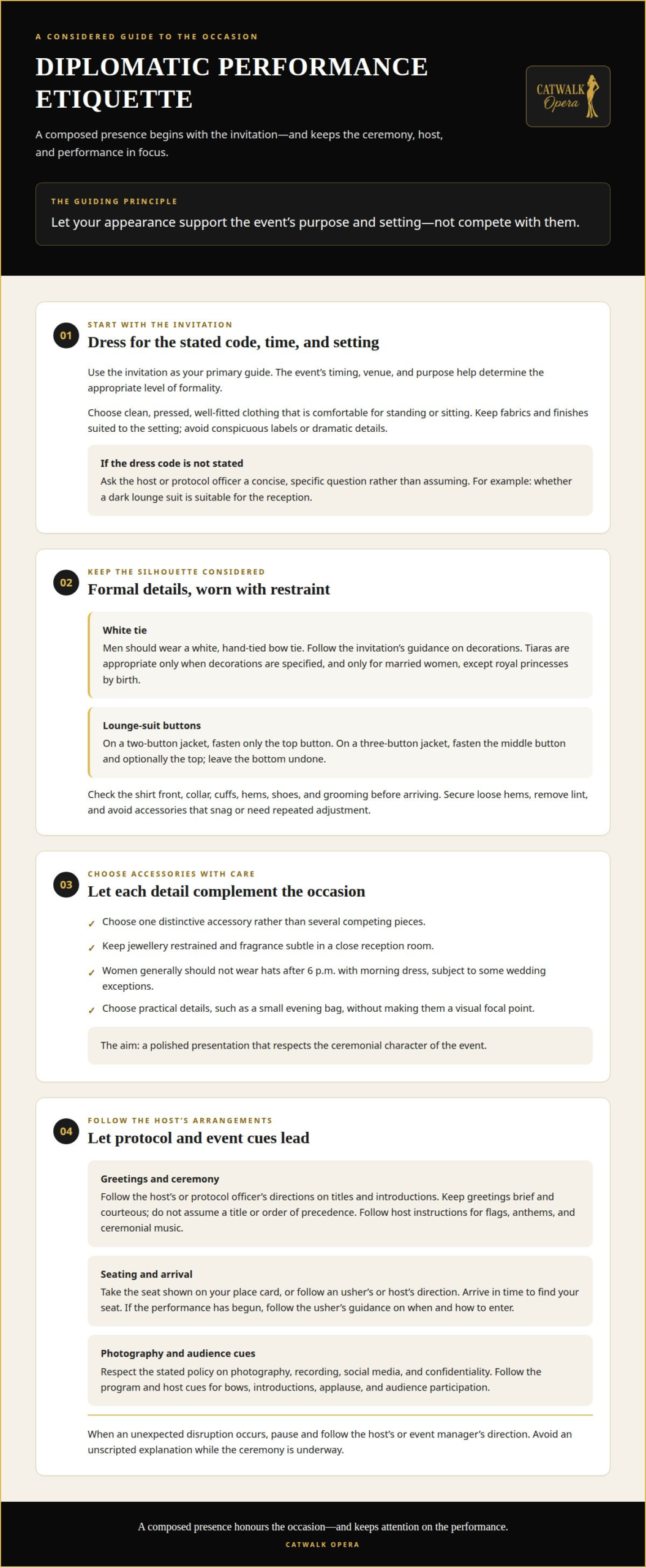
For white-tie events, follow the invitation’s guidance on decorations and choose a placement suited to the occasion. Tiaras are appropriate at white tie only when decorations are specified, and only for married women, except royal princesses by birth. Keep jewellery considered: restrained earrings can complement formal attire without competing with the performance.
Women generally should not wear hats after 6 p.m. with morning dress, subject to some wedding exceptions. Choose accessories in keeping with the invitation and occasion. A small evening bag, for example, can be practical without becoming a visual focal point. These details should support the overall presentation, not distract from the event’s ceremonial character.
Event seating
At a diplomatic performance, follow the seating plan and directions provided for that event. If your invitation includes a place card, take the assigned seat; if an usher or host directs you elsewhere, follow that guidance. Seating can reflect the program’s design, so do not change places without permission. A host may, for example, reserve a particular row for invited guests or participants.
Arrive in time to find your seat using the event’s instructions. If the performance has begun, follow the usher’s guidance on when and how to enter. Keep movement discreet, particularly if the host asks guests to remain seated during a musical passage. The right approach depends on the venue and the event’s arrangements.
Follow the host’s stated policy on photography, recording, social media, and confidentiality. If the invitation or event announcement restricts recording, respect that instruction; if photography is permitted, observe any limits on timing or location. Do not assume that permission to attend includes permission to publish images. A host may, for instance, allow photographs during a reception but not during the performance.
For bows, introductions, applause, and audience interaction, follow the host’s cues or the program. A performer might bow at the end of a piece, while the host may introduce a dignitary before remarks. Follow the program’s direction on applause, especially around ceremonial music. If no cue is given, take your timing from the room rather than interrupting a formal moment.
These choices make etiquette for performances at diplomatic events responsive to the occasion, rather than reliant on assumed universal rules. If you are hosting, include guidance on seating, photography, and audience participation in the invitation or program. Clear instructions help guests understand the arrangements and allow performers to prepare entrances, acknowledgements, and transitions.
Neatness, moderation, and professional presentation
At a diplomatic reception, polished presentation starts with clothing that meets the stated dress code. Keep garments clean, pressed, and comfortable enough for standing or sitting. A well-fitted jacket and immaculate shoes create a composed impression without drawing attention from the occasion. Choose fabrics and finishes suited to the setting instead of conspicuous labels or dramatic details.
For white tie, men should wear a white, hand-tied bow tie. It should complement the formality of the ensemble, not substitute for it. Before arriving, check that the shirt front, collar, and cuffs sit neatly. With a lounge suit, fasten the jacket according to its construction: on a two-button jacket, fasten only the top button.
With a three-button lounge-suit jacket, fasten the middle button and optionally the top, leaving the bottom undone. This helps the jacket fall as intended and keeps the silhouette tidy. Whatever you wear, keep the overall line orderly: secure loose hems, remove lint, and ensure accessories do not snag or need repeated adjustment.
Moderation matters in professional settings. Choose one distinctive accessory rather than several competing pieces, and keep fragrance subtle in a close reception room. Avoid clothing that restricts movement or makes sitting uncomfortable. A discreet pocket square or restrained jewellery can complement formal dress without competing with the ceremony or performance.
If the invitation gives no dress code and you remain uncertain, ask the host or protocol officer. Keep your question concise and specific, such as whether a dark lounge suit is suitable for the reception. That is more considered than assuming a level of formality. A final check of fit, fastenings, and grooming will help you arrive ready to greet guests with confidence.
Time, venue, and occasion as dress-code considerations
The invitation, event time, venue, and purpose all shape the appropriate dress code. For performers, cultural context and the event’s arrival instructions also guide preparation.
Dress Considerations
Dress considerations mean matching attire to the invitation’s code, the event’s timing, and its setting. Work attire suits many after-work receptions, while other gatherings call for formal dress. White tie is evening wear and should not be worn before 6 p.m. Black tie is recommended for evening events after 6 p.m., though it can be worn earlier at American weddings.
Cocktail attire is recommended for evening events after 6 p.m. Morning dress may continue into the evening when an event began during the day. These distinctions matter when a performance forms part of a longer occasion: a daytime ceremony followed by evening proceedings may not call for the same change of attire as an evening-only event. The invitation’s wording remains the central guide.
The venue and your role add context. A performer at a formal reception may need a different presentation from one appearing at a cultural program in the same building. Consider how your attire will look under the event’s lighting and against its visual setting, while keeping the stated dress code in mind.
Cultural Sensitivities Abroad
Cultural sensitivity means representing your country respectfully within the host’s context and the event’s purpose. Use the host’s preferred wording for country names and symbols, and avoid assumptions about local customs. For example, a program acknowledgement should follow the event’s requested presentation, not impose your own order or interpretation.
For arrival and backstage conduct, follow the event’s stated call time and directions for performers. There is no single arrival time or backstage routine for every diplomatic performance; the venue, schedule, and host’s arrangements determine the process. If instructions change, use the event’s designated communication channel for updates and keep your preparation aligned with the program.
For a diplomatic reception, check the dress code before deciding what to wear. Work attire suits many after-work events, while others are formal; checking the invitation helps you distinguish between them.
Catwalk Opera
Catwalk Opera can shape a live performance to complement the formality, cultural character, and visual design of a diplomatic occasion. Its curated approach brings operatic artistry into alignment with the event’s purpose and flow, creating a polished atmosphere without distracting from protocol.
For a gala, cultural reception, or formal private gathering, consider a Luxury Opening Moment, Signature Fashion Opera Experience, or Private Royal Recital. Choose according to the role music should play in your program: marking an opening, adding a fashion-led element, or creating an intimate recital setting. Each offers a distinct way to integrate performance into the occasion.
If you are planning a diplomatic event and would like to explore a performance tailored to its setting, contact Catwalk Opera.
Shape an Evening That Feels Considered
For your next diplomatic performance, consider how an artistic moment can express the occasion’s character while respecting its formal setting. Etiquette for performances at diplomatic events is not simply about appearance; it also shapes the atmosphere guests experience and the impression your gathering leaves. Aligning presentation, program, and purpose thoughtfully can make the performance feel integral to the evening rather than an interruption.
As you develop the event, give the performance a clear role in the wider design. A carefully considered entrance, visual mood, and transition to the next part of the program can create a graceful, coherent experience for guests.
Contact Catwalk Opera to discuss your event and explore how a live performance might complement its distinctive character. With a clear creative direction, your evening can feel polished, memorable, and entirely its own.
Frequently Asked Questions
What is the proper dress code for performers at diplomatic events?
Performers should follow the event’s stated dress code and coordinate their presentation with its formality and setting. If the invitation names a code, use it as the starting point for stage attire; if it does not, ask the host or protocol officer. A performer at an after-work reception, for example, may dress differently from one appearing at a formal evening ceremony.
How early should performers arrive, and what backstage protocol should they follow?
Follow the event’s stated call time and backstage directions. Arrival timing and backstage routines depend on the venue, schedule, and host’s arrangements; use the designated communication channel for updates.