What if the performance and collection spoke in one visual and musical language instead of competing for attention? Coordinating performance with a fashion designer works best when the performer joins the creative conversation early. The designer’s vision can then guide the music, styling and staging. Every runway moment needs a clear purpose; the challenge is to shape a live performance that heightens the garments while keeping them at the centre.
This guide explains how to establish a shared creative direction, define the performer’s role and duration, and place each musical moment naturally within the event flow. It also considers how bespoke curation can support a cultural statement, from a concise Luxury Opening Moment to a more expansive Signature Fashion Opera Experience. Led by international soprano Monika Spruch, Catwalk Opera approaches fashion performance as an artistic partnership, shaped around the event’s purpose and atmosphere. Use the practical steps below to align the designer, performer and production team in advance, so the result feels polished, intentional and connected to the collection.
Key Takeaways
- Start with the event objective, then define the performance’s role, placement and intended effect on the audience.
- When coordinating performance with a fashion designer, align musical character, visual styling and runway movement with the collection’s creative direction.
- Choose a format that respects runway pacing: a Luxury Opening Moment lasts 3-5 minutes, while a high-impact moment usually lasts 10-15 minutes and a full centerpiece may span 20-30 minutes.
- Keep the collaboration focused with a shared brief, clear approval points and one current event schedule. Confirm production requirements directly with the team.
- Explore how Catwalk Opera’s Luxury Opening Moment or Signature Fashion Opera Experience can be shaped around the event’s purpose and atmosphere.
Start with the event objective before coordinating a fashion performance
You’re balancing two aims: protecting the collection’s identity and creating a moment guests will remember. First, decide what the performance should do. Will it open the runway, create a transition between segments, establish the evening’s atmosphere or serve as a central performance? A clear event objective gives the designer, performer and planning team a shared reference before anyone discusses music or staging.
The format matters. A runway presentation places garments and models in a different relationship to the audience than a standalone performance. If useful, consult this overview of a fashion show as you frame the event. Ask the designer to describe the collection’s mood, references and silhouettes, as well as the response they hope to evoke. A collection defined by fluid movement may call for a different performance direction from one built around sculptural forms. The designer knows the collection’s codes best; your role is to bring them into the creative brief.
What should the first creative briefing establish?
Use the first briefing to agree on the audience, venue context, desired emotional response and purpose of the performance. Ask the designer to share visual references, collection notes and essential brand codes. These give the team a clear foundation for decisions and help prevent assumptions from becoming part of the plan.
Also establish who contributes, who reviews each proposal and who gives final creative sign-off. Defined approval stages help protect the designer’s intent while giving the performance team a dependable direction to develop.
How can performance support the designer’s vision?
Work together to translate the designer’s stated mood into a performance direction. Discuss whether the performance should introduce the collection, punctuate a runway sequence or conclude the presentation. That choice shapes its relationship to the garments: a musical entrance might build anticipation, while a transition could mark a shift in tone. The aim is to frame the collection, not impose a separate interpretation on it.
A cultural statement is strongest when the performance and design express a coherent point of view. Bespoke curation can connect musical character and visual identity while keeping the designer’s creative authority intact.
- Objective: What should the performance achieve?
- Creative direction: Which collection references and brand codes should guide it?
- Placement: Should it introduce, punctuate or conclude the runway sequence?
- Approval: Who confirms the final artistic direction?
The shared creative brief records the agreed artistic direction, connecting the designer’s vision, the performance’s role and the audience’s intended experience. With that direction established, coordinating performance with a fashion designer becomes a considered creative partnership, not a last-minute addition to the programme.
Co-curate the music, visual language and performance format
Once the creative direction is agreed, decide how music will serve it. A live vocal performance and recorded music create different experiences; neither is automatically the better choice. Consider whether the show needs one distinctive live moment or continuous musical accompaniment, and how each option supports the designer’s concept and the event’s rhythm. Bespoke curation starts with the creative brief rather than a pre-selected track chosen without reference to the collection.
Creative collaboration extends beyond music. The MasterClass chapter on planning a fashion show explores how choices such as music and model casting can bring ideas to life. Share the designer’s mood boards, references and collection notes with the performer and production team. Then discuss how musical character, visual styling and runway movement can express a consistent sensibility. A restrained vocal presence, for example, may support a collection with a spare visual language, while a more dramatic musical character may suit a presentation built around theatrical contrasts. Let the designer guide the interpretation.
How should planners compare live curation and recorded music?
Start with the job music needs to do. If the show calls for a singular moment with a distinct artistic presence, bespoke live vocal curation may fit the brief. If it needs continuous accompaniment, consider how recorded music can sustain the atmosphere. Compare the options against the designer’s concept, audience and event flow rather than assuming one is more refined. Discuss repertoire, arrangements and production elements after the creative requirements are clear.
How can styling and staging complement a collection?
Use shared visual references to discuss the performer’s placement, entrance and visibility with the designer and production team. Check sightlines from the audience’s perspective to ensure the performance adds dimension without obstructing garments or runway movement. Treat costume and styling as collaborative decisions, with the designer’s approval. The goal is a composed visual relationship, not a second focal point competing with the collection.
Before sign-off, capture the main choices in a concise creative note:
- Music: Is the performance a singular live moment or part of continuous accompaniment?
- Visual language: Which references should guide mood and styling?
- Placement: Where can the performer be seen without interrupting runway sightlines?
- Approvals: Who confirms the final creative and production decisions?
These decisions make coordinating performance with a fashion designer an act of co-curation, with the garments remaining the visual centre. For a related perspective on a tailored fashion opera performance, explore Catwalk Opera’s approach to live vocals and fashion-led events.
Balance the live performance with runway pacing and event flow
A live performance should frame the collection, not compete with it. Its duration and placement need to respect the runway’s pace, give each look room to register and preserve the designer’s intended focus. Consider how the performance fits into the full event flow: an entrance, a transition between sequences, a pause in the runway or a closing moment each creates a different kind of emphasis.
Which performance duration best suits the runway?
Choose a format based on the event objective, the space available in the programme and the prominence the designer wants the performance to have. A Luxury Opening Moment lasts 3-5 minutes and may suit a concise introduction. A high-impact moment usually lasts 10-15 minutes, while a full centerpiece might span 20-30 minutes. These are planning references, not promises of a particular audience response or commercial result. Confirm the final format for the event with the performance team.
Consider what happens immediately before and after the performance. A short opening can establish atmosphere before models enter. A moment within the programme may need a planned runway pause or a clear transition back to the collection. Place a longer centerpiece deliberately so its prominence feels intentional within the wider schedule.
How can the run of show protect the collection’s focus?
Record every performance cue in one shared, current schedule. Include the performer’s entrance and exit, the runway sequence, transitions, any planned pause and the person responsible for each cue. Agree how the performer and models will enter, move and exit in relation to the venue plan. Then review sightlines and circulation with the relevant event contacts.
Where the setup permits, arrange a production walkthrough or focused cue review. Reviewing entrances, exits and transitions can clarify how the performance sits beside the runway and help the team spot timing conflicts before guests arrive. Make the schedule accessible to everyone who needs to act on it, and ensure they are using the latest version.
- Opening: Confirm whether the performance ends before models enter or leads directly into the first look.
- Transition: Mark the cue that signals the shift back to the runway.
- Closing: Agree how the final musical moment, last runway sequence and exit relate to one another.
Agreed duration and placement preserve runway rhythm, giving the performance room to resonate while keeping the collection in focus. This clarity is central to coordinating performance with a fashion designer: each cue has a purpose, and the live moment fits naturally into the show instead of interrupting it.
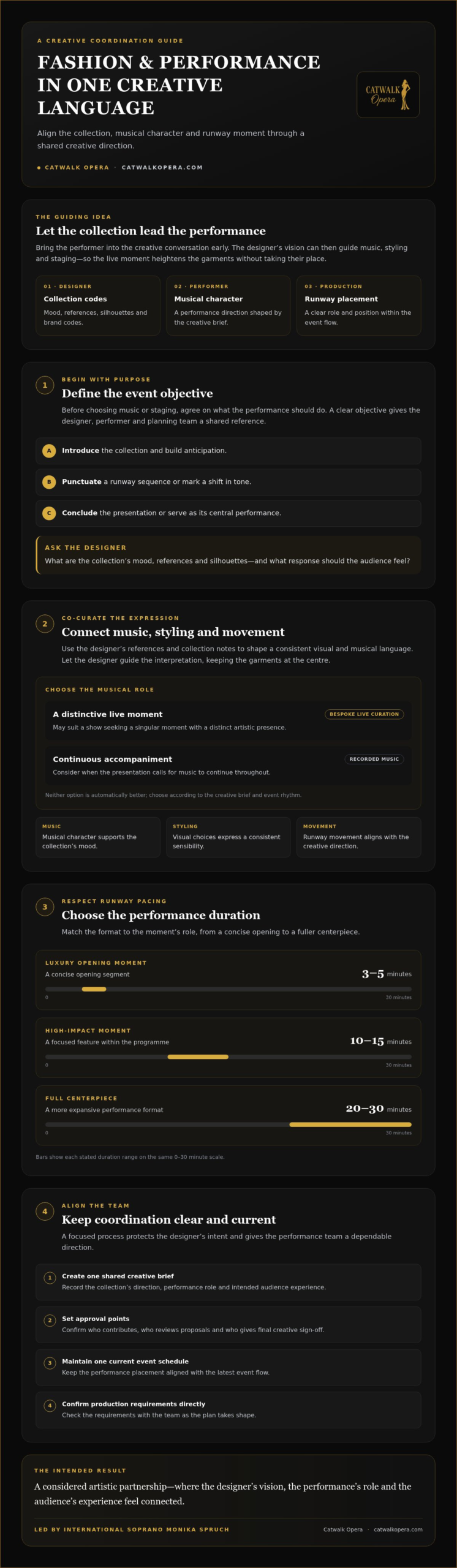
Use a coordination checklist to align designer, performer and production team
Once the creative direction and performance placement are established, give every contributor one reliable reference point. A shared brief should record the approved concept, decision-makers, approval stages and latest event schedule. This is especially useful when creative feedback, runway timing and production arrangements are progressing at the same time. Assign one person to maintain the current version so the designer, performer and production team are working from the same information.
What should the planner confirm before event day?
Reconfirm the approved creative direction, performance duration, cues and final event flow with the designer, performer and production contacts. Check the performer’s arrival, venue access, point of contact and agreed production arrangements. Confirm venue requirements and technical details directly with the team, as these can vary by event and location.
Ask the provider to confirm its insurance and liability coverage details, then share relevant information with the appropriate event contacts. For an engagement involving international travel, discuss travel arrangements and the international visa timeline early. Confirm event-specific requirements with the relevant parties and account for them in the schedule.
How can the team manage approvals and timing?
Assign one contact to consolidate feedback from the designer, planner and production team, then circulate confirmed decisions to everyone who needs them. Set approval milestones for visual references, staging choices and the final schedule. This gives the designer a clear opportunity to approve the visual direction and allows production to plan from settled information.
- Creative approval: Record the approved references, styling direction and decision-maker.
- Performance details: Confirm duration, placement, entrances, exits and cues.
- Production coordination: List venue access, agreed requirements and responsible contacts.
- Schedule control: Name who maintains and shares the latest event flow.
Plan the booking timeline early. Catwalk Opera recommends securing a booking at least three to six months in advance. Booking an international soprano typically requires a lead time of 6 to 12 months, allowing time to discuss travel planning and the international visa timeline with the appropriate parties.
For a bespoke performance shaped around your fashion event, discuss your plans with Catwalk Opera. Clear approvals and confirmed production details help each contributor bring the agreed vision to the runway with composure.
Bring the designer’s vision to life with a bespoke fashion performance
When the objective, creative direction and event flow are aligned, the performance can become an integral part of the fashion presentation rather than an addition to it. For a planner, coordinating performance with a fashion designer means carrying the agreed vision through to a live moment, with the garments and the designer’s point of view at its centre.
Catwalk Opera offers two formats for high-profile fashion and luxury events: the Luxury Opening Moment and the Signature Fashion Opera Experience. Led by international soprano Monika Spruch, Catwalk Opera brings bespoke curation to each collaboration, shaping the performance around the event’s purpose and atmosphere. This approach can support a cultural statement and a distinctive prestige halo while keeping the designer’s vision as the guiding reference.
What does a bespoke collaboration begin with?
Begin with the materials that give the artistic team a clear picture of the event: the brief, collection references, schedule and venue context. Share the performance objective and where it belongs in the programme. Then discuss how its musical character and visual presence can complement the collection. Shape the details through conversation and agree them for the specific event rather than making assumptions in advance.
The collaboration focuses on the performance. Fashion design and general event production remain with the relevant creative and production teams, whose approvals and requirements should be confirmed directly.
What is the next step for a fashion event planner?
Start the conversation early, particularly if the engagement involves international travel. Booking an international soprano typically requires a lead time of 6 to 12 months, so early discussion gives you and the team time to consider the event schedule and international visa timeline. Share what is confirmed, identify what is still in development and ask which performance format may best suit the event objective.
If you are considering a soprano for a wider luxury event, the luxury event soprano singer guide can provide related booking context. For a fashion presentation, bring the collection direction, preferred performance placement and event brief into the initial conversation. These details help establish whether the Luxury Opening Moment or Signature Fashion Opera Experience is the appropriate format, with final arrangements discussed for your event.
Discuss your fashion event with Catwalk Opera to explore how a bespoke live performance might align with the designer’s creative vision and the evening’s purpose.
Shape a performance that belongs to the collection
A memorable fashion performance begins with a clear event objective and a creative brief shaped around the designer’s vision. Aligning music, visual language and staging helps the live moment complement the garments, while agreed cues and placement keep it composed within the event flow. That is the heart of coordinating performance with a fashion designer: creating one considered artistic direction, with the collection at its centre.
Catwalk Opera, led by international soprano Monika Spruch, brings bespoke curation to fashion and luxury events. Its international availability, alongside insurance and liability coverage, gives planners practical details to discuss as they shape an engagement. The performance concept can be tailored around the event’s purpose and atmosphere.
If you’re ready to explore how a live vocal performance could complement your collection, discuss your fashion event with Catwalk Opera. With the right creative alignment and thoughtful planning, your performance can become a distinctive expression of the designer’s vision.
Frequently Asked Questions
How do you coordinate a live performance with a fashion designer?
Start with a shared brief that defines the event objective, the collection’s creative direction and the performance’s role. Ask the designer to provide references and identify who approves creative and staging decisions. Then agree on performance placement, cues and timing in a shared run of show, with one person responsible for keeping the schedule current. This gives each contributor clear direction while keeping the designer’s vision at the centre.
When should a performer be involved in fashion show planning?
Bring the performer into planning once the event objective and initial creative direction are clear, and early enough to discuss how the performance fits the programme. This lets the team consider musical character and placement alongside the collection’s visual language, rather than treating performance as a last-minute addition. Early discussion also gives everyone time to confirm duration, cues, venue context and event-specific production requirements directly with the relevant contacts.
Can a live performance complement a fashion collection without distracting from it?
Yes. Give the performance a defined role and a duration that suits the runway sequence, then agree on staging and performer placement with the designer. Review audience sightlines to keep garments and model movement visible, and confirm styling choices with the designer before approval. The performance should frame or punctuate the collection, not create a competing focal point. A shared schedule helps preserve the intended rhythm from entrance through the final sequence.
How long should a live performance during a fashion show last?
The right duration depends on the event objective, programme space and intended prominence. A Luxury Opening Moment lasts 3-5 minutes; a high-impact moment usually lasts 10-15 minutes; and a full centerpiece might span 20-30 minutes. Treat these as format references, then confirm the event-specific duration with the team. Consider how the moment connects to model entrances, runway pauses and transitions so its length feels intentional within the show.
What should be included in a fashion show performance brief?
Include the event objective, audience and venue context, as well as collection references and essential brand codes. State whether the performance introduces, punctuates or concludes a runway sequence, and record the agreed duration, placement and cues. Name the creative approvers and production contacts, then identify who maintains the latest schedule. A focused brief gives the designer, performer and event team a shared reference for creative decisions and practical coordination.
How far in advance should you book an international soprano for a fashion event?
Catwalk Opera recommends securing a booking at least 3-6 months in advance. Booking an international soprano typically requires a lead time of 6-12 months, so begin discussions early if the event involves international travel. Early planning gives you time to align the performance with the designer’s direction and discuss the schedule, venue context and international visa timeline with the appropriate parties. Confirm event-specific arrangements directly with the team.
How can a designer and performer agree on visual styling?
Share the designer’s mood boards, collection references and essential brand codes with the performer and relevant production contacts. Discuss how styling, placement and visibility can complement the garments and overall visual direction. Give the designer a clear approval role for choices that affect the collection’s identity. Confirm decisions with the team and record them in the shared brief so the event-day presentation reflects the approved creative direction.