Instrumental music designs ambient space, yet an elite vocal performance commands absolute, collective focus. When you evaluate an instrumental vs vocal performance for events of high distinction, the central challenge is rarely volume alone; it is creative purpose. You must balance the fear that a powerful live voice might overpower seated dinner conversation against the risk that restrained instrumental music will feel unremarkable and drift into the background. Every premier host seeks to protect guest networking while still delivering an unmistakable cultural statement.
Discover how to evaluate acoustic presence, event flow, and emotional resonance to choose the ideal musical centerpiece for your gathering. Below, we explore how to align performance formats with formal program timelines, how to calibrate sound across delicate residential acoustics, and how to sequence each phase of the evening to achieve maximum emotional ROI without acoustic friction.
Key Takeaways
- Resolve the debate of an instrumental vs vocal performance for events by aligning sonic intensity with the distinct phases of your gathering.
- Understand acoustic decibel dynamics to preserve effortless dinner dialogue while reserving breathtaking volume for your main cultural statement.
- Structure an intentional multi-phase event flow that moves seamlessly from ambient strings during arrivals to an electrifying operatic centerpiece.
- Evaluate venue specifications and residential acoustics early to guarantee pure resonance without intrusive amplification.
- Maximize your gathering’s emotional ROI and prestige halo by replacing generic background music with bespoke, couture-styled artistry.
The Strategic Roles of Instrumental and Vocal Artistry in Event Design
Selecting between an instrumental vs vocal performance for events requires an understanding of how acoustic architecture shapes human interaction. Rather than viewing music as simple entertainment or background filler, elite planners treat sound as the foundation of an environment’s social structure. The choice between strings, brass, or the human voice dictates how guests move through a venue, how deeply they converse, and where their attention settles.
Every gathering possesses an overarching event objective. When your goal is to foster high-level networking during a private reception, sound should envelope the room without demanding eye contact. Conversely, when your objective is to mark a critical transition, such as opening a charity ball or staging a luxury brand launch, subtle instrumentation yields to focal artistry. For discerning hosts, emotional ROI serves as the true metric of success: you are measuring how effectively the artistic medium etches the evening into collective memory.
Defining Ambient Soundscapes: The Strength of Instrumental Ensembles
Instrumental arrangements excel at establishing continuity without intruding on dialogue. Historic chamber music ensembles were composed specifically for intimate state rooms and private banquets, balancing resonance with social discretion. Modern string quartets and grand pianos disperse acoustic energy evenly across vaulted ceilings, sustaining a refined backdrop that encourages continuous conversation while guests circulate through expansive reception galleries.
The Power of the Human Voice: Commanding Total Presence
The human voice triggers an instinctual biological response. While an instrumental piece can linger pleasantly in the background, live vocals instantly direct eyes and focus toward the stage. An internationally acclaimed operatic soprano introduces immediate gravitas to key program milestones, cutting through ambient room chatter without harsh synthetic amplification.
When curating an instrumental vs vocal performance for events with global visibility, stage presence matters as much as acoustic strength. An elite vocalist brings visual drama through couture presentation, deliberate physical poise, and narrative delivery. That singular theatrical presence transforms a standard performance segment into a definitive cultural statement, leaving an indelible impression that ambient instruments alone cannot achieve.
Evaluating Your Event Flow: When to Choose Voice vs. Instruments
Mastering the balance between an instrumental vs vocal performance for events requires mapping musical intensity directly to your timeline. A private celebration or luxury gala doesn’t maintain a single emotional register throughout the evening; it breathes, gathers momentum, and shifts focus. Discerning planners assess how venue architecture, ceiling geometry, and room acoustics interact with sound at every stage, ensuring the entertainment supports the room’s energy rather than competing with it.
Cocktail Receptions and Arrival Moments: Prioritizing Conversation
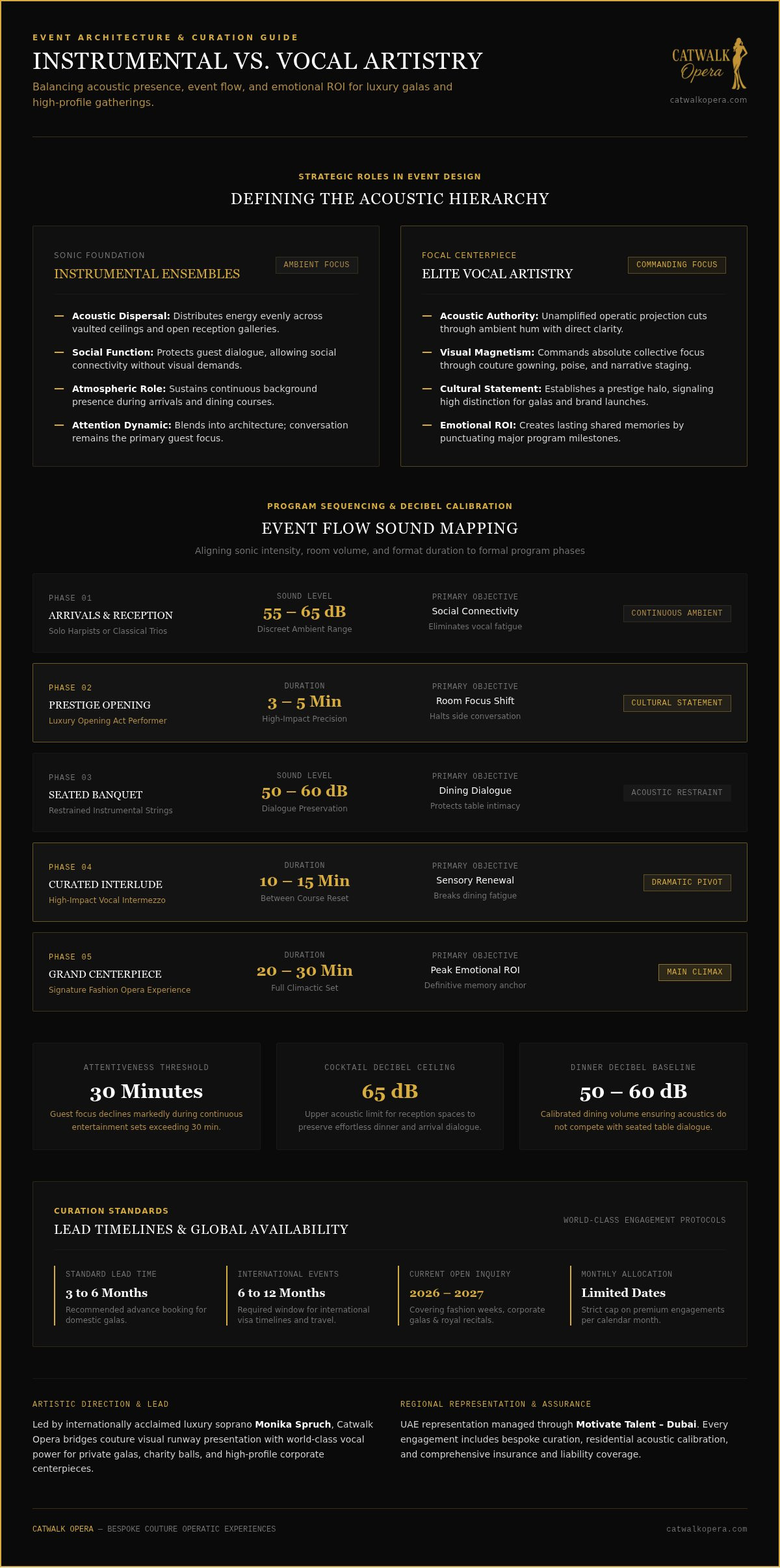
During initial arrivals, social connectivity remains the priority. Solo harpists or classical trios excel in this setting, providing an air of quiet luxury without demanding visual devotion. Acoustic sound during receptions is ideally calibrated between 55 and 65 dB. This keeps background frequencies pleasant and light, allowing guests to converse comfortably across gallery spaces without vocal fatigue.
The Prestige Opening: Creating Unforgettable First Impressions
Once attendees transition into the main ballroom, the event flow demands an intentional visual and acoustic pivot. Introducing a 3 to 5 minute luxury opening act performer cuts through lingering side conversations and focuses the entire room. This concise performance marks the formal commencement of the program, framing keynote addresses or runway presentations with an authoritative cultural statement that recorded sound cannot replicate.
Seated Dinners and Gala Galas: Sustaining Atmospheric Balance
Seated dining requires acoustic restraint, with background levels dipping to 50 to 60 dB to protect table conversation. Yet extended dinners risk sensory fatigue if the atmosphere remains static. Audience engagement surveys reveal that gala guests experience a marked decline in attentiveness during continuous entertainment sets exceeding 30 minutes.
A curated 10 to 15 minute vocal intermezzo placed between courses revitalizes the room, providing a striking reset before dessert or keynote speeches. Achieving this dynamic balance relies on refined live event sound engineering that manages acoustic reflections across glass and marble surfaces. For organizers orchestrating a high-profile corporate gala or private recital, consulting with Catwalk Opera provides access to bespoke performance curation designed to harmonize seamlessly with complex event schedules.
Direct Comparison: Comparing Key Performance Factors for Luxury Gatherings
Weighing an instrumental vs vocal performance for events requires examining how each medium alters physical acoustics, stage design, and guest engagement. While instrumental ensembles supply steady sonic architecture, a solo vocal performance shifts the entire room into a focused, theatrical arena.
Acoustic Presence and Volume Management
Natural acoustic output varies dramatically between instruments and the human voice. A string quartet disperses sound broadly across a room, whereas peak operatic vocal delivery reaches 90 to 105+ dB without synthetic amplification. That acoustic penetration commands room focus without requiring cluttered speaker towers.
Room geometry dictates how sound behaves. Private residences and estate halls register reverberation times (RT60) between 0.4 and 0.8 seconds, compared to 1.4 to 1.6 seconds in purpose-built opera halls. In these drier residential acoustics, the unamplified voice retains pristine clarity. Reviewing the artistic definition and dynamics of vocal music reveals how vocal tone naturally cuts through complex architectural spaces where multi-instrumental setups might require extensive microphone balancing to avoid feedback.
Visual Impact and Cinematic Stage Presence
Visual dynamics separate background music from headline art. Instrumental trios and quartets typically perform seated in understated evening wear, intentionally fading into the room’s perimeter. An operatic soloist brings cinematic movement and tailored visual elegance directly to the focal point of the venue.
During a luxury brand launch or couture presentation, the singer’s styling can be integrated with the evening’s aesthetic themes. Paired with focused theatrical lighting, a vocal soloist commands attention with effortless poise, giving attendees an unforgettable visual focal point.
Guest Perception and Prestige Halo
The choice of medium directly influences how guests perceive an occasion. Standard jazz or classical background music feels familiar, but an unexpected, world-caliber vocal aria creates an immediate prestige halo. The sheer rarity of live opera in private settings elevates the host’s institutional standing.
Securing a recognized world class soprano for hire ensures that the performance is treated as a bespoke cultural statement rather than generic entertainment. When evaluating an instrumental vs vocal performance for events with high-profile attendees, vocal artistry consistently generates superior emotional ROI and leaves an indelible mark on collective memory.
Logistical and Technical Curation: Preparing Your Venue for Musical Excellence
Flawless execution behind the scenes determines whether an artistic moment feels effortless or strained. When orchestrating an instrumental vs vocal performance for events of significant scale, technical preparation extends far beyond basic stage positioning. Event producers must account for clear sightlines, dedicated dressing suites that afford acoustic privacy for vocal warm-ups, and protected pathing between backstage staging areas and the main room.
Sound Reinforcement and Technical Rider Execution
Acoustic needs diverge sharply once a live soloist steps onto the stage. While unamplified string ensembles require little more than disciplined placement and soft lighting, an operatic soprano requires dedicated stage monitoring to maintain pitch precision against reflective surfaces. Sound engineering teams must balance live instrumentation, backing arrangements, and vocal projection to avoid frequency bleed. Complete all acoustic balancing and sound checks at least ninety minutes before doors open, ensuring incoming guests encounter only serene, uninterrupted ambience.
Lead Times, Travel, and International Coordination
Securing internationally acclaimed vocal talent requires disciplined schedule management. Hosts should finalize domestic bookings three to six months in advance. When planning an instrumental vs vocal performance for events across international borders, plan for a window of six to twelve months to navigate the international visa timeline. Flying artists overseas involves formal consular schedules and administrative fees, including the $2,965 USD USCIS premium processing fee for U.S. petitions or the £1,035 GBP annual UK Immigration Health Surcharge. Regional representation simplifies this cross-border coordination; for example, Motivate Talent – Dubai manages engagements throughout the UAE.
With global performance calendars actively booking for the 2026 and 2027 seasons, securing dates and reviewing technical riders early guarantees flawless delivery. Inquire with Catwalk Opera to confirm international availability and initiate bespoke technical planning for your upcoming gala.
The Ultimate Synergy: Blending Instrumental Atmosphere with a Dramatic Vocal Centerpiece
The choice between an instrumental vs vocal performance for events isn’t a rigid either-or decision. World-class galas and high-profile brand activations achieve their greatest cultural impact when they abandon binary thinking altogether. By treating instruments and voice as complementary movements within a single sonic architecture, you create an evolving narrative that mirrors the natural momentum of the evening.
Architecting the Multi-Act Event Experience
An orchestrated multi-act schedule prevents sensory saturation while guiding guest emotions with cinematic precision. Structure your evening across three distinct musical phases:
- Arrival and Welcome: Subtle instrumental melodies fill the room, enveloping guest arrivals and cocktail dialogue without commanding visual focus.
- The Opening Statement: A focused 3 to 5 minute Luxury Opening Moment commands absolute stillness, drawing every eye to the stage to mark the official opening of the program.
- The Evening Climax: A 20 to 30 minute Signature Fashion Opera Experience anchors the conclusion of dinner, delivering a breathtaking artistic finale that leaves guests spellbound.
This layered transition keeps the acoustic energy fluid, moving from social conversation to focused, theatrical immersion.
Custom Artistry by Catwalk Opera for Elite Occasions
Catwalk Opera delivers this tailored synergy by bridging traditional classical disciplines with runway aesthetics. Led by international soprano Monika Spruch, every production is created through bespoke curation rather than stock licensing. The musical repertoire, visual styling, and staging are designed in direct conversation with your event designer, ensuring that every note reflects the theme of the gathering.
Whether you’re organizing an elite runway show, a private royal recital, or an international charity ball, bespoke musical curation elevates your gathering from a standard evening into an indelible cultural statement. To protect artistic caliber, Catwalk Opera accepts only a limited number of premium engagements each month. With global availability currently open for the 2026 and 2027 international gala seasons, reserve your dates early to begin bespoke production design for your centerpiece.
Elevate Your Gathering with Bespoke Musical Architecture
Resolving the balance of an instrumental vs vocal performance for events comes down to harmonizing ambient subtlety with dramatic grandeur. While delicate instrumental textures cultivate effortless dialogue during arrivals, a commanding live voice elevates critical milestones into unforgettable cultural statements. Selecting the right artistic medium at each stage ensures your program flows with natural elegance and authority.
Catwalk Opera unites operatic excellence with haute couture aesthetics under the direction of international soprano Monika Spruch. From high-impact 3 to 5 minute Luxury Opening Moments to full 20 to 30 minute fashion opera productions, every arrangement is bespoke and tailored to your room’s unique acoustic profile. To preserve the highest artistic caliber, Catwalk Opera maintains strict exclusivity by accepting a limited number of premium engagements worldwide each month. When you’re ready to craft a transformative experience for your guests, inquire with Catwalk Opera to curate an unforgettable vocal centerpiece for your 2026 event.
Frequently Asked Questions
Will a live vocal performance overpower dinner conversation during a formal gala?
No, because bespoke vocal performances are staged as designated focal moments between courses rather than continuous background music. Ambient instrumental music maintains a 50 to 60 dB level during dining to foster effortless dialogue. Live vocalists take the stage during deliberate pauses in service, commanding attention for focused intervals without forcing guests to raise their voices over the music.
How do technical and sound engineering requirements differ between instrumentalists and classical vocalists?
Instrumental ensembles primarily require natural acoustic positioning or subtle condenser microphones, whereas a classical crossover vocalist demands dedicated stage monitoring and vocal dynamic control. When planning an instrumental vs vocal performance for events, sound engineers must isolate vocal frequencies against room reflections. A soprano’s dynamic range requires soundcheck calibration at least ninety minutes prior to guest arrival.
What lead time is required to book a classical crossover soprano for an international event?
International engagements typically require a booking lead time of six to twelve months. This runway accounts for couture wardrobe coordination, custom musical arrangements, and the international visa timeline. Administrative procedures, such as filing for work permits alongside consular appointments, necessitate advance scheduling. For regional dates, securing talent three to six months ahead remains recommended to guarantee artist availability.
Can vocal performances be tailored to complement high-fashion runway shows or brand themes?
Yes, bespoke vocal performances are tailored to mirror specific collection aesthetics, runway choreography, and brand messaging. Catwalk Opera, led by Monika Spruch, specializes in integrating couture styling directly into the staging. Rather than relying on generic tracks, arrangements align note-for-note with model pacing, lighting cues, and architectural stage designs to reinforce brand prestige.
How much physical stage space is necessary for an operatic vocal performance compared to an ensemble?
A solo soprano requires significantly less fixed square footage than an acoustic ensemble, but demands open, unobstructed sightlines and room for dramatic physical presence. While a string quartet requires a stationary seated footprint with music stands and chairs, a solo vocalist moves fluidly across runways, grand staircases, or minimalist focal platforms, integrating naturally into unique architectural spaces.
What performance duration is most effective for an event opening or gala centerpiece?
Precision timing maintains guest engagement and prevents sensory fatigue. For event openings, reveals, or runway presentations, a concise Luxury Opening Moment lasting 3 to 5 minutes creates immediate impact. For seated gala intermezzos, high-impact sets of 10 to 15 minutes are ideal, while a full Signature Fashion Opera Experience centerpiece spans 20 to 30 minutes before table attention wanes.
How do I choose between an instrumental quartet and a solo soprano for an intimate private celebration?
Your choice between an instrumental vs vocal performance for events in private estates depends on whether you seek subtle background ambience or an indelible cultural statement. An instrumental ensemble provides steady, conversational accompaniment throughout an evening. In contrast, a solo soprano delivering a Private Royal Recital provides an unforgettable artistic focal point, transforming a milestone gathering into an exclusive salon experience.