What makes a live performance in a historic venue feel inseparable from its setting? It begins with thoughtful alignment between the room, the vocal presentation, the visual styling and the event schedule. Historic architecture gives an occasion a distinctive character, while the space’s layout, access and venue requirements all shape how guests experience a performance.
Repertoire is only one part of the plan. Consider where guests will be, what they will see and how the performance will fit between other programme moments. A venue-first approach helps you create an experience that complements the architecture rather than competing with it.
This guide explains how to shape a performance around a room’s character, choose a format that serves your event objective and coordinate practical details. From the site visit to the final transition, use these steps to bring vocal artistry and historic character together in a polished guest experience.
Key Takeaways
- Let the venue’s architecture and atmosphere inform artistic choices, so the performance feels considered rather than placed on top of the setting.
- For a live performance in a historic venue, start with your event objective, then plan the performance moment and coordinate practical details early.
- Choose between live vocal artistry and recorded music according to the presence, adaptability and effect you want, rather than assuming one format suits every occasion.
- Align timing, access and layout with the venue team, and clarify responsibilities to support a smooth event flow.
- Catwalk Opera, led by international soprano Monika Spruch, brings bespoke vocal curation to distinctive event moments.
Why live performance in a historic venue calls for a venue-first plan
A venue-first plan starts with the setting and the occasion, then shapes artistic choices to serve both. Instead of selecting a performance and treating it as a decorative addition to the schedule, consider how the room’s architecture, atmosphere and purpose can influence the guest experience. Give the performance a clear role: it might mark an arrival, connect two parts of the programme or create a focal moment.
A venue-responsive performance is curated for the character of the room and the event objective. A generic entertainment booking may not account for that relationship. This distinction matters in historic settings, where the architecture already carries visual and emotional weight. The performance should converse with that character, not compete with it.
Read the venue as part of the event
Before choosing a format, consider how guests will encounter the room. Its scale, layout and visual character shape the performance’s presence. Sightlines affect who can see the moment, while guest movement affects whether attention can settle or needs to remain fluid. A performance for a seated audience may call for a different placement from one during a reception or dinner.
Start by defining your event objective. Are you creating a poised welcome, a memorable transition or a focal moment? That intention gives the artistic planning direction. During a site visit, look at the proposed performance position from the areas where guests will gather, and note any routes or views that should remain clear.
Make the artistic choice a cultural statement
A historic venue can lend an event a sense of continuity and distinction. Your artistic choices can extend that impression, expressing the host’s identity while respecting the building’s established character. For an example of a historic performance setting adapted over time, see Carnegie Hall, a historic venue for live performances.
Live vocal artistry can introduce a contemporary layer without overwhelming the setting. Consider a cinematic entrance framed by the room’s existing lines, or a carefully timed vocal moment that brings guests’ attention together. Couture presentation and musical character can be considered alongside the event design, creating visual and artistic coherence rather than adding an unrelated element.
This approach is especially valuable when your event carries a message. A performance can function as a cultural statement, communicating refinement, creativity or a sense of heritage through its placement and presentation. The aim is not to imitate the past, but to create a considered meeting between the venue’s history and the occasion taking place within it.
For a live performance in a historic venue, let the room inform the plan, then refine the artistic choice around the impression you want guests to remember. That alignment gives the performance meaning beyond its duration and helps it feel integral to the occasion.
How to plan live performance around a historic venue’s character
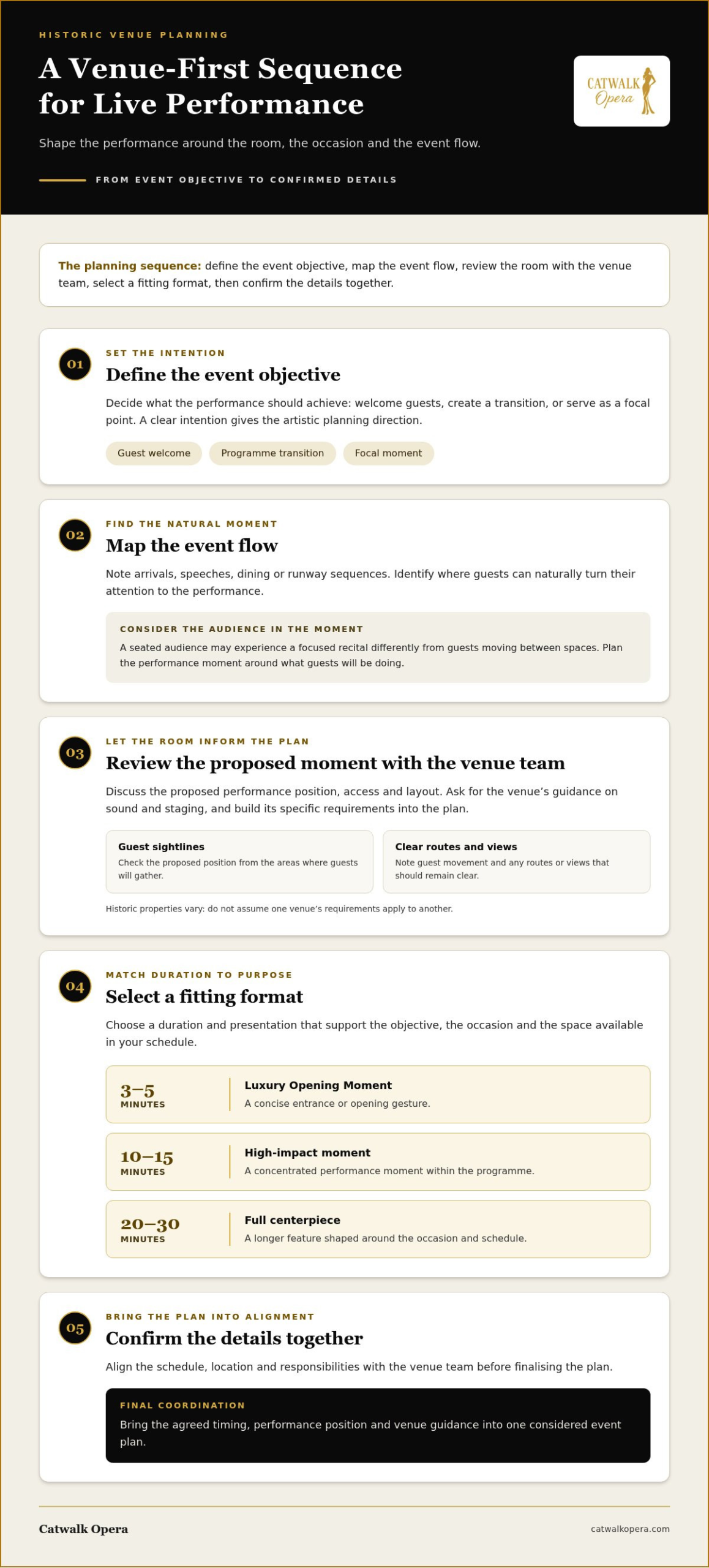
A clear sequence helps you move from the event objective to a performance moment that feels intentional and workable. Define what the moment should achieve, place it in the event flow, then align the format and practical details with the venue team. Set the objective, map the schedule, review the room, agree on the format, then confirm the performance details. Early coordination matters because access, layout, sound and staging can differ from one historic property to another.
- Define the event objective. Decide whether the performance should welcome guests, create a transition or serve as a focal point.
- Map the event flow. Note arrivals, speeches, dining or runway sequences, and identify where guests can naturally turn their attention to the performance.
- Review the proposed moment with the venue team. Discuss access, layout and the venue’s guidance for sound and staging.
- Select a fitting format. Choose a duration and presentation that support the objective and the occasion.
- Confirm the details together. Align the schedule, location and responsibilities before finalising the plan.
Start with the room, schedule and audience
Consider where guests will be and what they will be doing when the performance begins. A seated audience may experience a focused recital differently from guests moving between spaces. Ask the venue team about access and layout, and record its specific guidance on sound or staging. Historic properties vary, so do not assume one venue’s requirements apply to another.
Coordination also reflects the care required to protect historic places. The Advisory Council on Historic Preservation discusses preserving America’s historic music venues, offering useful context for planning in a way that respects the setting. Keep the conversation practical: share the proposed timing and performance position, then incorporate the venue’s guidance into the event plan.
Align the performance format with the event objective
Duration is one way to shape the performance’s role. A Luxury Opening Moment lasts 3 to 5 minutes, suited to a concise entrance or opening gesture. A high-impact moment usually lasts 10 to 15 minutes, while a full centerpiece might span 20 to 30 minutes. Choose according to the occasion, the audience’s attention and the space available in your schedule.
Catwalk Opera tailors live vocal experiences to the occasion and theme, bringing artistic curation into conversation with event design. A concise opening can establish a formal tone; a longer centerpiece can give guests time to settle into a shared moment. Account for transitions before and after the performance, too, so the event flow remains composed.
For your live performance in a historic venue, confirm the artistic format alongside the venue’s guidance on access, sound and staging. If a bespoke vocal moment suits your event objective, explore Catwalk Opera’s tailored performance experiences as part of your planning.
Live vocal performance or recorded music: what suits the historic setting?
A live vocal moment and recorded music can serve different roles in the same event. Live artistry gives guests a focal point to experience together, while recorded music can maintain a consistent atmosphere between scheduled moments. Neither format is automatically the better choice. For a live performance in a historic venue, ask which option best serves the room, audience and event objective without disrupting the occasion’s rhythm.
If you are concerned that a live performance may be difficult to integrate, plan it as a defined moment rather than an added layer. Thoughtful placement, timing and a clear transition help it sit naturally within the programme. Practical guidance on planning events in historic landmarks also highlights the value of balancing the setting’s character with the needs of a contemporary gathering.
When a live performance strengthens the experience
Live vocal artistry can draw attention to a particular moment, giving guests a shared focus rather than a continuous backdrop. It may suit an arrival, a formal transition or a central feature, especially when you want the performance to express a brand identity or set a distinctive tone. Thoughtful curation connects the music and presentation with the occasion, helping the artistic moment feel intentional within the setting.
Emotional ROI is the lasting impression and shared memory guests may carry from the experience. It is not a guaranteed business result. Consider whether you want a memorable focal point, a more intimate atmosphere or a cultural statement, then decide whether a live moment supports that intention.
Event objective | Live vocal artistry | Recorded music
Create a focal moment | A distinctive, present performance can gather attention around a chosen point in the programme. | Can provide a musical bed, but may not create the same live focal point.
Maintain ambience | Can bring a personal artistic presence to a planned segment. | Can sustain a consistent atmosphere between programme moments.
Express identity | Bespoke curation can connect vocal artistry with the host’s theme or brand character. | A selected soundtrack can support the mood through music choices.
When recorded music may better serve the event flow
Recorded music can suit arrivals, guest circulation and intervals when you want ambience to continue without creating a distinct performance moment. It can accompany conversation or transitions while the event unfolds. Choose this approach according to the space, how guests move through it and whether the intended atmosphere calls for subtle continuity or focused attention.
You can also combine formats. Let recorded music establish the atmosphere during a reception, then introduce a live vocal centerpiece at a deliberate point in the schedule. This contrast can give the performance its own presence while keeping the surrounding event flow composed. Make the choice by working from your objective and the venue’s guidance, not from a fixed rule about which format belongs in a historic setting.
How to coordinate performance details with the venue and event flow
A polished performance depends on clear coordination as much as artistic intent. For a live performance in a historic venue, agree on its place in the schedule, the route into the room and the venue’s guidance on how the space may be used. When each person understands their role, the performance can support a transition or create a considered pause without unsettling the evening’s rhythm.
Coordinate timing, access and the performance moment
Work from a shared event schedule. Confirm arrival and preparation timing with the event team, then place the performance in relation to guest arrivals, speeches, dining or other programme elements. Give the venue team the proposed location and timing early, so its instructions can shape access and room use. A transition is smoother when the host, guests and performance partner know what happens next.
- Planner or host: Share the event objective, schedule and intended guest experience, and identify who will communicate updates.
- Venue team: Provide guidance on access, room layout, sound, staging and other relevant requirements for the property.
- Performance partner: Align the artistic moment and practical arrival details with the agreed schedule and venue guidance.
- Event team: Confirm cues and transitions, including how guests will be invited to turn their attention toward the performance.
Keep the final plan concise and accessible to everyone who needs it. Include the agreed performance time, location, access instructions and the person responsible for communicating schedule changes. If the programme shifts, a clear point of contact can relay the update and help everyone work from the same timing.
Plan lead time for an international engagement
For international luxury events, allow 6 to 12 months of lead time for an international soprano. The general recommendation is to secure a booking 3 to 6 months before the event date. These are distinct planning horizons: the longer period applies to international engagements, while the general recommendation offers a guide for other bookings. Catwalk Opera accepts a limited number of premium bookings per month, so early planning helps align the artistic direction with the wider event schedule.
With more time, you can develop the performance concept alongside the venue plan rather than treating them as separate decisions. It also gives the planner, venue team and performance partner time to align on timing, access and the intended atmosphere. A clear booking brief, as outlined in the luxury event soprano hiring guide, can bring creative direction and event logistics together.
To begin shaping a performance around your event’s character and schedule, explore a bespoke Catwalk Opera experience.
Create a bespoke live performance in a historic venue with Catwalk Opera
Catwalk Opera is an international luxury performance concept led by internationally acclaimed soprano Monika Spruch. For a live performance in a historic venue, bespoke curation offers an alternative to stock licensing: artistic choices can respond to the occasion, your intended impression and the character of the room. Vocal artistry and couture presentation can form part of the event design rather than feeling like an unrelated addition.
This approach suits hosts who want a performance to carry meaning as well as musical presence. A historic interior may suggest formality, intimacy or grandeur; a curated experience can complement that atmosphere while giving the event a contemporary signature. The venue remains central, with the performance adding a distinct artistic point of view.
Shape a performance around the occasion
Begin with your event objective, theme and desired atmosphere. A Luxury Opening Moment can create a concise entrance into the occasion, while the Signature Fashion Opera Experience offers a broader fashion-led artistic frame. Choose according to the role you want the performance to play, from an elegant opening gesture to a defining feature within the event.
As you shape an opening, consider how its vocal presentation can establish the tone and connect with the event’s visual direction. The Luxury Opening Act Performer guide explores how operatic artistry and brand-aligned styling can give that first moment a purposeful presence. Catwalk Opera tailors the experience to the occasion, keeping its creative direction in conversation with the venue.
Take the next step toward a considered booking
Global availability is open for the 2026 season, and inquiries for the 2026-2027 event season are open. For international luxury events, allow 6 to 12 months of lead time. Early planning gives you room to align the performance concept with the event schedule and venue guidance, then refine details with the teams shaping the guest experience.
As you develop your brief, consider what guests should feel at the performance’s conclusion and how the moment should connect to what comes before and after. Sharing the occasion, creative direction and venue character helps shape a performance that feels coherent with the event as a whole.
If you are planning a distinctive gathering and would like to explore an artistic moment tailored to its setting, discuss a bespoke live performance for your event with Catwalk Opera.
Shape the moment your guests will remember
A historic setting gives you a distinctive stage, but the meaning of the occasion comes from the choices you make within it. As you refine your brief, consider the impression you want guests to carry beyond the evening: intimacy, quiet grandeur or a striking contemporary contrast. That intention can guide a live performance in a historic venue, shaping an artistic moment connected to both the place and your purpose.
Catwalk Opera’s bespoke approach is led by soprano Monika Spruch and brings vocal artistry into dialogue with event design. Its international experience supports distinguished occasions across settings, with insurance and liability coverage as part of its professional provision. A considered performance can become more than a scheduled feature; it can give guests a shared point of connection and your event a signature atmosphere.
If you are ready to explore an artistic direction tailored to your setting and occasion, discuss a bespoke live performance for your event. Begin with your creative vision and event brief.
Frequently Asked Questions
Can live opera be performed in a historic venue?
Yes. Opera can be part of an event in a historic venue when the performance plan respects the room and its specific requirements. A soprano’s vocal presence can create a striking moment for a private gathering, gala or brand occasion. Coordinate with the venue team on room use and its guidance for sound, staging or access. This helps you plan a live performance in a historic venue with care.
How do you plan live music for a historic building?
Start by identifying the purpose of the music, then map the guest experience around it. Decide whether music should greet arrivals, accompany a transition or draw attention to a planned feature. Note when guests will be seated or moving, and share the schedule with the venue and performance teams. A concise written cue plan can clarify who signals the start and how the programme continues afterwards.
Does a historic venue affect how live vocals sound?
Yes, the room can influence how a voice carries and is perceived. Its proportions, surfaces and furnishings may contribute to a distinctive sound, so do not assume a performance will feel identical in every space. Consider where guests will listen from and discuss the room’s qualities with the venue team. This can inform the performance position and any sound arrangements while keeping the vocal moment suited to the setting.
How long should a live performance at a historic venue last?
Choose a duration according to the performance’s role in the programme. A Luxury Opening Moment lasts 3 to 5 minutes; a high-impact moment usually lasts 10 to 15 minutes; a full centerpiece might span 20 to 30 minutes. A brief entrance may benefit from a concise feature, while a dedicated centerpiece gives guests more time to focus. Fit the duration to the occasion and the surrounding schedule.
How far in advance should I book a live performance for an international event?
For an international luxury event, allow 6 to 12 months of lead time when booking an international soprano. This gives you time to develop the artistic direction alongside the event schedule and venue planning. The general recommendation is to secure a booking 3 to 6 months in advance. Include the performance in early planning conversations so its timing and creative role can be considered with the wider programme.
Can a soprano performance suit a corporate event in a historic venue?
Yes. A soprano performance can suit a corporate event when its artistic direction reflects the company’s purpose and the occasion’s tone. At a product presentation, for instance, a concise vocal feature could mark a reveal; at a formal dinner, a focused recital may create a distinct shared moment. Bespoke curation can connect musical character and presentation with the event’s identity, giving the performance a considered role in the guest experience.