A fixed soundtrack can make an installation feel complete; responsive, open-ended music can make it feel alive. Music to accompany a live art installation can shift with a visitor’s movement, choices or presence, allowing each encounter to shape the sound rather than simply receive it. The result is an exchange between performer, space and audience.
Music changes how visitors experience an image, object or room. The creative challenge is deciding how much influence to give them: a clear invitation can encourage participation, while a more open structure leaves room for quiet observation and discovery. Neither approach is automatically better. The right balance depends on the installation’s artistic intention and the atmosphere you want to create.
This article explores how open-ended music leaves room for change, how responsive performance can acknowledge audience input, and what participation might look and feel like in a gallery or event setting. It also considers how sound can support an installation’s visual language and flow without overwhelming it, helping you decide whether an interactive musical element belongs in your design.
Key Takeaways
- Choose between open-ended and responsive music by considering how much influence visitors should have over the experience.
- Let the installation’s theme, visual language and intended mood guide the musical character.
- Weigh the distinct roles of live performance, recorded music and ambient sound when shaping the visitor experience.
- Plan sound placement and volume around the space, so music supports the artwork without competing with it.
Indeterminate and responsive music
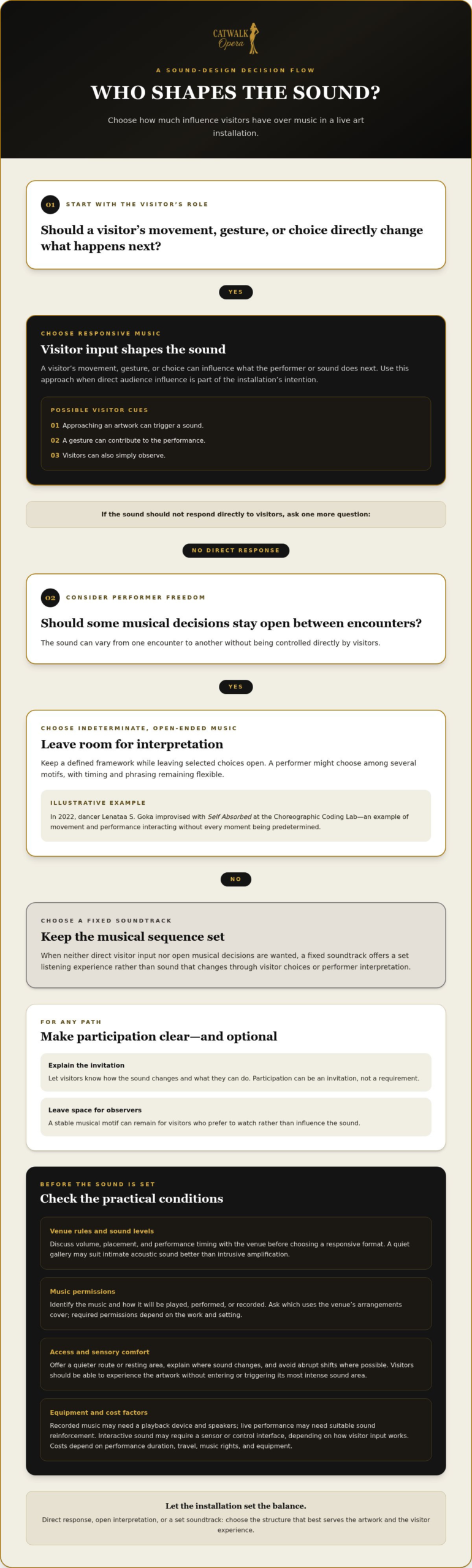
Indeterminate music leaves some decisions open, so a performance can change between encounters rather than follow a fixed sequence. Responsive music goes further: a visitor’s movement, gesture or choice can shape what happens next. When planning music to accompany a live art installation, decide whether participation should change the sound directly or simply influence the performer’s interpretation.
Consider a defined framework with open choices. A performer might select among several motifs as visitors move through the space, while leaving timing and phrasing flexible. In 2022, dancer Lenataa S. Goka improvised with Self Absorbed at the Choreographic Coding Lab. This example illustrates how movement and performance can interact without requiring every moment to be predetermined.
Start by identifying the installation’s purpose, then decide what role visitors should play. They might trigger a sound by approaching an artwork, contribute a gesture or simply observe. Make the invitation clear and optional. For example, a softly changing vocal phrase could respond to movement while a stable musical motif remains for visitors who prefer to watch.
What music licensing and copyright permissions are required for an art installation? Identify the music and how you plan to use it, then obtain the relevant permissions for playing, performing or recording it. Ask the venue which uses its arrangements cover, as permissions can depend on the work and setting.
How do venue noise limits and event rules affect music for an art installation? Venue rules affect volume, placement and performance timing. Discuss these constraints before choosing a responsive format. A quiet gallery, for example, may suit intimate acoustic sound better than intrusive amplification.
How much does it cost to hire musicians or license music for an art installation? Costs depend on factors such as performance duration, travel, music rights and equipment, and a quotation follows an inquiry. The relevant costs differ for a live performer and licensed recordings.
What equipment is needed for music in a live art installation? A recorded piece may need a playback device and speakers, while a live performance may need suitable sound reinforcement. An interactive setup may also require a sensor or control interface, depending on how visitor input changes the sound.
How can music accommodate accessibility and sensory sensitivities in an installation? Offer a quieter route or resting area, explain where the sound changes, and avoid abrupt shifts where possible. Visitors should be able to experience the artwork without triggering or entering its most intense sound area.
Matching Music to Installation Themes and Atmosphere
Begin with the installation’s central idea, then identify the feeling visitors should carry through it. In a work about migration, a gradual shift between musical textures might suggest changing landscapes. For a sculpture focused on stillness, sparse notes and generous pauses can leave room for close observation. Music to accompany a live art installation should interpret the artwork, not compete with its visual presence.
Next, consider the materials, palette and movement in the space. Reflective metal might invite delicate, bright tones; woven textiles could suggest softer, sustained sounds. A fashion installation with sculptural silhouettes may call for a more dramatic musical contour. Translate these visual cues into choices about timbre, pace, dynamics and silence, rather than selecting music by genre alone.
Set the emotional direction before choosing specific pieces. For a contemplative mood, avoid abrupt changes that pull visitors away from detailed artworks. In a playful installation, a recurring motif can make moving through the room feel exploratory. For example, a gentle phrase could return in altered form beside each object, creating continuity without making every encounter identical.
Then test the proposed music in the actual space. A passage that feels intimate in a planning room may seem imposing beside delicate works. Walk the visitor route while listening, and note where the sound draws attention, obscures conversation or creates a useful pause. Adjust the arrangement to suit the event’s purpose: a cultural statement may need a distinct opening, while a quiet exhibition may call for restrained accompaniment.
Finally, agree on a concise curatorial brief with the artist and sound team. Define the artwork’s theme, intended atmosphere, visitor journey and moments that require silence. Use those decisions to assess each musical choice. A tailored score can echo a visual rhythm, while a carefully selected existing piece may better preserve the work’s restraint.
Should you use live musicians, recorded music, or ambient sound for an art installation?
Choose the format that best supports the artwork’s relationship with time and visitors. A live performer brings a visible human presence; recorded music offers a consistent sequence; ambient sound can establish an atmosphere without drawing attention to a melody. A portrait installation, for example, might use a live voice for a scheduled opening, then quieter sound during independent viewing.
Live musicians suit installations where gesture, breath or spontaneous interpretation is part of the experience. A performer can respond to the room’s energy and create a distinct sense of occasion. In a fashion-focused installation, a vocalist’s presence can connect the visual composition with the event’s ceremonial opening. This format works best when performance itself is part of the artwork, not just a soundtrack added around it.
Recorded music works well when sound needs to remain consistent throughout an exhibition day. A carefully edited sequence can align with visitor circulation, repeat predictably and preserve a particular musical detail. In a gallery with several viewing zones, separate tracks can create transitions between works. Consider repetition carefully: a short loop may feel elegant at first, then become distracting during a longer visit.
Ambient sound suits spaces where tone matters more than a recognisable composition. Field recordings of wind, distant city traffic or water can suggest a place without imposing a strong narrative. For a work about a landscape, a restrained soundscape may extend its atmosphere while leaving visitors free to interpret the images. Keep the sound’s role clear: atmosphere should not obscure dialogue or other works.
Match the format to the installation’s duration, visitor movement and curatorial intent. Should the sound change, repeat or remain subtle? A hybrid arrangement can combine a live performance at a defined moment with recorded or ambient sound during general viewing. This creates a memorable focal point without requiring continuous live music. The strongest choice serves the installation’s structure and keeps its visual language central.
Planning Sound and Volume in Exhibition Spaces
Start with a floor plan showing artworks, entrances, seating and visitor routes. Mark where sound should begin, fade or remain absent. In a narrow gallery, a speaker aimed across a sculpture may create a focused listening point. In an open hall, placing sound near the installation can help prevent it from spilling into neighbouring exhibits.
Consider the room’s surfaces before choosing speaker positions. Stone, glass and bare walls can reflect sound, while curtains and upholstered furniture absorb it. A spoken passage beside a glass partition may become difficult to understand because of reflections. Test a short excerpt in the intended location, then move or redirect the speaker until the sound feels distinct.
Set a listening level that serves the artwork and visitor route. Begin at a restrained volume, then walk through each viewing area and listen from different distances. A quiet soundscape beside a detailed painting, for example, should not mask conversation or draw attention away from the image. Keep an unobstructed, quieter area where visitors can pause outside the sound field.
Coordinate sound checks with the venue’s operating rules and event schedule. Ask the venue team about permitted sound levels, quiet periods and neighbouring activities. A rehearsal in an empty gallery may sound different once visitors arrive and conversations begin. Test again during setup, and agree who can adjust playback or amplification during the event.
For a live performance, place the performer where sightlines, artwork and visitor movement work together. A vocalist positioned at a gallery threshold can create a clear arrival moment without blocking access. If you want a live vocal element shaped around the occasion, plan a tailored vocal opening that complements the installation’s visual composition.
Catwalk Opera: Luxury Opening Moment
Catwalk Opera’s Luxury Opening Moment can give an art installation a refined live vocal introduction, creating a focal point before visitors explore the work. The 10-12-minute performance suits an opening where music should make a distinct impression without continuing throughout the exhibition. Its curated presentation can complement the occasion’s atmosphere and visual design, making it a considered choice for a luxury brand activation, gallery opening or private event.
For a more sustained, fashion-led performance, the Signature Fashion Opera Experience may be a closer fit. A Private Royal Recital offers an intimate option for an exclusive gathering. Share your installation’s theme and event objective with Catwalk Opera to discuss the right format.
Shape the Next Creative Decision
Let sound become part of the installation’s curatorial voice. As you develop the concept, decide what visitors should notice, feel or remember, then give the musical element a distinct role. Music to accompany a live art installation can be more than atmosphere: it can mark a transition, frame a first encounter or lend a visual idea a human presence. The strongest direction feels inseparable from the work, rather than added at the final planning stage.
For a live vocal presence shaped around an event’s aesthetic, Catwalk Opera can help you consider a performance direction suited to your plans. Contact Catwalk Opera to discuss your installation and explore how a carefully curated musical moment could support its artistic identity. Your next creative decision can give the installation a more resonant beginning.
Frequently Asked Questions
What music works best for a live art installation?
The best choice supports the work’s meaning without distracting from it. For an installation built around written statements, instrumental sound can keep attention on reading; for a silent, sculptural work, a brief vocal phrase may add a human presence. Consider visitors’ pace and whether they need to hear one another. Test a short excerpt alongside the artwork before settling on a direction.
What are examples of live art installations with music or sound art?
Cave of Sounds is one example of a sound-art project, shared in progress at Music Hackspace in 2013 and presented at Athens Science Festival in 2018. It was exhibited at the Leonardo da Vinci Museum of Science and Technology in Milan until 22 October 2023. Another example is Post Truth and Beaty, installed at the We Are Robots festival in 2017. These examples show sound art appearing in varied cultural settings.