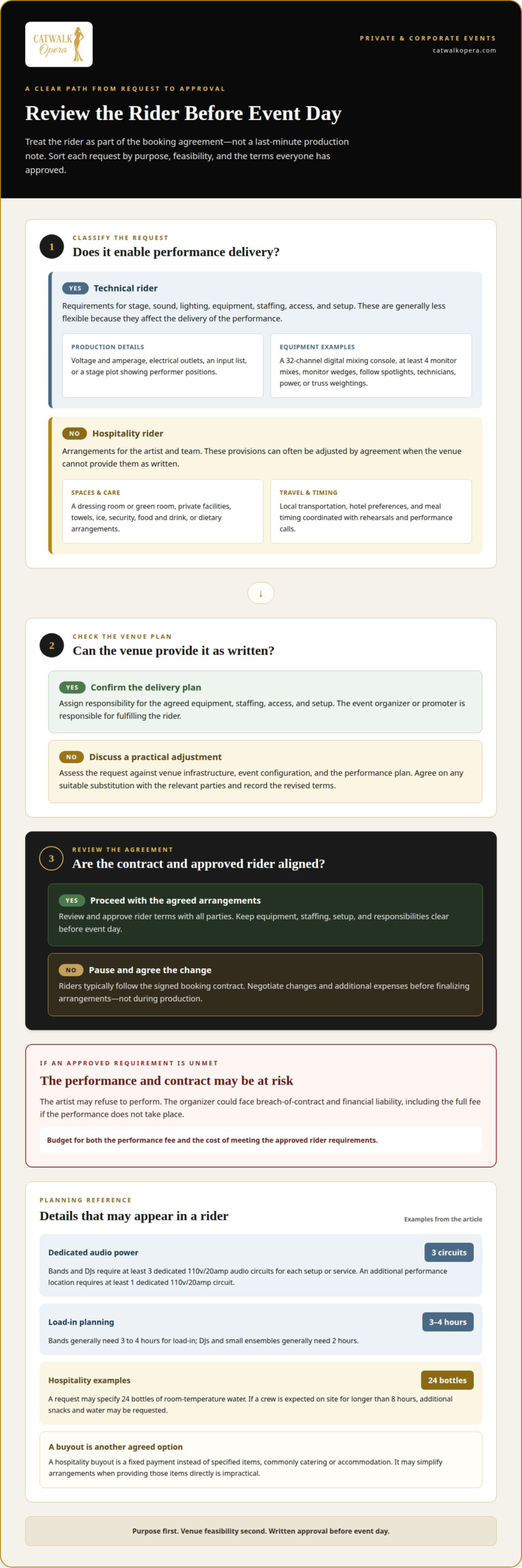
A rider should be treated as part of the booking agreement, not as a last-minute production note. Entertainment rider requirements for private events typically cover two areas: technical needs for the performance and hospitality arrangements for the artist and team. Since a rider may arrive after the booking contract is signed, the organizer and performer should review its terms and agree on any necessary adjustments before event day.
You may know that sound, staging, access, and hospitality shape a performance. The challenge is deciding which requests are essential and which can be adapted to the venue and event. This guide explains how to assess technical and hospitality riders, evaluate unusual requests against practical limits, and clarify responsibilities.
From private celebrations and luxury galas to corporate gatherings, thoughtful planning brings performance requirements into harmony with the setting, schedule, and atmosphere you want to create.
Key Takeaways
- Review rider terms alongside the booking agreement and resolve practical adjustments well before event day.
- Separate performance-critical technical requirements from hospitality preferences to focus negotiations where flexibility is greatest.
- Assess unusual requests by their purpose, feasibility, and effect on the performance rather than judging them at face value.
- Adapt arrangements to the venue, event flow, and audience so the performance feels considered in both private and corporate settings.
Can unusual or excessive rider requests be refused?
Yes. You can negotiate or decline a request before approving the rider, but first assess its purpose and the contract terms. Sound, lighting, and venue capacity can determine what is practical.
Technical Equipment and Setup Specifications
Technical specifications define the stage, sound, lighting, equipment, staffing, and access a performance needs. They matter because overlooked details can disrupt sound checks and event timing. A rider can specify a 32-channel digital mixing console, at least 4 monitor mixes, and sound-check time. Monitor wedges, follow spotlights, technicians, power, and truss weightings may also appear. For destination fly-ins, venues often supply more backline equipment. Bands generally need three to four hours for load-in; DJs and small ensembles generally need two.
Match each request to the act and event configuration. For example, bands and DJs require at least 3 dedicated 110v/20amp audio circuits for each setup or service. An additional performance location, such as a ceremony space, requires at least 1 dedicated 110v/20amp circuit. Cold sparklers or additional lighting may require extra electrical capacity.
Contract Terms and Rider Responsibilities
The contract and approved rider govern compliance, substitutions, and responsibility for agreed requirements. Riders typically follow the signed booking contract, so all parties should review and approve them. Negotiate changes and additional expenses before finalizing arrangements. The event organizer or promoter is responsible for fulfilling the rider, including providing agreed equipment, staffing, and setup.
Budget for both the performance fee and the cost of meeting rider requirements. If an approved requirement is unmet on event day, the artist may refuse to perform, and the organizer could face breach-of-contract and financial liability, including the full fee if the performance does not take place.
Requests that appear excessive deserve scrutiny, not automatic rejection. A 50 amp generator can suit the stated band and DJ power needs, while a separate lighting circuit may be necessary for added effects. Compare each item with the event plan, venue infrastructure, and agreed contract terms; adjust the rider with the relevant parties before production is set.
What’s the difference between a technical rider and a hospitality rider?
An entertainment rider has two distinct sections: technical requirements and hospitality requests. Understanding entertainment rider requirements for private events starts with separating what enables the performance from what supports the artist and team.
Technical and Hospitality Rider Sections
A technical rider describes the equipment and arrangements needed to deliver a performance; a hospitality rider covers provisions for the artist and team. This distinction directs production questions to the right people and keeps discussions focused on relevant needs.
Technical details may include voltage, amperage, electrical outlets, an input list, or a stage plot showing performers’ positions. A stage plot clarifies the performance-space layout, while an input list helps production staff plan the audio setup. Together, these details turn performance requirements into a practical venue plan.
Artist Amenities and Hospitality Requests
A hospitality rider can address food and drink, towels, local transportation, hotel preferences, security, and private facilities. A request for 24 bottles of room-temperature water is one example of a specific provision. Clear wording helps you coordinate the host, caterer, venue, and artist without relying on assumptions.
Consider how the schedule affects hospitality. If a crew is expected on site for longer than 8 hours, the rider may request additional snacks and water. Dietary requests can be arranged by the organizer or through a caterer, with timing aligned to the event programme.
Review each section against the venue’s existing arrangements and production schedule. Technical requirements are generally less flexible because they affect performance delivery; hospitality provisions can often be adjusted by agreement. If an item cannot be provided as written, discuss a suitable substitution and record the revised terms. This keeps entertainment rider requirements for private events clear to everyone responsible for delivery.
A hospitality buyout is an agreed fixed payment instead of specified items, commonly catering or accommodation. It may simplify arrangements when providing those items directly is impractical. If a live performance would complement your event’s aesthetic, explore bespoke live performance as a creative option.
Dressing rooms, catering, accommodation, and transportation
Hospitality planning connects private backstage arrangements with the artist’s itinerary and event schedule. Clear assignments help you coordinate these details discreetly.
Backstage Spaces and Security
A dressing room or green room gives the artist a private place to prepare, while agreed access arrangements support discretion. These details matter when guest areas and backstage routes intersect.
Specify the room’s location, who may enter, and which amenities are needed. For example, a hospitality rider may request towels, ice, private facilities, or security around backstage areas. Give the venue team a clear point of contact so access and preparation can be coordinated without disrupting guest movement or the schedule.
Catering, Accommodation, and Transportation
These arrangements cover the artist’s meals, dietary needs, hotel preferences, and local transport. Planning them together helps align arrival, preparation, and performance with the event itinerary.
Share dietary requests with the caterer and coordinate meal timing with rehearsals and performance calls. Assign responsibility for hotel reservations and transport, including the pickup point and destination. For an international engagement, coordinate travel and accommodation with the artist’s itinerary and venue schedule, making each handoff clear to the host and event team.
Costs of Common Rider Requests
Costs for sound, lighting, meals, and transportation depend on the venue’s existing provisions, production requirements, location, and hospitality scope. Consider these factors when identifying which budget lines need attention.
Performance pricing is provided after a quote request and depends on the event. Relevant factors include production needs, travel, and hospitality selections. Compare the venue’s existing facilities with the requested arrangements, then account for any additional staffing or travel. This gives you a considered view of the budget without treating every rider as the same package.
Adapting requirements for private and corporate events
Adapt the rider to the event objective, venue, and production design. A private dinner and a corporate runway presentation call for different arrangements.
Event-Specific Requirement Adjustments
Event-specific adjustments align the performer’s requirements with the gathering’s format, audience, and schedule. This preserves the artistic impact without carrying unnecessary production elements into the plan.
For a private celebration in a residence, consider the room layout, acoustics, guest movement, and available equipment. A corporate event may need a defined stage position, lighting cues, and coordination with the production schedule. In either setting, document agreed changes to equipment, staffing, and hospitality in the rider. Productions typically specify how many local crew and technical staff the venue should provide.
Venue Rules and Local Requirements
Venue policies and applicable safety, accessibility, and local permit conditions can affect where and how a performance is staged. The rider must work within the event space’s operating requirements.
For example, a venue’s access route may shape equipment load-in, while stage placement may affect guest circulation and accessible viewing. Local permit conditions can also influence production arrangements, particularly for outdoor or public-facing events. Treat these as planning constraints, not assumptions: identify the venue’s requirements and include relevant adjustments in the event document.
Before approving a revised rider, compare each request with the actual space, schedule, and production plan. Confirm the minimum equipment and staffing needed for the performance, then separate essentials from adaptable elements. If catering is included, align dietary requests with the agreed hospitality arrangements and meal schedule.
For an intimate gathering where refined artistry should feel personal to the setting, consider a Private Royal Recital. Shape the performance around your event’s atmosphere and the practical requirements of the venue.
Catwalk Opera: Luxury Opening Moment
Catwalk Opera offers a Luxury Opening Moment for planners seeking a refined live performance to introduce an evening. The performance can provide a concise opening that suits the event’s atmosphere and visual direction.
For a fashion-led production, the Signature Fashion Opera Experience brings operatic artistry into a high-fashion presentation. A Private Royal Recital offers an intimate performance setting for an exclusive gathering. Consider each format alongside the venue, event flow, and production plan.
As you shape the rider, align the performance setting with your event objective and practical arrangements. Contact Catwalk Opera to discuss your event, or visit catwalkopera.com.
Shape the Performance Around Your Event
The final planning decision is not simply which requests to accept, but how the performance should feel within the room and programme, and what you want guests to remember. Use entertainment rider requirements for private events to connect practical arrangements with your creative intention, giving each production choice a clear purpose.
Before confirming your entertainment, define the moment you want to create: an elegant arrival, a striking transition, or an intimate exchange with guests. That direction gives the artist and event team a shared reference point for shaping the performance.
Explore Catwalk Opera’s performance formats to consider which artistic approach best suits your vision. Let that choice bring a distinctive final note to your event.
Frequently Asked Questions
How Should Event Organizers Review and Negotiate Riders?
Compare every request with the event’s purpose, venue plan, and available production resources. Separate essential performance conditions from preferences, then assign responsibility for each accepted item. If a request conflicts with the floor plan, propose a workable alternative and document the agreed revision. This keeps negotiations focused on practical decisions rather than treating every clause as equally critical.
What does a rider actually include?
A rider may include details for coordinating the artist’s appearance with the event programme. Beyond equipment and hospitality, consider how call times, performance locations, venue access, and transitions fit together. For example, if an event includes a ceremony and reception in separate spaces, make the artist’s movement between them clear in the schedule. The final document should reflect the agreed event plan.
What happens if a rider requirement is not met on the day?
Depending on the unmet requirement and the contract, the performance may be affected or may not proceed. If a shortfall arises, identify it immediately, inform the artist’s representative and venue lead, and discuss an acceptable alternative before the scheduled appearance. Record the issue and decision so everyone has a clear account of what changed and how the event team responded.
What is a ‘buyout’ in the context of a hospitality rider?
A buyout replaces agreed hospitality provisions with a payment instead of supplying those items directly. Its practical value depends on clearly defining what it covers. For example, if it applies to accommodation, specify that separately from meals or local transport. The organizer and artist should record the arrangement so the event team can plan the remaining hospitality without assumptions.
What is a rider in an artist contract?
A rider is a document attached to an artist-booking agreement that records agreed requirements for delivering the engagement. For planning purposes, treat it as an operational reference linked to the booking, not as a substitute for the event schedule. If the schedule changes, compare it with the rider and communicate any agreed revisions to the people responsible for carrying them out.
What is an Entertainment Rider?
An Entertainment Rider is an event-specific document that sets out an artist’s requirements for a booked performance. It translates the agreed engagement into practical arrangements for the host, venue, and production team. It is most useful when each item has an owner and fits the actual programme. This shared reference can reduce confusion as the event moves from planning to delivery.