Considerate international event entertainment starts with cultural context and thoughtful placement in the programme. Cultural considerations for international event entertainment include scheduling around religious observances and local customs, representing traditions with care, and making performances accessible across languages. A striking performance can enrich an event, but its timing and meaning matter as much as its visual impact.
An international gathering calls for more than a polished running order. Careful preparation helps guests feel welcome without reducing distinct cultures to decoration or spectacle. This guide covers staff preparation, language support, visual communication and interpretation, then explores how to schedule cultural performances respectfully. It also considers how to shape entertainment around your event’s atmosphere and audience, so each moment feels cohesive and considered.
Key Takeaways
- Prepare staff to recognize cultural differences, respond respectfully to concerns, and help guests feel included throughout the event.
- Use clear language, thoughtful visual communication, and multilingual support to make schedules, directions, and key messages easier to follow.
- Choose interpretation and translated materials to suit the programme, helping international guests participate with confidence.
- Schedule cultural performances with care: consider observances and local customs, and represent traditions respectfully within the event’s creative vision.
1. Cultural sensitivity training for event staff
Before doors open, brief staff on the audience’s cultural backgrounds, communication styles and event protocols. Use practical scenarios rather than abstract reminders: a guest may prefer a greeting without a handshake or need a quiet moment before joining a reception. Train hosts and volunteers to listen without assumptions, ask politely when uncertain and direct concerns to a designated lead. These steps help staff respond discreetly at a corporate gala, runway presentation or private gathering.
Prepare staff to handle misunderstandings calmly. Rehearse how to acknowledge a concern, avoid defensiveness and involve the event lead when needed. Give team members clear authority to make reasonable adjustments, such as offering a quieter place to speak or guiding a guest to the right area. A named point of contact also prevents attendees from having to repeat a sensitive concern.
Make feedback accessible and specific. Offer multilingual surveys, anonymous response options, and small focus groups with varied representation. Ask attendees whether event directions were clear, whether they felt welcome, and which moments affected their engagement. Avoid questions that ask one guest to speak for an entire culture. A prompt such as “What could make the welcome more comfortable?” invites useful detail without making identity the subject.
Give visual communication the same care. Use clear maps, schedules and signs in plain language, then check that colours, symbols, flowers and decorative motifs carry no unintended meaning for the audience. A floral centrepiece chosen for its elegance, for example, may have cultural associations worth researching before it appears throughout the room. Pair essential instructions with recognizable icons, but never rely on imagery alone for safety or access information.
Make inclusion visible in the event’s practical choices. Ask about dietary requirements and label food clearly, including vegetarian options and allergy information. Consider whether the schedule allows time for prayer and whether seating or networking arrangements suit the guests attending. Afterward, compare feedback, participation and event objectives, then use the findings to refine staff briefings and future planning.
2. Multilingual support and visual communication
Choose a shared language for essential announcements and keep each message concise. English is often used as a common language at international gatherings, but translated key details can help guests follow along. Welcome attendees clearly, explain where the programme begins and avoid local slang. Ask speakers to use familiar terms and pause between ideas, so guests with different language backgrounds can follow the programme.
Communication styles affect how spoken messages are received. Some cultures value direct wording, while others rely more on context and subtlety. “Please take your seats now” may sound efficient to some guests and abrupt to others. Pair clear instructions with courteous phrasing, and brief presenters on respectful language. Active listening matters too: allow time for a response instead of treating silence as agreement.
Non-verbal communication calls for similar sensitivity. An Irish handshake and a Japanese bow illustrate how greetings differ, while direct eye contact may signal respect in one setting and feel confrontational in another. Avoid making one gesture the expected form of welcome. Train greeters to use a warm verbal greeting, observe each guest’s cues and allow comfortable personal space. This small adjustment can help prevent an unintended misunderstanding at a formal arrival.
Use visual communication to make practical details clear across language preferences. A venue map can pair room names with simple icons; a schedule can distinguish a reception, presentation and catering through labels and consistent design. Add plain-language captions to diagrams rather than relying on colour alone. Review symbols and imagery for local meanings before printing, especially on invitations, stage screens and directional signs. Thoughtful visual design can support cultural sensitivity without reducing traditions to decoration.
For a programme where performance and visual identity must communicate across languages, consider international performance curation as part of the event’s creative planning.
3. Multilingual materials and real-time interpretation
For international event entertainment, identify and follow the destination’s requirements for permits and licences, safety, data protection and privacy. Map these requirements to the destination and event format during early planning. This helps coordinate artist travel, venue arrangements and attendee information, while keeping local customs in view. Include translation and language access in the same planning schedule.
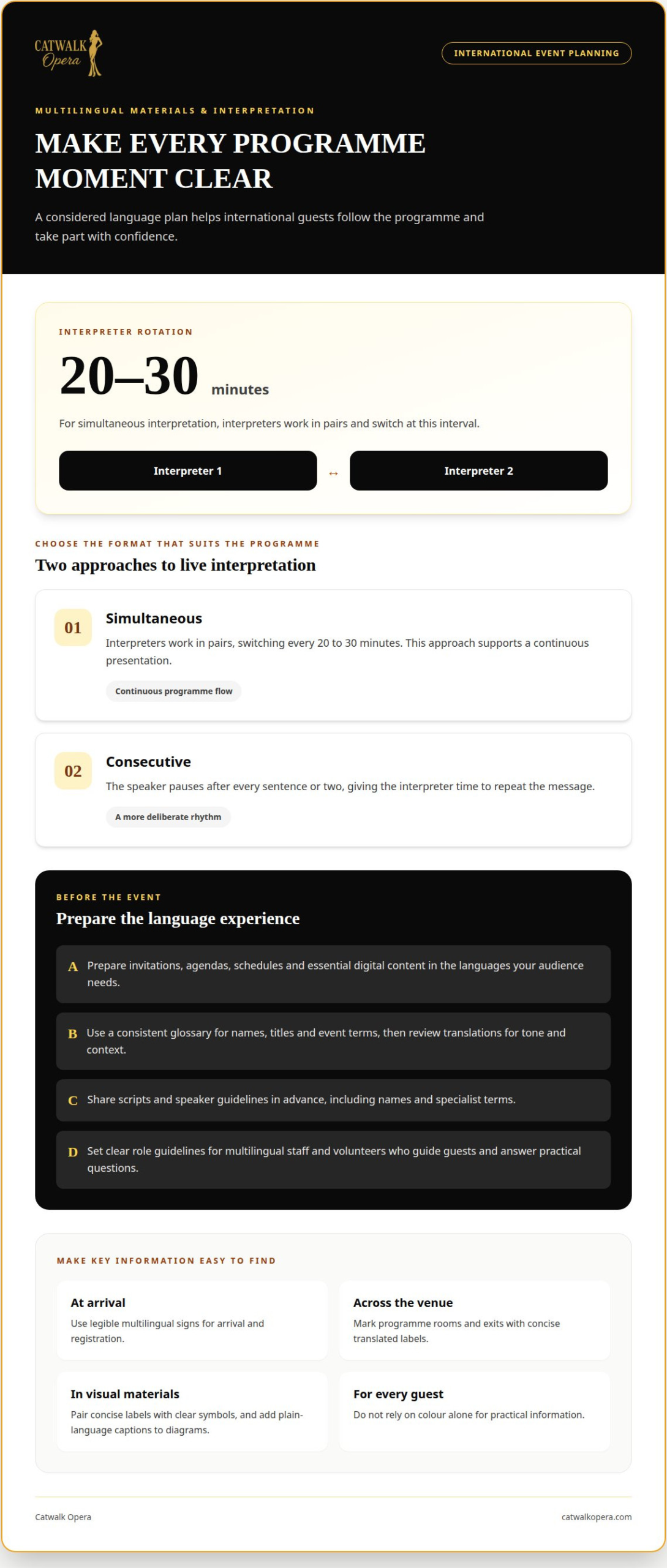
Prepare invitations, agendas, schedules and essential digital content in the languages your audience needs. Use a consistent glossary for names, titles and event terms, then review translations for tone and context. A formal welcome, for example, may need different phrasing from a social invitation. Multilingual staff or volunteers can guide guests, explain wayfinding and answer practical questions. Clear role guidelines also help prevent conflicting directions.
For live presentations, choose interpretation that suits the programme. Simultaneous interpreters work in pairs and switch every 20 to 30 minutes. In consecutive interpretation, the speaker pauses after every sentence or two, allowing the interpreter to repeat the message. The first approach supports a continuous presentation; the second creates a more deliberate rhythm. Share scripts and speaker guidelines in advance, including names and specialist terms, to reduce language barriers.
Make multilingual signage legible at key points, including arrival, registration, programme rooms and exits. Pair concise translated labels with clear symbols, and keep wording consistent across signs and printed schedules. Review symbols and images for unintended meanings in the cultures represented. Apply the same care to inclusive themes: celebrate cultural differences without presenting one tradition as the event’s standard. If a programme includes cultural material, invite knowledgeable representatives to guide its context and presentation. Thoughtful translation, interpretation and visual choices help guests engage while preserving the event’s intended elegance.
Requirements vary by destination and event format and may include permits, licences, safety rules, and data-protection and privacy requirements. Identify them early in planning.
4. Cultural rituals and performances in event schedules
Place cultural performances with intention, not simply between programme segments. During planning, map religious observances, national holidays and local customs against the event schedule. A prayer break or customary toast may shape when guests can comfortably participate. Communication with local cultural organisations can clarify which practices are appropriate and how to introduce them respectfully.
Preferences for music, dance, humour and performance vary between communities and individuals. A style welcomed at one gathering may feel unfamiliar or unsuitable at another, so avoid treating cultural diversity as a single taste. Ask knowledgeable representatives about context, tone and audience expectations, then curate experiences that celebrate traditions without turning them into spectacle.
Religious and cultural considerations may affect music, dress, movement, gender interactions and the timing of entertainment. For example, consider prayer times and major religious holidays when scheduling performances. Review proposed content and staging with people whose traditions are represented, especially when ceremonies or customary toasts are part of the programme.
To avoid appropriation and stereotypes, invite members of the represented community to guide or present their own cultural material. Explain the history and meaning of an art form accurately, and avoid using costumes, symbols or choreography as decorative shorthand. A cultural performance should give its tradition context and dignity, not reduce it to a visual motif.
Brief performers on the event objective, audience profile, schedule, presentation style and any sensitivities already identified. Discuss how the performance will be introduced and whether its history or meaning needs explanation. Consider the performer’s knowledge of the tradition, event experience and ability to communicate clearly with your team.
Common risks include inaccurate representation, exclusionary humour, insensitive imagery, or entertainment scheduled during an observance. International performers and culturally appropriate entertainment have no single typical cost; pricing depends on the performance, production needs, travel, and event requirements, with a quote provided after an inquiry.
For a fashion-led programme seeking a carefully curated musical centrepiece, explore the Signature Fashion Opera Experience as one possible fit for the event’s creative vision.
Catwalk Opera: Luxury Opening Moment
Catwalk Opera offers a refined performance option when your event calls for a distinctive musical opening. The Luxury Opening Moment lasts between 3 and 5 minutes, creating a concise focal point for a gala, fashion presentation, or corporate gathering.
Its artistic direction can complement your event’s visual identity and atmosphere, creating an elegant transition into the programme. For a more developed fashion-led performance, the Signature Fashion Opera Experience offers another format; the Private Royal Recital suits an intimate, exclusive setting. Choose the experience that supports your event objective and fits naturally within its cultural context.
If a live soprano performance suits your programme, contact Catwalk Opera or visit catwalkopera.com to explore the possibilities.
Shape an Event Guests Can Enter With Confidence
Let cultural considerations for international event entertainment guide your next creative decision, from the mood you want to establish to the impression guests carry forward. A distinctive artistic moment can express your event’s identity while feeling thoughtfully suited to its audience. Start with the atmosphere you want to create, then shape the performance around that intention.
Catwalk Opera brings live soprano performance and operatic artistry to fashion-forward event settings. A curated vocal moment can complement your visual direction and give the programme a graceful, cinematic focal point.
Explore a performance concept for your event and shape an occasion that feels welcoming, considered, and memorable.
Frequently Asked Questions
What cultural factors should be considered when planning entertainment for an international event?
Consider how local expectations may shape event timing, dress, introductions and decision-making. Some groups prefer collective input, while others follow a more hierarchical process; this can affect approvals and performer briefings. Punctuality norms can differ too, so build flexibility into transitions rather than treating every schedule change as discourtesy. Gift-giving customs also vary, making a considered gesture more appropriate than an assumption.
How can event organizers research local customs, etiquette, and audience expectations?
Research the event location and the communities represented, distinguishing broad customs from individual preferences. Ask local hosts how introductions, dress expectations and decision-making usually work for this specific gathering. Compare those insights with destination-specific cultural resources, and note where practices vary by region or occasion. This helps prevent a generalisation from becoming an inflexible rule for every guest.
How should entertainment accommodate language differences and translation needs?
Plan language support for the performance as well as event logistics. Prepare accurate pronunciations for names and titles, and provide concise context for lyrics or references that may be unfamiliar to guests. If a performance includes humour or wordplay, explain its intent in programme notes rather than relying on literal translation. This preserves artistic nuance while helping attendees understand what they hear.
What accessibility and inclusion practices should international event entertainment follow?
Make participation optional and explain audience expectations before a performance begins. Guests should not be put on the spot to sing, dance, stand or respond in a particular way. If the programme includes audience interaction, make observing an equally welcome option. Clear advance notes about staging, sound and participation help guests decide how they would like to experience the moment.
How can organizers evaluate audience response and cultural appropriateness after an event?
Debrief with performers and cultural contributors while the programme is still fresh. Ask whether introductions represented the performance accurately, whether its context was handled respectfully and whether any creative choices felt out of place. Record specific revisions to scripts, programme notes or staging for future events. This gives collaborators a meaningful role in refining how their traditions are presented.