The strongest opera singer for a fashion show is styled to serve the collection’s mood, not simply to wear a beautiful gown. Choose the classic, colorful world of Madama Butterfly for a poised, cinematic entrance; for The Barber of Seville, let playful, irreverent details bring wit and movement to the runway.
Costume and music can transform a runway moment, but the distinction between operatic characters can shape its entire visual impression. Here, you’ll see how Butterfly’s elegance differs from the Barber’s spirited character, and how each direction can complement a collection without competing with it.
We will consider silhouette, colour, performance energy and the atmosphere you want guests to remember. The result is a clearer way to align vocal artistry and fashion direction, whether you are planning a refined couture presentation or a runway moment with a more mischievous edge.
Key Takeaways
- Align the singer’s costume and stage presence with the collection’s mood, from Butterfly’s classic elegance to the Barber’s playful irreverence.
- Shape the booking around your runway’s creative direction, event flow and performance requirements.
- Choose between a solo vocalist and an ensemble by considering the atmosphere and scale you want to create.
- Select repertoire for its emotional tone and how naturally it complements the designs and runway pacing.
3. How to hire an opera singer for a fashion show
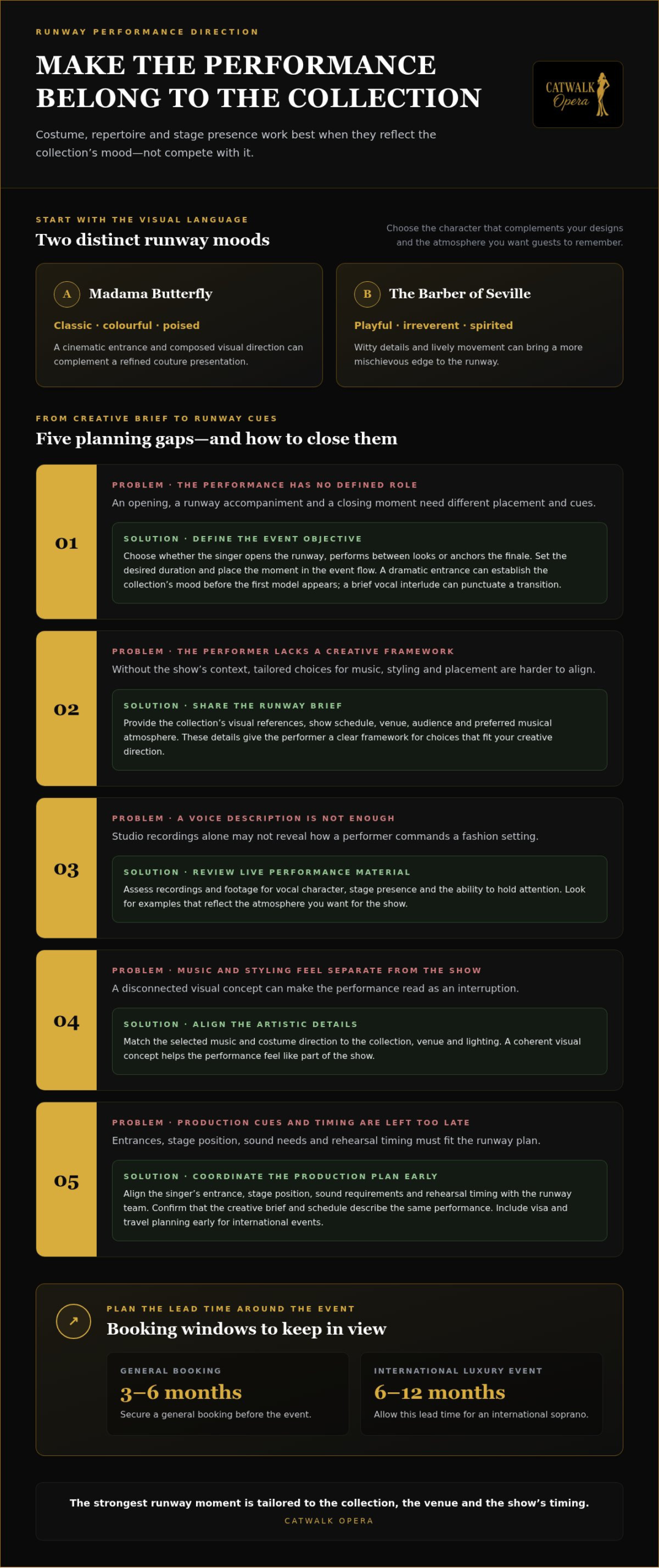
Begin with your event objective: an opening statement, a live runway accompaniment or a closing moment. That decision shapes the singer’s role, repertoire, styling and placement in the show. A dramatic entrance, for example, can establish a couture collection’s mood before the first model appears, while a brief vocal interlude can punctuate a transition.
Set the creative direction before approaching performers. Share the collection’s visual references, show schedule, venue, audience and preferred musical atmosphere. A designer inspired by Madama Butterfly might favour a poised, colourful presentation; a playful interpretation of The Barber of Seville could call for more irreverent styling. These references give the performer a clear framework for tailored choices.
- Define the performance brief. Specify whether the singer opens the runway, performs between looks, or anchors a finale. Include the desired duration and how the moment fits the event flow.
- Review live performance material. Assess recordings and footage for vocal character, stage presence and the ability to hold attention in a fashion setting. Look for examples that reflect the atmosphere you want.
- Discuss repertoire and styling. Match the selected music and costume direction to the collection, venue and lighting. A coherent visual concept helps the performance read as part of the show, not an interruption.
- Coordinate production details. Align the singer’s entrance, stage position, sound requirements and rehearsal timing with the runway team. Clear cues help models, music and vocals move together.
- Allow time for planning. Secure a general booking three to six months before the event. For international luxury events, allow a six-to-twelve-month lead time for an international soprano.
Before confirming, make sure the creative brief and schedule describe the same performance. A singer positioned at the opening needs different cues from one appearing during a finale. For an international event, include visa and travel planning early so arrangements align with the schedule.
4. Where to find opera singers for fashion events in the United States
For a United States runway, search artist portfolios, classical talent agencies and opera management networks for professional vocalists experienced in live performance. These channels can help identify singers whose repertoire and stage presence suit a fashion audience. Look for live footage, repertoire examples and experience in comparable event settings.
Use these routes to build a focused shortlist:
- Artist websites: Review each singer’s biography, performance clips, repertoire, and event experience. Look for footage that shows how the performer commands a stage, not only studio recordings.
- Classical talent agencies: Share your collection’s mood, event date, venue, and performance format. An agency can present artists whose profiles align with your brief.
- Opera management networks: Explore professional representation connected to opera companies and touring performers. Ask for examples of fashion, gala, or brand-event work in the artist’s portfolio.
- Conservatory alumni networks: Institutions such as Juilliard and the Curtis Institute of Music connect planners with classical music communities. Seek established performers with polished event experience, rather than treating student status as a substitute for runway credentials.
Compare candidates against the same criteria. A strong portfolio should demonstrate vocal quality, confident movement and a visual presence that complements designer styling. A singer suited to a dramatic couture entrance, for instance, may create a different effect from a performer chosen for a witty, character-led moment. Match the artist to the collection’s identity.
Geography also shapes your shortlist. A New York presentation may favour a performer familiar with the venue and production team, while a Los Angeles event may prioritise alignment with its brand concept and schedule. For international bookings, include travel and visa planning in the production conversation.
Before making a selection, share a concise brief and request relevant live examples. Assess each opera singer for fashion show suitability by considering repertoire, stagecraft, styling potential and fit with your event flow. These details reveal more than a voice description alone.
3. How to choose between a solo opera singer and an opera ensemble for a runway show
A solo vocalist creates a clear focal point: one voice, one presence and a concentrated emotional line. This can suit a runway opening where the first look and singer’s entrance establish the collection’s character. For a Madama Butterfly-inspired direction, a solo performance can preserve an intimate, composed atmosphere. An ensemble brings several voices together for a broader musical texture and a more theatrical impression.
Start with the event objective, then consider how each format shapes the runway:
- Choose a solo singer when one distinctive voice should lead the audience’s attention. A single performer can anchor an opening, a transition, or a finale without adding several vocal points to the visual composition.
- Choose an ensemble when the concept benefits from vocal contrast or a larger operatic presence. For example, a dramatic finale can feel more expansive with multiple singers, especially when the staging gives them room to interact.
- Match the format to the venue by considering the stage footprint, sightlines, and runway layout. A narrow catwalk may favour one performer, while a generous stage can accommodate a group more naturally.
- Coordinate the production plan around entrances, costume changes, sound balance, and cues. An ensemble requires the team to align several performers’ positions and timing with the models’ movement.
Budget and logistics matter, but let the creative effect lead the decision. An ensemble generally involves coordinating more performers, schedules and stage positions. A soloist keeps the visual focus singular, which can suit a minimalist collection or a sharply defined character. Neither format is automatically more compelling; the right choice depends on the designer’s intent and show design.
Before booking, map the performance onto the running order. If the music needs to carry one recognisable moment, choose a soloist. If the runway calls for a layered operatic scene, consider an ensemble. In either case, align the vocal format with the collection, venue and audience experience.
An individual singer’s profile can also inform the choice: Vittorio Grigolo released his self-titled solo CD in 2006. For either format, opera singers choosing audition or performance clothing are advised to prioritize a professional tone and good fit, using tailoring when needed, so their presentation suits the production.
4. What songs work well for an opera singer at a fashion show
Choose repertoire by matching each piece’s mood, language and musical shape to the collection. Puccini’s “O mio babbino caro” offers lyrical elegance for a romantic couture entrance. Bizet’s “Habanera” from Carmen brings a more playful, self-assured character. The right selection supports the designs rather than distracting from them.
Consider the runway’s pacing before settling on a complete aria. A sustained, lyrical passage can accompany a slow opening, while a lively excerpt may sharpen a finale. For a brief transition, choose a clearly shaped section that reaches a satisfying musical point. The singer’s entrance and exit should fit the models’ movement and the event flow.
Use these well-known works as creative starting points:
- “O mio babbino caro” from Gianni Schicchi: Puccini’s lyrical melody suits refined silhouettes and a romantic atmosphere.
- “Habanera” from Carmen: Bizet’s characterful aria can complement bold styling and a confident runway mood.
- “Una voce poco fa” from The Barber of Seville: Rossini’s playful energy works with witty, irreverent design choices.
- “Vissi d’arte” from Tosca: Puccini’s expressive writing can create a dramatic pause or a poised closing moment.
These examples are not a fixed playlist. Consider how each selection supports the designer’s references, whether they evoke Madama Butterfly, Carmen or a contemporary couture narrative. A tailored programme can pair classical opera with crossover repertoire, provided the transition feels intentional. Consider language, tempo, vocal character and the visual tone of the staging together.
Share your collection images, running order, and desired atmosphere when shaping the repertoire. To develop a tailored musical direction for your runway, explore bespoke fashion opera curation.
Catwalk Opera: Luxury Opening Moment
Led by internationally acclaimed luxury soprano Monika Spruch, Catwalk Opera’s Luxury Opening Moment brings live vocal artistry into the fashion presentation. Lasting between 3 and 5 minutes, it can establish the collection’s atmosphere before the first look appears. For a longer, more integrated runway concept, the Signature Fashion Opera Experience brings operatic performance into closer dialogue with the event’s creative direction.
Choose the Luxury Opening Moment for a concise, cinematic entrance; consider the Signature Fashion Opera Experience when the performance should form a more sustained part of the show. The Private Royal Recital offers an intimate performance for an exclusive audience.
Share your collection’s visual references and event objective with Catwalk Opera to shape a direction that complements your runway. Visit catwalkopera.com to discuss your fashion event.
Shape the Runway Moment You Want Guests to Remember
Translate the collection’s visual identity into a concise creative brief. Describe the atmosphere you want guests to feel, the role the performance should play and how the live moment should relate to the show’s overall design. This gives the artistic direction a clear purpose beyond simply adding music to the runway.
The right opera singer for a fashion show can become part of the collection’s cultural statement, bringing voice, costume and stage presence into a single composition. Consider what you want the audience to remember after the final look: elegance, surprise, theatrical wit or a distinctive blend. That intention can guide the details that make the performance feel uniquely connected to your event.
When you are ready to shape that creative direction, contact Catwalk Opera to discuss your show. Your runway can become a memorable meeting of fashion and operatic artistry.