A museum opening deserves more than background music. The right entertainment for a museum opening can create a distinctive atmosphere while keeping the collection at the heart of the occasion. Live performances, thoughtful talks and carefully timed artistic moments give guests different ways to engage, from a musical welcome to a deeper connection with the works on view. The best choice reflects the exhibition, venue and mood you want to establish.
An opening should feel memorable without competing with the art. This guide explores how to choose live entertainment, talks and performances that complement the museum’s identity, support the event’s flow and welcome guests with intention. Performance style, placement and timing all shape the experience, helping you create an opening that feels culturally resonant, visually considered and distinctly your own.
Key Takeaways
- Choose live performance that supports the art rather than competing with it, and place it thoughtfully within the event flow.
- Align the artistic style, volume and format with the exhibition’s theme, venue and guest audience.
- Interactive moments and talks can invite participation while preserving the museum’s atmosphere and the guests’ freedom to explore.
- Shape an opening around your event objective: Catwalk Opera’s Luxury Opening Moment offers a bespoke live performance for a distinctive welcome.
Live entertainment
Live performance can give a museum opening a distinct sense of occasion without drawing focus from the collection. Start by matching the artistic format to the event’s purpose, venue and guests.
Entertainment Costs
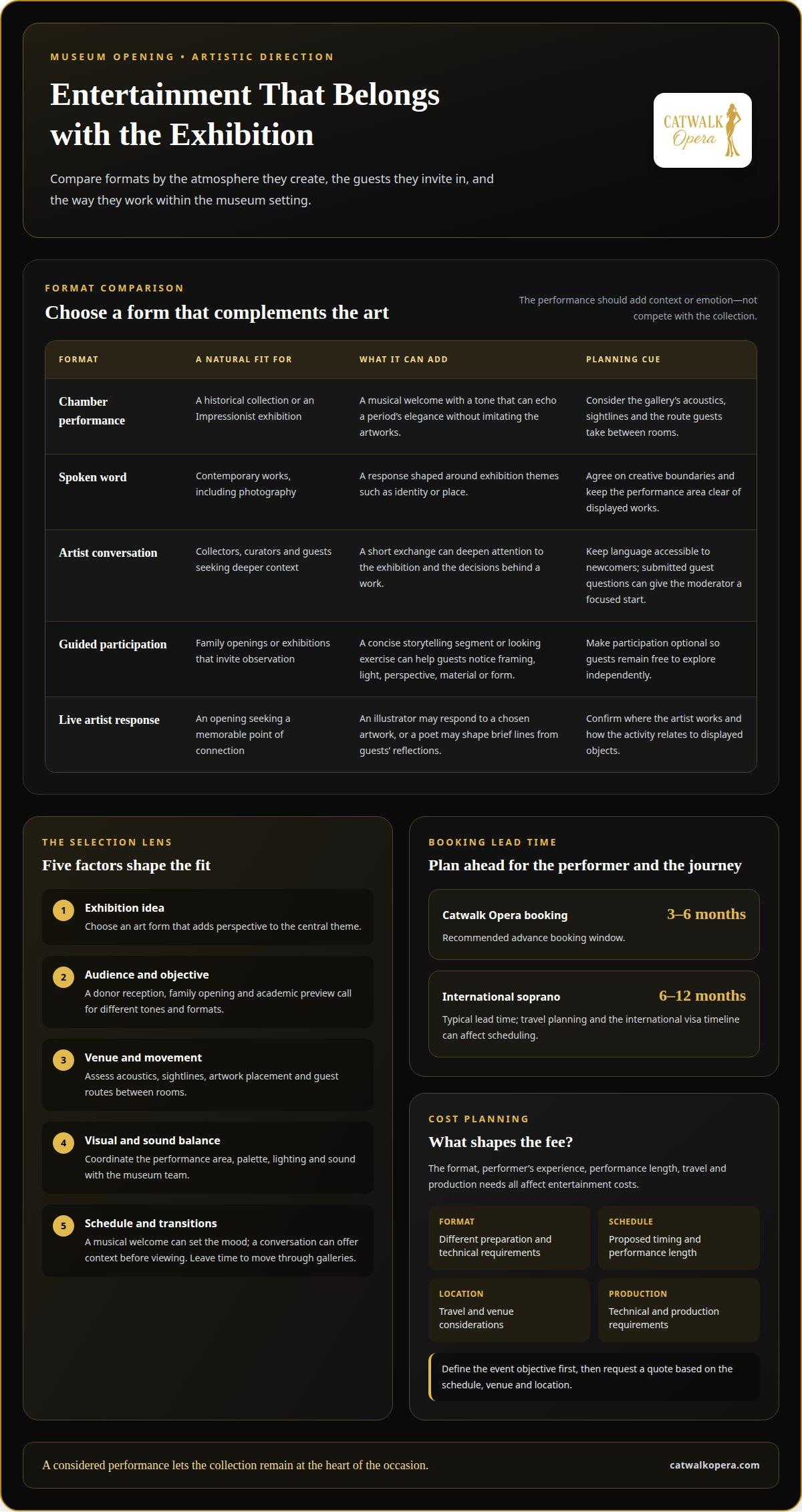
Entertainment costs depend on the format, performer’s experience, performance length, travel and production needs. A solo vocalist, instrumental ensemble and speaker each involve different preparation and technical requirements. Define the event’s objective first, then request a quote based on the proposed schedule, venue and location. The scope, travel and production needs shape the fee.
Theme and Audience Fit
Choose an artistic style that creates a meaningful connection to the exhibition. A classical performance may suit a historical collection, while spoken word could respond to contemporary works. Consider guests’ familiarity with the subject, the museum’s identity and the atmosphere you want to create. The performance should add context or emotion, not compete with the art.
Permit and noise requirements depend on the venue, location, amplification and use of outdoor space. Ask the museum’s event team to identify applicable approvals and sound limits, and include performers’ liability coverage details in planning documents.
For accessibility, provide clear routes, reserved seating with unobstructed sightlines and accessible program information. A talk can include captions, while a quieter area gives guests a place to pause. Share access arrangements with performers before finalizing the schedule.
Book early, especially for a sought-after artist or an international engagement. Catwalk Opera recommends securing bookings three to six months ahead; an international soprano typically requires six to twelve months. Travel planning and the international visa timeline can affect the schedule.
Build the reception schedule around arrivals, opening remarks, the performance and gallery exploration. Place a featured performance at a natural transition, such as after the welcome and before guests enter the galleries. Leave room to move between spaces, and coordinate sound checks with the museum’s event team.
Local options may include chamber musicians, spoken-word artists, historians or performers connected to the exhibition’s subject. The museum’s location, venue requirements and artistic direction shape which formats suit the occasion. Ask the event team which local performers and vendors are familiar with the building’s access and sound requirements.
How do you choose entertainment that fits a museum’s theme and audience?
Begin with the exhibition’s central idea, then choose an art form that adds perspective. For an Impressionist exhibition, a chamber performance might echo the period’s elegance without imitating specific artworks. A contemporary photography opening could feature spoken word shaped around themes of identity or place. This connection makes the performance feel considered, rather than added simply to fill the program.
Next, define the audience and event objective. A donor reception calls for a different tone from a family opening or academic preview. For families, a concise, participatory storytelling segment may welcome younger guests. For collectors and curators, a short artist conversation can deepen attention to the exhibition. Match vocabulary, pacing and formality to the guests who will attend.
Study the venue as carefully as the theme. A performance in a grand entrance can create a ceremonial arrival, while an intimate gallery suits a restrained recital. Consider sightlines, acoustics, artwork placement and the route guests take between rooms. A performer beside a busy entrance may be difficult to hear. In a smaller gallery, an unamplified voice may feel more immediate.
Then assess how the performance will look and sound alongside the exhibition. A sculptural costume, dramatic lighting or amplified music can alter a gallery’s visual balance. Agree on a restrained palette and a clear performance area with the museum’s event team. For example, a single spotlight can define a focal moment without washing out nearby works or distracting from them.
Finally, connect the format to the schedule. A brief musical welcome can establish the opening mood, while a moderated conversation gives guests context before viewing. Keep transitions clear and leave time for people to move through the galleries. Ask the curator to identify themes performers should respect, then share that guidance during creative planning. The result should feel like a cultural statement, not an interruption.
What interactive entertainment can engage guests at a museum opening?
Interactive entertainment gives guests a role beyond observing while keeping the collection central. At a photography opening, a curator-led looking exercise can invite guests to notice framing, light and perspective. At a sculpture exhibition, a short guided discussion can focus attention on material and form. Keep each invitation optional, so guests can participate or continue exploring independently.
A live artist can create a memorable point of connection. For example, an illustrator might respond to a chosen artwork through a live drawing, with the finished piece displayed nearby. A poet could compose brief lines inspired by guests’ reflections on an exhibition theme. Agree on the creative boundaries with the museum, including where the artist works and how the activity relates to displayed objects.
Use conversation to bring context into the room. A moderated exchange between a curator and an artist can explore the decisions behind a particular work. Guests might submit questions on arrival, giving the moderator a focused starting point. Keep the discussion accessible to newcomers by explaining terms and references clearly, rather than relying on specialist language.
For a more sensory format, consider a musical performance that responds to the exhibition’s mood. A short passage performed in a designated space can invite guests to pause and listen before entering the galleries. Provide a clear viewing area, preserve accessible routes and keep the experience distinct from quiet spaces. The contrast between sound and stillness can shape a thoughtful transition.
Plan participation around guest comfort and the museum’s setting. Offer simple instructions at each activity, provide seating for a conversation and make alternatives available for guests who prefer not to speak publicly. A tactile demonstration should use designated materials rather than collection objects. These choices invite engagement while protecting artworks and respecting different ways of participating.
Finally, coordinate each interactive moment with the reception’s flow. Place a guided conversation after welcoming remarks, or schedule live creation near a natural gathering point. Keep gallery access clear during activities, and brief hosts on how to direct guests. A well-placed invitation can encourage curiosity without turning the opening into a sequence of compulsory stops.
How much does entertainment for a museum opening typically cost?
There is no single standard fee for a museum opening performance. The price depends on the case and follows a quote request. Scope, location, travel, rehearsal, staging and production needs shape it. A solo spoken-word appearance and a live musical performance require different preparation, personnel and event coordination.
Start by defining the format and its role in the reception. A brief welcome performance has a different scope from a program with several appearances across the evening. Specify the event objective, proposed schedule and venue when requesting a quote. This gives the estimate a clear basis, rather than comparing unrelated formats by headline price alone.
Then separate the performance fee from practical production needs. Request an itemized estimate covering:
- Performer or ensemble fees, including the agreed performance scope.
- Travel and accommodation, when the artist must come from elsewhere.
- Sound equipment, staging, lighting or other venue requirements.
- Rehearsal, preparation and coordination with the museum’s event team.
Venue details can change the production plan. A performance in a quiet gallery, for example, may need a different sound setup from one in a large entrance hall. Share the room layout, access arrangements and any existing equipment. The museum’s technical team can identify what is available and what the performance requires.
To compare proposals fairly, align each one with the same brief. Check the number of performances, set length, travel assumptions, production responsibilities and any additional preparation. A lower quote may cover a narrower scope; a higher quote may include more production or creative development. Ask for each item to be stated clearly.
Protect the budget by setting priorities before requesting proposals. Decide whether your main investment is a striking opening moment, live accompaniment or a more developed artistic concept. Keep a contingency in the event budget for venue-specific production needs. A clear scope helps you make an informed decision and select entertainment that suits the museum’s theme, space and audience.
Catwalk Opera: Luxury Opening Moment
Catwalk Opera’s Luxury Opening Moment brings a refined live vocal performance to the first impression of your museum opening. Led by international soprano Monika Spruch, the concept pairs operatic artistry with a considered visual presence, creating a focal moment before guests enter the galleries.
The performance can suit a welcome or a transition into the exhibition. Its concise format allows you to establish a distinctive mood while keeping the collection central. Curation can reflect the event’s atmosphere and setting, helping the performance feel integrated rather than incidental.
If you are shaping an opening around a singular live moment, contact Catwalk Opera to discuss your event.
Shape an Opening Guests Will Remember
Your next decision is how the performance should express the museum’s identity. Treat entertainment for a museum opening as part of the artistic direction, connecting the welcome, the exhibition and the atmosphere you want guests to carry with them. A carefully curated live moment can feel like a natural extension of the collection, rather than an addition to the program.
Catwalk Opera offers the Luxury Opening Moment for a distinctive opening, alongside the Signature Fashion Opera Experience and Private Royal Recital for different event settings. Consider which format best reflects your occasion, then shape the creative direction around the venue and exhibition.
To discuss an opening tailored to your event, contact Catwalk Opera about your opening. Your vision can set the tone for a memorable evening.
Frequently Asked Questions
What entertainment works best for a museum opening?
A curated performance or conversation works best when it reflects the exhibition and suits the reception’s atmosphere. For a historically focused collection, a specialist talk can offer context; a contemporary exhibition might benefit from a live artistic response. Consider how guests will encounter the program as they arrive, and choose an engaging format that keeps attention on the artworks.
What live music options are suitable for a museum opening?
Solo vocal performances, chamber music and classical crossover can all suit a museum opening, depending on the gallery’s acoustics and the exhibition’s mood. Catwalk Opera’s Luxury Opening Moment lasts between 3 and 5 minutes, offering an expressive choice for a planned opening segment. Its concise format can create a musical focal point without requiring continuous music throughout the reception.