The most fitting performance is not always the grandest. Choosing entertainment for international dignitaries means considering the occasion, the audience and the atmosphere you want to create, then selecting live music that feels polished, respectful and proportionate. A carefully curated performance can give a formal gathering a distinctive artistic presence without overshadowing its purpose.
Music can shape how guests experience an event. For a distinguished international audience, its style, presentation and place in the schedule deserve particular care. The right choice complements the setting and feels considered rather than generic.
This guide explains how to assess musical styles, performance formats and cultural context when planning entertainment for visiting dignitaries. It also explores how live vocal performance can create a memorable opening or centerpiece, and how thoughtful curation can align music and visual presentation with your event’s character.
Key Takeaways
- Match the performance format to the occasion: a defined musical moment can create a focal point, while more ambient entertainment may suit a different event flow.
- Choose music and presentation that complement the gathering’s purpose, setting and international audience rather than relying on a generic format.
- Give cultural etiquette careful consideration, including sensitivities around flowers, food and drinks, so hospitality feels respectful and thoughtfully planned.
- Coordinate entertainment with formal protocol and the event’s schedule, and consider a bespoke operatic performance when you want a distinctive artistic centerpiece.
Live performance
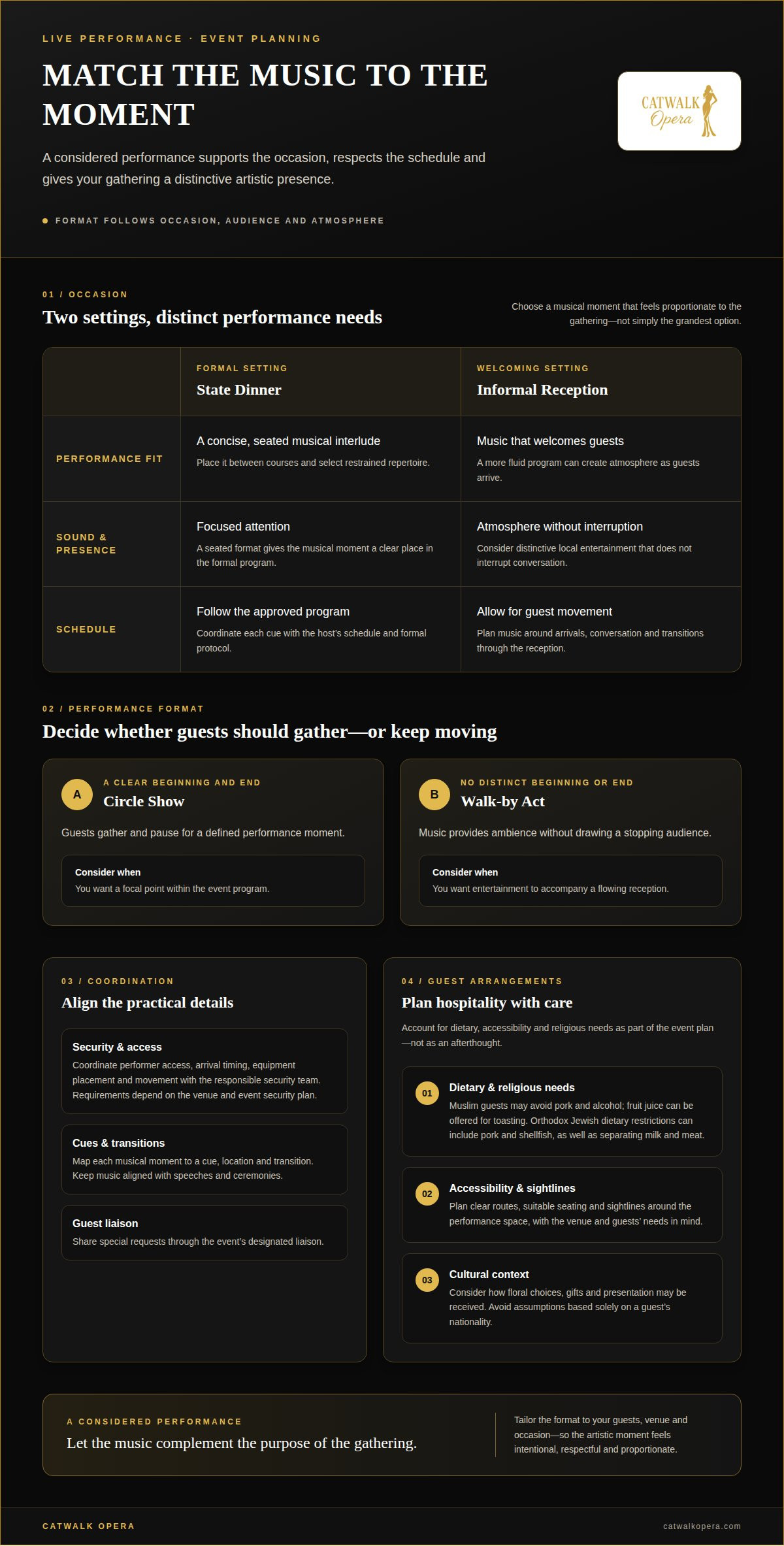
A live performance is an artistic presentation delivered in person at a gathering. For a dignitary event, its format should reflect protocol, setting and purpose. A formal state dinner may suit a concise, seated musical interlude between courses. An informal reception can accommodate a more fluid program, with music welcoming guests as they arrive.
For a state dinner, choose restrained repertoire and place each musical moment within the host’s approved schedule. For a reception, consider distinctive local entertainment that creates atmosphere without interrupting conversation. A circle show, or performance with a clear beginning and end, asks guests to gather and pause. A walk-by act has no distinct beginning or end, providing ambience without drawing a stopping audience.
Security requirements depend on the venue and the event’s security plan, not on the performance format alone. Coordinate performer access, arrival timing, equipment placement and movement with the responsible security team before finalizing the schedule. This keeps production aligned with venue arrangements without assuming the same protocol applies to every visiting party.
Plan an official diplomatic event around its purpose, guest profile and schedule. Set the performance time, then coordinate the venue, host team and performer accordingly. Distinctive local entertainment can add cultural context, while a seated musical interlude may better suit a formal dinner. Share special requests through the event’s designated liaison.
Include dietary, accessibility and religious needs in the event plan and guest arrangements. Muslim guests may avoid pork and alcohol; fruit juice can be offered for toasting. Orthodox Jewish dietary restrictions can include pork, shellfish and the separation of milk and meat. For accessibility, plan clear routes, suitable seating and sightlines around the performance space, considering the venue and guests’ needs.
U.S. examples include Marian Anderson’s White House performance, invited by Eleanor Roosevelt in 1936, three years before Anderson’s Lincoln Memorial concert. The Roosevelt White House also held yearly receptions for diplomatic, judicial and armed-services guests before World War II. These precedents show how music and formal hospitality can share a program. Use them as inspiration, then tailor the format to your guests, venue and occasion.
Musical performances
A musical performance is live vocal or instrumental music presented for an audience. At a diplomatic gathering, its style, volume and placement should suit the occasion. A solo recital can focus attention during a formal program, while instrumental music can create a measured atmosphere at a reception. Connect the choice to the event’s purpose and schedule.
A vocal recital features a singer performing selected repertoire for an audience. Its intimate scale can suit a seated gathering, while a carefully timed song can mark an entrance, welcome or ceremonial transition. Consider language, lyrical themes and presentation together. A familiar musical tradition may offer a meaningful cultural reference; a neutral instrumental selection can keep attention on the occasion itself.
An instrumental performance uses instruments without a lead vocal. It can be arranged as a focused concert moment or as discreet accompaniment. A Boduberu drummer performed in the Maldives in 2010, illustrating how traditional percussion can bring a distinct local character to a program. If you choose a culturally specific form, frame it with context and respect rather than treating it as decorative background.
Repertoire is the set of musical works selected for a performance. Curate it around the event’s tone, audience and transitions. A formal welcome might call for a composed opening, followed by a quieter interlude as guests move to dinner. A reception could pair brief musical appearances with conversation. Coordinate cues with the host’s schedule so music supports speeches and ceremonies instead of competing with them.
Presentation includes the performer’s placement, attire and relationship to the room. Align these choices with the event design, including the visual setting, sightlines and guest movement. A focal position gives a featured recital ceremonial presence; a discreet position may suit music intended to accompany conversation. Before confirming the program, map each musical moment to a cue, location and transition. This helps the performance feel intentional and integrated.
Historical examples show how music can anchor public occasions: The Black Crook was a long-running musical on Broadway in 1866. A Byzantine banquet scene depicting musicians and musical instruments dates from 1204-1453.
What cultural etiquette should hosts consider when entertaining foreign dignitaries?
Cultural etiquette means adapting hospitality to guests’ cultural expectations and sensitivities. For a diplomatic gathering, consider how floral choices, gifts, meals and family arrangements may be received. A polished event reflects care through specific decisions, not assumptions about a guest’s nationality. Include these considerations in planning alongside the program and venue.
Color symbolism refers to the meanings guests may associate with particular colors. In many nations, particularly in Far East countries, white flowers, cars, gifts and wrapping can carry associations with death and funerals. Before choosing white arrangements or presentation details, consider their cultural context. A restrained palette that suits the setting can preserve visual elegance without relying on a potentially sensitive symbol.
Gift etiquette involves thoughtful selection and presentation of tokens for visiting guests. A gift’s color and wrapping can matter as much as the object, so consider both before arranging an exchange. Keep the presentation dignified and consistent with the event’s purpose. For a formal reception, for instance, understated packaging can avoid making a striking color the focus.
Spousal hospitality is the welcome extended to a dignitary’s accompanying spouse. If a visiting dignitary has a stag luncheon, the host or hostess, or the spouse of another high-ranking official, should offer the accompanying spouse a luncheon. Include this in the day’s hospitality plan rather than treating the main guest’s schedule as the only itinerary. Thoughtful parallel arrangements can make the welcome feel complete.
Guest-specific planning shapes arrangements around the people attending instead of applying a single cultural template. Use a clear sequence: identify the guests and event format, review color and gift choices, then coordinate dining and arrangements for accompanying spouses. For a diplomatic dinner, this might mean considering floral symbolism while scheduling a separate luncheon for a spouse. These details express respect through thoughtful design and hospitality.
Orthodox Jews avoid pork, shellfish, certain parts of the cow, and milk with meat. For Muslims, pork products, including food prepared using pork grease, and alcohol are forbidden; fruit juice can be served for toasting.
What are common protocol rules for official entertainment of visiting dignitaries?
Official-event protocol is the coordinated approach to welcoming guests and arranging formal proceedings. For visiting dignitaries, align musical cues with the host’s schedule, introductions and ceremonial moments. Keep the performance in its assigned place so it supports the occasion rather than interrupting official business. A musical welcome, for example, can precede introductions when the schedule allows.
An escort officer is the designated liaison accompanying a visiting dignitary. Consult that officer about the guest’s special requests or preferences before finalizing entertainment. Share the intended format, timing and setting, then incorporate relevant guidance into the program. This helps the host plan a fitting experience without making assumptions about an individual guest.
Distinctive local entertainment reflects the host location’s cultural character. Consider it for a diplomatic luncheon or dinner when it suits the gathering’s tone. Choose a performance that can be presented with respectful context, rather than treating a cultural tradition as decoration. It can connect the event to its setting while preserving its formal character.
A wardroom is a shipboard space that may host official luncheons or dinners. For a diplomatic event aboard a vessel, this setting can support a formal meal and accompanying entertainment. Coordinate the performance with the room’s purpose and the meal schedule. A concise musical interlude, for example, can complement dinner without displacing conversation or the host’s remarks.
Hospitality planning coordinates dining and service details for invited guests. Fish and fowl are often considered broadly suitable across dietary restrictions; a varied selection of non-alcoholic beverages can also accommodate different preferences. These are planning considerations, not substitutes for guest-specific arrangements. A written schedule can set out meal service, formal remarks and entertainment in a clear sequence.
Written reservations document arrangements for venues, hotels or restaurants. Put reservations in writing, then align the event schedule and performance cues with those arrangements. A confirmed dinner time, for example, gives the host team a reference point for scheduling a musical welcome. This planning discipline helps official entertainment fit smoothly into the visit’s wider program.
Catwalk Opera
Catwalk Opera helps translate the tone of a diplomatic gathering into a bespoke live musical moment. Led by international soprano Monika Spruch, its performances bring refined vocal artistry and fashion-forward presentation to distinguished occasions.
A Luxury Opening Moment can establish an elegant first impression, while the Signature Fashion Opera Experience pairs vocal performance with high-fashion presentation. For a more intimate gathering, a Private Royal Recital offers a focused musical experience for an exclusive audience. Catwalk Opera can bespoke-curate the repertoire and visual presentation around your event’s purpose, whether welcoming guests or creating a distinctive centerpiece.
As you plan entertainment for international dignitaries, consider how the performance will fit the schedule and shape the room’s atmosphere. Contact Catwalk Opera to discuss a musical direction tailored to your event.
Shape the Moment Ahead
Define the impression you want guests to carry beyond the evening. Entertainment for international dignitaries can express welcome, identity and occasion with quiet distinction. Consider whether the event calls for an opening gesture, a fashion-led artistic presentation or an intimate recital, then let that intention guide the creative direction.
Catwalk Opera offers the Luxury Opening Moment, Signature Fashion Opera Experience and Private Royal Recital, each suited to a different role in a formal, exclusive gathering. A performance can set an elegant tone or bring a more personal quality to the room.
When you are ready to explore a performance suited to your occasion, contact Catwalk Opera about performances. A thoughtful artistic direction can give your gathering a memorable signature.
Frequently Asked Questions
What entertainment is appropriate for international dignitaries?
Live music is a fitting choice when it creates a gracious, inclusive atmosphere. At a multilingual reception, consider instrumental music or a wordless vocal passage so guests can appreciate the performance without relying on a shared language. Repertoire that reflects the host’s artistic identity can also give the gathering a distinctive cultural character without requiring guests to understand the lyrics.