A tailored entertainment proposal should connect the client’s goals to every choice: the performance concept, scope, fee, and planning milestones. Presenting an entertainment proposal to a client is more effective when you explain how each option serves the event, rather than simply listing services. The client can then assess, discuss, and refine a clear plan.
A polished performance is only part of the decision. The client also needs to understand the atmosphere you’re creating, what each option includes, and how the investment supports the event’s priorities.
This guide covers how to develop a tailored plan, present options and fees clearly, and connect the proposal to client goals, negotiations, and milestones. Lead with the experience you’re creating, make the differences between options easy to compare, and close with practical next steps while preserving the event’s artistic character.
Key Takeaways
- Translate the event’s purpose, audience, and desired atmosphere into a tailored performance concept.
- Use the negotiation history to clarify priorities, address open questions, and shape a proposal that moves the conversation forward.
- Make package distinctions and pricing easy to compare by connecting each option to its scope and contribution to the event.
- Map key decisions and deliverables into milestones so everyone can see how the proposal progresses toward performance day.
Meeting with the client to understand event goals and requirements
An entertainment proposal should include an executive summary, event overview, tailored services, budget, and planning milestones. To make it relevant, connect the event objective, guest profile, and desired atmosphere to a clear performance concept.
-
Summarize the Event and Services
During your client meeting, record the event’s purpose, audience, venue, preferred atmosphere, and key requirements. Then outline the proposed services and explain how each supports the objective. For example, a fashion show proposal could pair a striking opening performance with the brand’s visual identity. Draft the executive summary once the plan is clear, so it reflects the proposal rather than assumptions.
-
Tailor the Proposal to the Audience
Shape the performance concept around the guests and occasion, using details from the host or planner. A charity ball focused on donor engagement calls for a different atmosphere than a luxury brand launch introducing a new collection. Explain why the proposed style suits the audience, and make sure the language, imagery, and event overview reflect the client’s brand rather than a generic template.
- Set out the planning process in an order the client can follow. Identify decisions such as approving the concept, aligning the performance with the event flow, and finalizing the schedule. Explain the sequence and the time each step requires for this event. Avoid promising a fixed turnaround before the venue, production requirements, and approval process are clear.
- Present the budget as a clear breakdown tied to the proposed scope. Separate entertainment from other event expenses, and explain which choices affect the overall investment, such as performance format and event requirements. If you offer a discount, state its approved terms and any effect on scope; do not imply a concession that has not been agreed. This keeps the financial section aligned with the plan.
Contextualizing a proposal within the negotiation history
- Before revising the proposal, summarize the negotiation history. Separate agreed priorities, open questions, and requests that have changed since earlier discussions. For example, if the client first prioritized a dramatic opening and later emphasized brand alignment, show how the revised concept addresses both without treating either discussion as a final commitment.
- Link the event’s goals to a specific solution. Explain the opportunity, such as creating a memorable runway opening, then show how the proposed entertainment supports that goal and the event’s atmosphere. A persuasive summary makes this connection clear upfront. Avoid generic claims that could describe any gala or fashion presentation.
- Use a proposal template for structure, not as a substitute for judgment. Keep consistent sections, such as credentials, process, and standard terms, then tailor the event overview, creative concept, and visual presentation. Match the client’s brand language and design cues. Remove references to other events, outdated dates, or services outside the current scope.
- State contract terms plainly: define the agreed scope, each party’s responsibilities, payment schedule, cancellation policy, change process, and any conditions or additional charges. Use the actual terms for this engagement rather than copying sample percentages or deadlines. This gives the client a clear basis for review and keeps the proposal aligned with the eventual agreement.
- Address plausible disruptions and explain how you’ll handle them. For example, specify how a schedule change will be communicated, who approves a revised running order, and how venue access affects preparation. Keep contingency measures within the proposed scope. Don’t promise a substitute performance or equipment arrangement unless the agreement includes it.
- Make the proposal professional with clear navigation, consistent branding, precise language, and evidence relevant to the event. Include a case example only when it supports a similar objective, such as a high-fashion presentation seeking a striking opening. Before sending, check names, event details, scope, and terms against the latest negotiation record.
Presenting service packages, pricing, and optional upsells
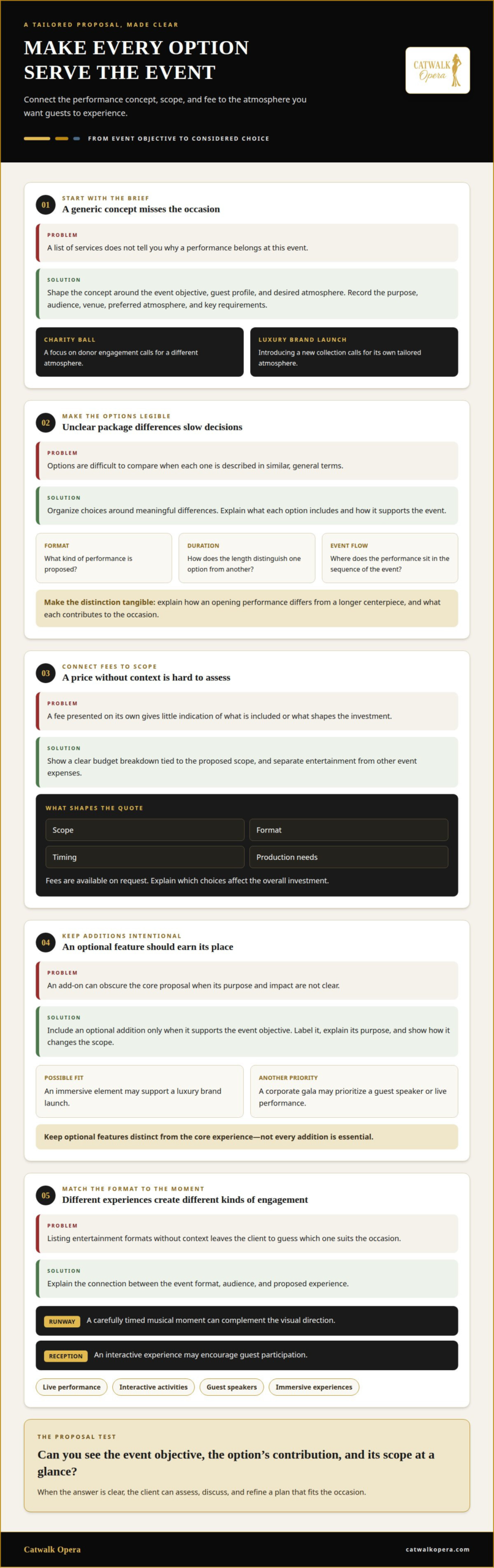
Present each option as a distinct way to meet the event objective, with scope and fees easy to compare. A visual presentation can help planners connect each option to the atmosphere they want guests to experience.
-
Present Service Packages and Pricing
Organize options around meaningful differences, such as performance format, duration, or place in the event flow. For example, explain how an opening performance differs from a longer centerpiece and what each contributes to the occasion. State that fees are available on request, with the quote shaped by scope, format, timing, and production needs. Avoid options whose differences aren’t clear.
-
Offer Optional Upsells
Include an optional addition only when it supports the client’s event objective. A luxury brand launch might benefit from an immersive element, while a corporate gala may prioritize a guest speaker or live performance. Label each addition, explain its purpose, and show how it changes the scope. Don’t present an optional feature as essential to the core experience.
- Choose entertainment that suits the event’s format and audience. Live performance, interactive activities, guest speakers, and immersive experiences create different kinds of engagement. At a runway presentation, a carefully timed musical moment can complement the visual direction; at a reception, an interactive experience may encourage guest participation. Explain the connection instead of listing options without context.
- Make the proposal easy to review during planning. Use a comparison table to show each option’s scope, purpose, and fee, then list any optional additions beneath it. Keep labels consistent across the proposal and presentation. After stating the fee, give the client room to respond before discussing its value. A strong proposal lets the client weigh each option against the event’s priorities.
Project action plan and milestones
Outline the performance schedule, setup needs, technical requirements, and decision points in sequence. This shows how the plan moves from approval to performance day.
-
Set the Work Timeline and Milestones
Map the work from proposal approval through final event coordination. Name each milestone, its expected deliverable, and the person responsible for moving it forward. For example, a fashion presentation may need concept approval before the running order is finalized. Show which decisions depend on venue details, and allow time for client review rather than implying every step happens at once.
-
Specify Schedule, Setup, and Technical Needs
Show where the performance fits in the event schedule, including transitions into and out of the segment. List setup and technical requirements for the proposed format, then identify who will coordinate each item with the venue. Avoid assumptions about equipment or access. For example, note that the final setup plan depends on the event space and confirmed performance arrangement.
- Separate confirmed milestones from pending decisions. A schedule can show concept approval, venue coordination, final timing, and event-day preparation as distinct stages. For each open item, explain its effect on the next step. If a venue change could alter the performance position, flag it before treating the running order as final.
- Plan communication around meaningful milestones. Schedule a meeting when the client needs to approve a creative direction or resolve a timing question, rather than adding check-ins without a clear purpose. After sending the proposal, give the client a follow-up timeline. Record agreed changes in the working document so the schedule, responsibilities, and deliverables stay aligned.
Catwalk Opera: Luxury Opening Moment
Catwalk Opera gives planners a bespoke performance option when an event calls for a striking artistic opening. The Luxury Opening Moment can provide a concise focal point for introducing a runway, gala, or brand presentation. For a more extended fashion-led experience or an intimate gathering, the Signature Fashion Opera Experience and Private Royal Recital offer distinct directions to consider within your proposal. Shape the concept around the event objective, visual identity, and place in the programme, then present its role clearly alongside the other event milestones. To discuss a performance concept for your occasion, contact Catwalk Opera.
Shape the Proposal Into a Shared Vision
A well-framed proposal can become a creative reference point as an event evolves. When presenting an entertainment proposal to a client, consider how its central artistic idea can guide later choices, from visual direction to the tone of the guest experience. This helps the work stay coherent as plans develop.
As the event takes shape, use the proposal’s creative direction to assess new ideas. Ask whether each addition strengthens the intended experience or distracts from it. This keeps the occasion intentional, with every element contributing to a distinctive atmosphere.
Let the proposal begin a shared vision. A clear creative point of view gives you purpose for the next planning decisions and helps create an event that feels considered from its first impression to its final moment.
Frequently Asked Questions
What about custom plans?
A tailored plan should distinguish the creative elements that define the experience from details that can change during preparation. For example, make the central artistic direction the proposal’s anchor, then identify presentation details that may change after stakeholder review. This lets collaborators refine execution without losing the concept. Use consistent terminology so revisions don’t create conflicting interpretations.
What questions should you ask a client before preparing an entertainment proposal?
Clarify who makes the final decision, who gathers feedback, and how approvals are recorded. Ask whether a brand team, host, or event committee must review the creative direction, and whose approval completes the process. Also establish what information should remain confidential and which internal terms to use. These details help you prepare a proposal that fits the client’s decision-making process.
How do you present entertainment options, packages, and pricing in a proposal?
Use a decision sheet to distinguish what the proposed fee covers from client-provided elements and optional additions. For example, clarify whether venue-provided staging falls outside the entertainment scope rather than leaving the client to infer it. Put assumptions beside the relevant item, not in distant fine print. This makes the budget easier to interpret and clarifies responsibilities during approval.
How do you present an entertainment proposal to a client in a meeting or email?
In a meeting, guide the client through the decisions rather than reading the proposal aloud. Keep the same version visible to everyone, and note agreed wording changes beside the relevant section. For email delivery, give the file a clear, event-specific name and identify the version. This helps the client’s team discuss one consistent document.