What if the most memorable gala performance is not the largest one in the room? Choosing live band vs solo performer for a gala is less about scale alone than the role music should play. An ensemble can create a broad, layered presence; a solo vocalist can bring a poised focal point to a carefully timed moment. The right format depends on your programme, audience and setting.
You may already know the feeling you want guests to carry from the evening, yet translating that intention into the right format can be less straightforward. Start by deciding when music should accompany the gathering and when it should draw focused attention. Then consider how the performance will fit the event flow and the room’s visual design.
This guide compares how ensemble size shapes atmosphere, visual presence and programme fit, so you can make a considered choice. It also explores how a curated solo vocal performance can offer a distinctive alternative when your event calls for a featured artistic moment. Led by international soprano and crossover vocalist Monika Spruch, Catwalk Opera brings together opera, cinematic sound and high-fashion presentation in experiences tailored to the occasion. Whether you are planning a charity ball, a high-profile corporate gala or a luxury brand evening, the right format can become a considered cultural statement.
Key Takeaways
- Choose the live band vs solo performer for a gala by defining the performance’s role, from shaping the atmosphere to creating a focal moment.
- Compare musical scale, visual presence and programme fit to select a format that complements the room and your event design.
- Use a practical planning sequence to align the performance with your guests, setting and event flow.
- Explore how Catwalk Opera’s Luxury Opening Moment, a 10-12-minute solo vocal experience, can introduce a fashion show, brand launch or VIP reception.
Live Band vs Solo Performer for a Gala: Start with the Event Objective
Choosing between an ensemble and an individual vocalist is a meaningful planning decision, but the format should serve your gala rather than dictate its character. Begin with the role you want music to play. Should it establish an elegant atmosphere, draw guests into a featured moment, express a brand’s identity or mark a transition? A larger musical presence is not automatically more impactful. The room, audience and programme shape how each format is experienced.
An event objective is the performance’s intended role in the programme, whether to shape atmosphere, command attention, express identity or mark a transition. Defining that role gives you a clearer basis for comparing live band vs solo performer for a gala. It also helps keep artistic choices aligned with the evening’s purpose, whether you are hosting a charity ball, a private gala or a high-profile corporate event.
What should the entertainment accomplish at your gala?
First, distinguish between music that accompanies an experience and a performance designed to focus attention. During arrivals or a reception, you may want to establish a gracious mood while guests meet and converse. At a scheduled point in the programme, you may instead want guests to pause for a distinct artistic moment. These purposes call for different approaches to scale, placement and pacing.
Consider who is in the room and why they have gathered. A fundraising evening, for instance, may use live performance to support a charitable purpose while lending the occasion a sense of ceremony. The Met Gala Wikipedia page offers one well-known example of a fundraising event whose identity is closely associated with fashion. For a luxury brand launch, music might express a particular visual language or introduce a new collection. In either case, the performance can become a cultural statement: an artistic choice that communicates something about the host or brand beyond entertainment alone.
Where does each format sit within the evening?
Map the evening in sequence. During arrivals, an ensemble can create a broader musical presence as guests enter and circulate; a solo performer can offer a more concentrated vocal and visual focal point. Between dinner and a speech, either format may mark a transition. Consider whether you want that shift to feel expansive or intimate, and how the performers will relate to the stage, room design and schedule.
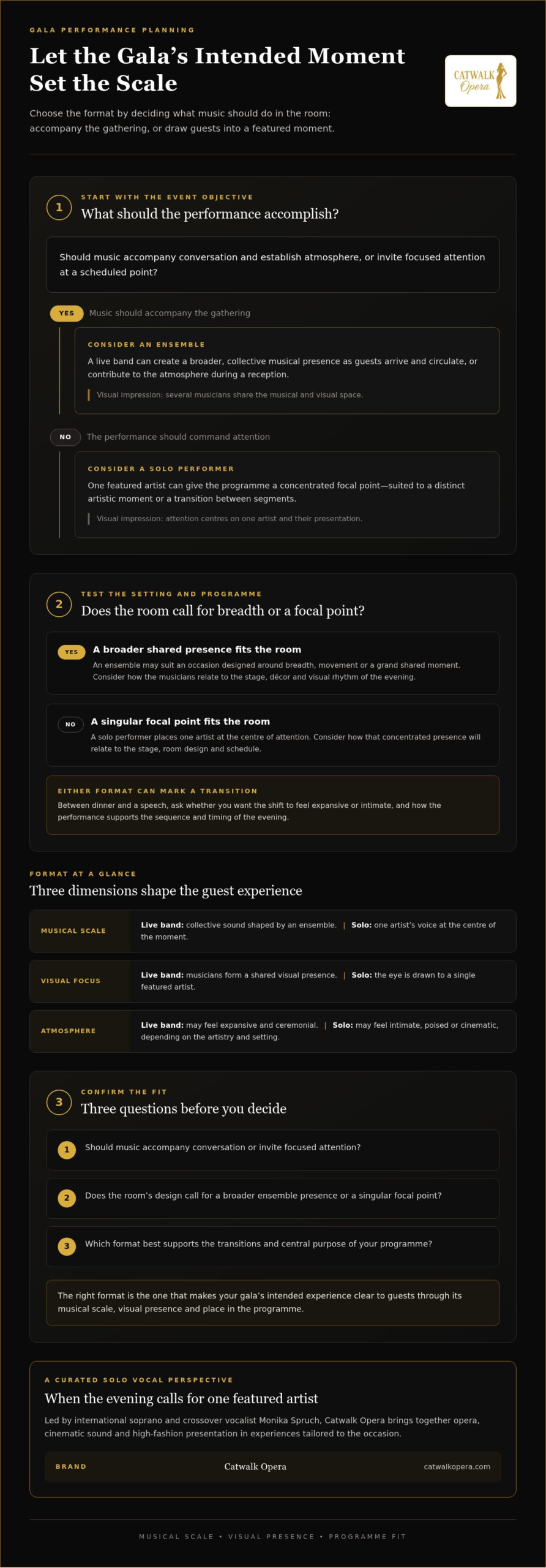
A band is an ensemble, with several musicians sharing the visual and musical space. A solo performer places one artist at the centre of attention. Neither is universally better suited to a particular venue or audience. Assess how each format fits your event flow, the sequence and timing of the evening. Ask yourself:
- Should music accompany conversation or invite focused attention?
- Does the room’s design call for a broader ensemble presence or a singular focal point?
- Which format best supports the transitions and central purpose of your programme?
Answering these questions first makes the format a deliberate expression of your gala’s purpose, not simply a decision about how many performers appear on stage.
How a Live Band and Solo Performer Shape a Gala Differently
An ensemble and a solo vocalist each bring a distinct visual and musical scale to the room. The question is not which format is inherently more impressive, but how its presence will shape the experience you want guests to have. A band may create a collective, layered impression; one featured artist can give the programme a precise point of focus.
The right performance format is the one that makes your gala’s intended experience most legible to guests, through its musical scale, visual presence and place in the programme.
Musical scale
Live band: a collective sound shaped by an ensemble. Solo performer: one artist’s voice at the centre of the musical moment.
Visual focus
Live band: musicians form a shared visual presence. Solo performer: the eye is drawn to a single featured artist and their presentation.
Programme role
Live band: can contribute to a broader musical atmosphere or a featured segment. Solo performer: can define a concentrated, clearly framed moment.
Atmosphere
Live band: may feel expansive and ceremonial. Solo performer: may feel intimate, poised or cinematic, depending on the artistry and setting.
What a live band can contribute to a gala
An ensemble can give a gala a sense of collective musical presence, which may suit an occasion designed around breadth, movement or a grand shared moment. Its scale is one expressive choice, not a measure of quality. Consider how the musicians’ presence will relate to the stage, décor and visual rhythm of the evening. Also consider whether the performance supports the programme’s pace and purpose.
For example, an ensemble might be positioned as a visible feature during a reception or as part of a planned entertainment segment. Its effect will vary with the room, the programme and its placement. A formal dining room and a spacious event setting create different visual contexts. Think about the atmosphere you want to establish and the transitions around the performance. The artistic effect depends on how the format sits within the whole design.
What a solo performer can contribute
A solo artist can create a defined focal point through the clarity of one voice, a distinctive stage presence and considered visual styling. That focus can lend a programme a sense of ceremony without requiring the entire evening to centre on the performance. The effect is not lesser in scale, but different in character: the audience encounters an individual artist rather than a group sharing the stage.
Catwalk Opera brings opera, cinematic sound and high-fashion presentation together in curated solo vocal experiences. The performance’s presentation can be considered in relation to a gala’s visual identity, from couture-inspired styling to a refined formal setting. If that alignment is central to your event, explore Catwalk Opera’s curated vocal performances.
In the live band vs solo performer for a gala decision, compare the feeling each format creates, not simply the number of musicians. A layered ensemble presence may suit one programme; a singular vocal focal point may better express another. Both can carry distinction when their role is thoughtfully composed with the evening’s design, audience and purpose.
Which Gala Format Fits Your Programme, Audience and Setting?
Once you understand the distinct presence each format brings, consider how it will meet the character of your event. A gala with a long reception and sustained social time may call for music that accompanies the evening across several moments. A tightly paced programme, by contrast, may benefit from one clearly placed performance for guests to experience as a feature. The right choice depends on the room, the guests and what the evening asks music to do.
For the live band vs solo performer for a gala decision, distinguish between a broader musical presence and a signature moment. An ensemble can contribute to the atmosphere across a programme, while a featured vocalist can give a particular transition or segment a distinct identity. The schedule and presentation determine how each format sits within the occasion, so plan around your event rather than assuming one option will suit every moment.
Match the format to the event flow
Map the evening in sequence. Note when guests are arriving, dining, listening to speeches or moving between spaces. Then identify which moments call for ambience, a transition or focused attention. If music is intended to accompany a reception, consider how an ensemble’s presence fits that social setting. If the programme includes a formal reveal or a change in tone, a featured vocal performance could provide a deliberate point of transition.
A signature performance does not need to carry the whole evening. It can sit between key programme elements, giving the event a composed pause before the next segment. For a luxury brand launch, for example, a solo vocal moment might follow an introduction and precede the next part of the evening. Consider the performance’s duration and placement alongside the surrounding schedule. For further planning considerations, consult this luxury event soprano hiring guide.
Consider the gala’s visual identity and setting
Look at the performance as part of the room’s composition. Consider sightlines, the visual weight of the staging and how the artist or ensemble will relate to lighting, décor and dress. A large, formal room might invite an expansive ensemble presence; an intimate dinner may call for a more focused presentation. These are starting points for design, not rules. The audience, programme and event objective remain decisive.
In a private residence, residential acoustics, the unique sonic signature of each room, can shape how live vocals are perceived. Consider where guests will be seated and how the performance will reach them within the setting. The room’s furnishings and layout are part of its character, so account for them when planning the performance position.
When a solo vocal presentation aligns with a gala’s visual language, it can become a cultural statement: an artistic expression of the host’s or brand’s identity. Opera, cinematic sound and high-fashion styling can give that moment a distinctive aesthetic, particularly when the event already draws on fashion or performance. The aim is coherence, not spectacle for its own sake. A carefully matched format lets music feel integral to the gala, rather than an interruption placed on top of it.
A Practical Checklist for Choosing the Right Gala Performance Format
A clear brief makes the choice between an ensemble and a solo artist more considered. For the live band vs solo performer for a gala decision, move from the event’s purpose to its practical setting, then select the format that best expresses the experience you want to create. This sequence helps you assess atmosphere, visual coherence and programme placement together.
Four questions to clarify the performance brief
Before choosing a format, answer these questions with your event team. Specific answers make it easier to translate an artistic idea into a well-placed performance.
- What is the event objective? Is the performance intended to open the evening, mark a transition, create atmosphere or serve as a centerpiece?
- What atmosphere should it convey? Decide whether you want an expansive, shared musical presence or a more intimate, focused vocal moment.
- Which visual cues should it complement? Consider the event’s palette, styling, staging and the identity of the host or brand.
- Where should it sit in the event flow? Identify when guests can give the performance their attention and how it relates to speeches, dinner or other programme elements.
Turn the brief into a considered format choice
With those answers in hand, follow this sequence to refine your selection:
- Define the objective. Write one sentence describing the performance’s role, such as introducing a fashion presentation or shaping the mood at a formal dinner.
- Map the event flow. Mark the moments that call for music, then distinguish those needing a continuing atmosphere from those suited to a featured performance.
- Assess the setting. Consider the room’s character, audience arrangement, sightlines and the way performers will relate to the décor and staging.
- Select the format. Choose an ensemble or solo performance based on how its presence supports the programme and visual identity, not on scale alone.
Summarize the brief in three phrases: the atmosphere you want, the moment where music belongs and the visual relationship the performance should have with the room. If those points describe a sustained musical presence, an ensemble may be a natural direction. If they call for a distinct opening or concentrated focal moment, a solo vocalist may align more closely. For an opening-led concept, the Luxury Opening Act Performer guide offers a focused perspective on the role of operatic artistry at the start of an event.
Catwalk Opera curates performances to complement each event’s elegance, purpose and atmosphere, bringing vocal artistry and high-fashion presentation into considered alignment with the occasion. To explore a curated solo vocal performance for your gala, consider how that distinctive presence could serve the brief you have shaped.
Catwalk Opera: A Curated Solo Vocal Experience for a Luxury Gala
A solo vocal performance can offer a gala a distinctive artistic focal point, particularly when its presentation is composed in relation to the event’s identity. Catwalk Opera brings opera, cinematic sound and high-fashion presentation together in carefully curated experiences. For planners weighing the live band vs solo performer for a gala, this approach offers an alternative when a featured vocalist aligns more closely with the occasion’s purpose and visual language.
Each experience is designed to complement the evening’s elegance, purpose and atmosphere. Its artistic direction can be considered alongside the programme and staging, allowing vocal artistry to feel integrated into the event rather than added as an afterthought.
Choose the Catwalk Opera experience that suits the gala moment
The three Signature Performance Experiences offer distinct durations and contexts, helping you match the performance to the character of your gathering:
- Luxury Opening Moment, 10-12 minutes. A concise opening experience for fashion shows, brand launches and VIP receptions, creating a defined beginning through live vocal artistry and high-fashion presentation.
- Signature Fashion Opera Experience, 20-30 minutes. A featured performance for luxury galas, hotels and corporate celebrations, suited to a programme that allows space for a fuller artistic statement.
- Private Royal Recital, 15-25 minutes. An exclusive recital for intimate VIP gatherings, where the setting can lend the performance a more personal character.
Across these formats, curation connects vocal artistry with cinematic sound and fashion-forward presentation. Choose an experience according to the occasion, whether you are planning an opening gesture, a central programme feature or an intimate recital. Consider its duration and placement as part of the evening’s design and pace.
For corporate hosts considering an operatic focal point, the soprano for prestige corporate events guide explores ways to align a vocal performance with an event’s purpose. Catwalk Opera’s listed recognition includes the International Opera Singer Award – Cannes 2024.
Bookings are accepted internationally, and pricing is available on request. If a curated solo vocal performance could serve your gala, discuss your event and request pricing through the Catwalk Opera website.
Give Your Gala a Performance with Purpose
The final choice is an artistic one: decide what you want guests to feel when music enters the evening. In the live band vs solo performer for a gala decision, let that intended experience guide the format, then shape the performance around the room, programme and visual identity. A carefully curated vocal moment can become part of the gala’s signature, not simply another item on the schedule.
For a solo performance that reflects your event’s character, consider how opera, cinematic sound and presentation can meet your creative direction. Catwalk Opera accepts a limited number of premium bookings per month, with performances available internationally.
Discuss a considered performance for your gala and take the next step towards an evening shaped with intention. Your chosen format can help create a distinctive moment guests carry with them.
Frequently Asked Questions
Is a live band always the better choice for a gala?
No single format is right for every gala. The live band vs solo performer for a gala decision depends on your event objective, programme, setting and desired atmosphere. An ensemble might suit an evening built around a broad musical presence, while a solo artist could fit a tightly timed featured segment. Consider the room and schedule alongside the experience you want to create, rather than treating performer numbers as a measure of impact.
Can a solo performer create a focal moment at a large gala?
Yes, a solo artist can be positioned as a featured moment within a large gala programme. The effect depends on how the performance is placed and presented, including its relationship to staging, visual design and surrounding events. Catwalk Opera’s curated vocal artistry offers one way to frame a distinctive individual performance. A large setting does not, by itself, determine the performance’s impact or guarantee how guests will respond.
How do I choose between a live band and a solo performer for a charity ball?
Begin with the charity ball’s objective, then consider programme timing, guest experience and visual identity. You might want music to accompany a reception, followed later by a concentrated artistic moment before a speech or presentation. Those roles may call for different approaches. Review the full schedule and decide where music should sustain the atmosphere and where it should receive particular attention, without assuming the same format must serve every part of the evening.
What should I include in a gala performance brief?
Include the event objective, desired atmosphere, visual direction and intended place in the event flow. You can also describe the gathering’s character, such as a formal awards evening, a fashion-led reception or an intimate VIP dinner. These details give the performance concept a clear creative context and help align its presentation with the occasion. Keep the brief focused on the experience you want, rather than adding technical specifications that do not define your artistic intent.
How much does a solo performer for a gala cost?
Catwalk Opera pricing is available on request. When requesting pricing, share the event context, including the type of gala, its intended atmosphere and where a performance would sit in the programme. This gives the discussion a relevant frame for your event.
Does Catwalk Opera accept international gala bookings?
Yes, Catwalk Opera accepts bookings internationally. Led by international soprano and crossover vocalist Monika Spruch, the performance concept brings operatic artistry together with cinematic sound and high-fashion presentation. Share your event context when making an inquiry so the conversation can begin with the experience you intend to create.