The most memorable dining soundtrack isn’t the loudest; it’s the one that lets cuisine and conversation remain at the heart of the evening. To use music to elevate a dining experience, match its tempo and character to the menu, guests, and desired pace: slower selections around 60-80 BPM can support a relaxed atmosphere, while 100-130 BPM may suit quick-service or bar settings.
You already know that a meal is shaped by more than what appears on the plate. Music can influence the room’s mood, how guests experience the food, and whether the occasion feels leisurely, lively, or quietly refined. The key is to make each choice intentional, not simply background decoration.
Here, you’ll learn how to align music with a restaurant’s identity and clientele, shape the pace of a meal through tempo and volume, and create a cohesive atmosphere throughout the day. You’ll also see how live performance can bring guests together, turning dining into a shared social experience with a sense of occasion.
Key Takeaways
- Match musical style to your menu, guests, and service period so the room feels intentional rather than generically soundtracked.
- Use tempo and volume to shape the pace of a meal while keeping conversation and the food at the center of attention.
- Build a coherent sound identity that supports your restaurant’s mood and gives guests a distinctive sense of place.
- Refine selections by noticing how guests respond, when the room is busiest, and how long the dining experience unfolds.
- Consider live performance when you want a meal to become a shared occasion, with Catwalk Opera’s Luxury Opening Moment offering a refined focal point.
Choosing music to suit a restaurant’s menu and clientele
To choose music to elevate a dining experience, align the sound with the menu, setting, clientele, and service period. A considered selection creates a coherent atmosphere without competing with the meal or conversation.
Setting Mood Through Venue and Sound
A venue’s acoustics and sound equipment shape how music feels, whether in an intimate dining room or a lively bar. Choose a setup that lets the music support your intended ambiance rather than impose a mood that conflicts with the meal.
Consider the room’s purpose before selecting a venue. A small setting with acoustic or jazz performances can suit a relaxed evening, while a bar may call for a more energetic sound. Choose commercial music systems for restaurant playback; they typically provide better sound quality and more reliable playback than consumer streaming platforms. Check that equipment works together and supports playlist scheduling, so music playing feels deliberate throughout service.
Selecting Tempo, Volume, and Genre
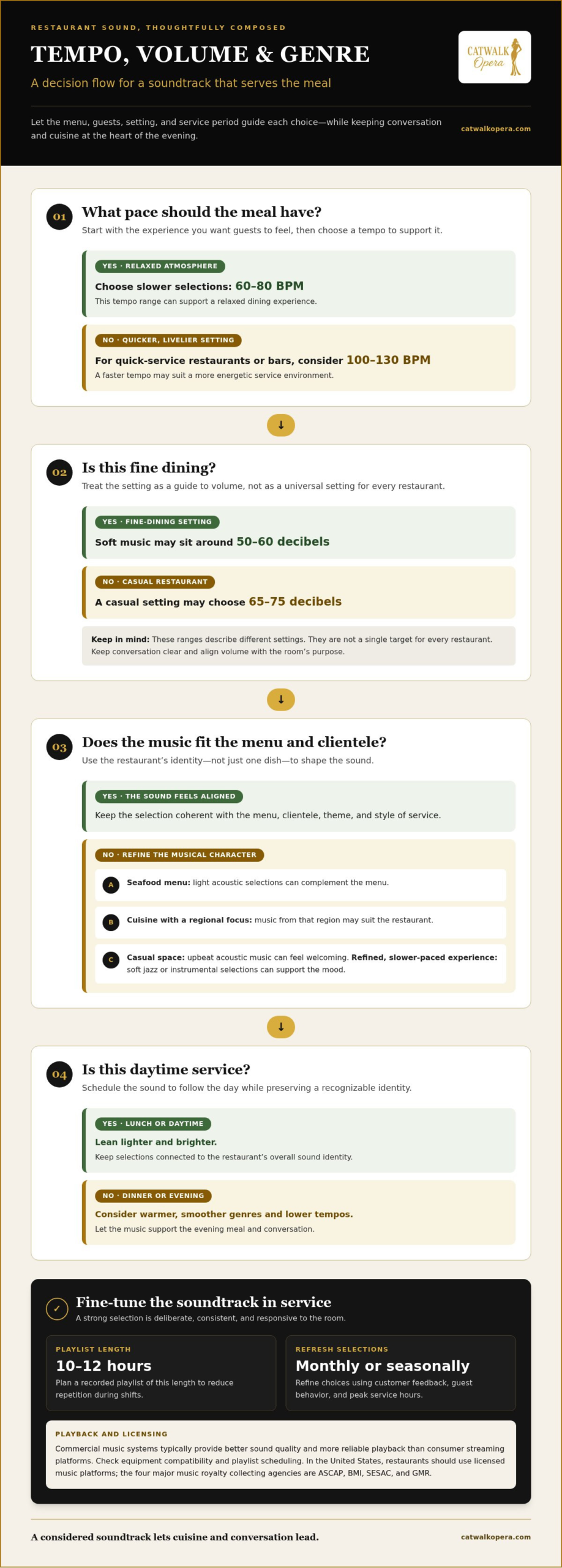
Tempo, volume, and genre are the practical tools for matching a soundtrack to diners and service pace. Slower music at 60-80 BPM can support a relaxed atmosphere, while 100-130 BPM may suit quick-service restaurants or bars.
Keep volume aligned with the room and its purpose. Fine-dining settings may use soft music at 50-60 decibels, while casual restaurants may choose 65-75 decibels. These ranges describe different settings, not a single target for every restaurant. Consider the menu, target demographic, theme, and time of day before choosing a genre or adjusting volume.
Let the menu and clientele guide the sound. Light acoustic selections can complement a seafood menu, while music from a particular region may suit a restaurant focused on that cuisine. Upbeat acoustic music can make a casual space feel welcoming; soft jazz or instrumental selections can suggest a refined, slower-paced experience. Match the sound to the restaurant’s identity, not just to one dish.
For lunch and dinner, schedule music to reflect each service period while maintaining a consistent sound identity. Lighter, brighter selections can suit daytime service; warmer, smoother genres and lower tempos can support evening meals and conversation. Playlist scheduling can also respond to crowd size and service intensity, helping the sound shift naturally as the room fills or quiets.
In the United States, restaurants should use licensed music platforms. The four major music royalty collecting agencies are ASCAP, BMI, SESAC, and GMR.
For recorded selections, plan a playlist that runs for 10-12 hours to reduce repetition during shifts, then refresh it monthly or seasonally. Review customer feedback, guest behavior, and peak service hours when refining choices. A consistent sound across the entrance and dining room also helps guests experience a smooth transition into the restaurant’s atmosphere.
How does music contribute to positive food experiences?
Music shapes how guests perceive flavor, mood, and a restaurant’s identity. Used with intention, it can make a meal distinctive without drawing attention away from the food.
Shaping Mood, Behavior, and Brand Identity
Sound gives a restaurant a recognizable character and can influence how diners experience individual flavors. A study published in Flavour reported that higher-pitched music was associated with sweeter-tasting food, while lower-pitched tones were associated with more bitter tastes. That connection gives you a creative way to consider sound alongside a menu, especially when a dish depends on a delicate balance of sweetness or bitterness.
Consistent musical choices can support a brand identity that guests associate with its setting. The key is coherence: selections should align with the restaurant’s visual design, menu language, and style of service. If the music shifts in energy across service periods, preserve a recognizable sound so the experience still feels like the same restaurant.
Choosing Music for Restaurant Types
Strategic choices can connect music with a cuisine or a particular course. A study attributed to the University of Groningen found that wine sales rose by 40% when French music played with French cuisine in a restaurant. The finding illustrates how culturally associated sounds can reinforce a meal’s setting, rather than functioning as anonymous background.
Music can also shape expectations: refined instrumental selections may signal an unhurried meal, while lighter sounds can give a casual restaurant a welcoming tone. For fine dining at home, choose a restrained playlist that suits the menu and leaves conversation clear. Soft jazz or instrumental music can provide an elegant background; keep the selection consistent with the meal’s mood instead of changing styles between courses.
Integrating Sound with Restaurant Design
Integrating sound with design means treating music, room details, and ambient sounds as parts of one guest experience. A carefully designed interior can feel disjointed if its soundtrack suggests a different mood.
Consider the restaurant’s materials, lighting, and layout when selecting music. A dining room with intimate tables and subdued lighting calls for a different sonic character than an open, animated space. Kitchen activity and the clinking of utensils can add a sense of place when balanced with the music. Keep sounds in the entry area connected to those in the dining room, creating a natural transition for guests.
Use customer feedback and dining behavior to refine these choices over time. For instance, note which selections suit the restaurant’s busiest periods and whether guests linger through dessert. An Oxford University study found that diners rated chocolate as 10% sweeter while listening to higher-frequency music, illustrating how sound can influence a tasting moment. For an event where performance itself should become part of the setting, a Signature Fashion Opera Experience can bring a distinctive artistic presence to the occasion.
How volume and tempo affect dining behavior
Volume and tempo influence whether a restaurant feels relaxed, animated, or difficult to navigate. Sound can also shape conversation, eating pace, and the attention guests give to a meal. As a host, aim to match the room’s energy to the occasion rather than impose a soundtrack that competes with it.
A study published in Psychology of Music found that diners tend to eat more slowly and appreciate food more when music is softer and slower-paced. That can suit fine dining, where thoughtful conversation and attention to each course are part of the experience. Livelier selections, by contrast, can make a casual setting feel more animated. Let the tempo serve the meal, whether guests are meeting for a leisurely dinner or stopping for a quick bite.
Volume affects how easily guests can talk with one another. Music that overwhelms conversation can make ordering, sharing stories, or hearing service details harder. Softer sound gives diners room to talk and notice a dish’s textures, aromas, and presentation. Consider how sound carries between tables, then adjust the overall level to the room rather than turning up the music to create energy.
Does music affect taste, appetite, or how much people spend? Yes, music can influence perceived flavor and expectations about service pace and menu pricing. Slower selections may encourage guests to stay longer and order dessert or another drink, while sound can shape whether a restaurant feels relaxed or brisk.
Tempo also affects how guests experience the sequence of a meal. A slower musical pace can encourage lingering between courses, while more energetic music may support faster service. Neither approach suits every restaurant or occasion. A business lunch, for instance, may call for a different rhythm than an anniversary dinner. Consider the event’s purpose, the menu’s pacing, and the kind of conversation you want to encourage.
Use observation to refine the sound. Compare guest responses during quieter and busier service periods, noting whether conversation remains comfortable and courses arrive at a natural pace. Keep the restaurant’s sound identity consistent as the energy shifts, so a change in tempo feels thoughtful rather than abrupt. Music can enrich a meal, but it should remain in the background, keeping the food and the people sharing it at the center.
Music’s role in guest memory and loyalty
Guests often remember a dinner as a sequence of details, not a single dish. A familiar melody, the room’s acoustic character, and a shared toast can combine into one vivid moment. Music can give that memory a distinct atmosphere, especially when its mood connects closely with the restaurant’s identity. The aim is not simply to be remembered, but to make the experience recognizable.
A consistent sound identity gives returning guests a cue that distinguishes your restaurant from another evening out. A dining room known for candlelit dinners, for instance, might maintain a restrained instrumental character across visits. The selections need not be identical. A coherent musical palette can make new choices feel part of the same setting, allowing the atmosphere to evolve without losing its signature.
Food memories can become linked with the setting in which guests enjoyed them. A particular dessert served during a celebratory dinner, for example, may later bring back the evening’s music and conversation. Strengthen that association by keeping the soundtrack aligned with the restaurant’s style rather than switching abruptly between unrelated sounds. Guests should remember the whole experience, not a playlist competing for attention.
Shared occasions make this connection especially meaningful. A birthday dinner, an anniversary, or a reunion brings people together around a moment they may discuss later. Music can frame those conversations and give the gathering a sense of occasion. Suit the sound to the group: a quiet family dinner benefits from space for conversation, while a festive gathering may welcome a more celebratory character.
Returning visits depend on more than memory, but a distinctive atmosphere gives guests another reason to choose the same restaurant. Consider what they might recall: the gentle acoustic texture near the windows, a recognizable musical mood, or the way the evening’s sound supported conversation. These details can become part of the restaurant’s identity when service, interior design, and music tell a consistent story.
Use feedback to understand which sound choices guests associate with the experience. Staff can note comments about conversation, comfort, or a memorable dinner, then compare them with the music scheduled at the time. If guests praise the intimate feel of a particular evening, preserve its defining qualities when refreshing selections. This turns observation into thoughtful refinement rather than changing the soundtrack without purpose.
Consistency does not mean every visit should feel identical. A restaurant can vary its selections for seasonal menus or special occasions while preserving a recognizable atmosphere. A spring menu, for example, might bring lighter sounds into the same refined musical style. When each adjustment supports the restaurant’s character, guests can discover something new and still feel a familiar connection on their next visit.
Live music and dining as a social experience
Recorded music can establish a restaurant’s atmosphere, but live music adds a human presence guests share in real time. A performer’s phrasing, a pause between courses, or a familiar melody can give an evening a collective focus. The social value lies in that shared moment, not simply in adding sound to dinner.
In a restaurant, live performance can connect diners with the performer. Guests may respond together to a musical passage, then carry that moment into conversation. This works best when the performance complements the meal rather than competing with it. A quiet dinner calls for a different musical presence than a celebratory gathering with a more animated mood.
Think of the performance as part of the event flow. At a wedding reception, live music can accompany dinner and give guests a shared point of attention between courses. A park concert can also provide music for a picnic, making the setting part of the occasion. In each case, the meal and performance should feel connected, not like separate activities happening at once.
For a restaurant evening, consider how a performance will affect conversation, service, and the room’s sensory character. Place it at a moment when guests can listen without missing an important part of the meal. A musical interlude between courses, for instance, can create a focal point while allowing conversation to resume afterward. Keep the sound suited to the setting and the experience you want guests to remember.
Live music also changes how a host shapes a gathering. A carefully selected performer can signal that dinner marks a special occasion, while an intimate acoustic performance may suit a smaller group. For a formal celebration, align the repertoire and presentation with the event’s visual style. At a fashion-forward dinner, elegant staging paired with live vocals can bring the artistic and visual elements together in one considered gesture.
Recorded playlists and music platforms remain useful for setting a consistent atmosphere before and after a performance. They can create a graceful transition as guests arrive, then return after the live moment without an abrupt change in mood. Keep the sound identity coherent so the performer feels integrated into the evening rather than inserted into it. A planned transition can preserve conversation and the meal’s rhythm.
Before choosing a venue for dinner and live music, review its performance schedule and consider whether its food and musical setting suit the occasion. For a private event where live vocals can become a defining social moment, plan an elegant live music experience shaped around the gathering’s atmosphere.
Catwalk Opera: Luxury Opening Moment
Catwalk Opera’s Luxury Opening Moment brings a refined live vocal performance to the opening of a dining occasion. The 10-12-minute performance can establish a distinctive atmosphere before guests turn their attention to the meal. It is thoughtfully curated to complement the event’s character, creating a vivid meeting of music, setting, and visual presentation.
For a fashion-led dinner or intimate celebration, a performance can serve as a cultural statement rather than continuous background sound. It suits hosts who want to gather guests around a shared artistic moment while preserving the evening’s natural flow. Catwalk Opera offers the Luxury Opening Moment, Signature Fashion Opera Experience, and Private Royal Recital for different event formats.
Contact Catwalk Opera to discuss a performance tailored to your dining occasion.
Shape the Atmosphere Your Guests Will Carry Forward
When you choose music to elevate a dining experience, begin with the feeling you want guests to carry beyond the table. A refined soundscape can support connection, while a carefully placed live performance can give the gathering a shared focal point. For hosts and planners, consider where music belongs in the evening’s design: as a subtle thread through dinner or as a distinctive artistic moment that brings everyone’s attention together.
That choice can guide the scale, mood, and presentation of your event. Catwalk Opera’s performance concepts are shaped for occasions where vocal artistry and visual atmosphere belong in the same composition. If you are planning a dinner that calls for a more memorable social dimension, contact Catwalk Opera to discuss music and the character you want your guests to experience.
With a clear intention, your next gathering can feel personal, beautifully considered, and unmistakably yours.
Frequently Asked Questions
How can you use music with intention?
Begin with the event’s purpose, then decide where sound should shape the experience. At a private dinner, music might mark guests’ arrival, accompany a transition between courses, or frame a brief toast. Give each moment a clear role and avoid filling every pause. This creates a considered sequence while leaving room for spontaneous conversation and the character of the gathering.
What music genres create an elevated dining experience?
Choose a genre palette suited to the occasion’s formality and the guests you’re welcoming. Before settling on selections, review lyrics for tone and meaning, since a striking line can draw attention away from conversation. Instrumental arrangements offer musical character without prominent words. A small, coherent palette usually feels more intentional than a mix of unrelated styles.
How does tempo affect dining pace and food perception?
Tempo can contribute to the perceived pace of a meal, while musical pitch may influence how guests perceive flavor. Consider the sequence of the menu: a transition between courses can be accompanied by a subtle change in musical character. Avoid abrupt shifts that draw attention to the soundtrack. Let the food remain the focus, with music providing a discreet frame.
What volume is ideal for restaurant background music?
There isn’t one ideal setting for every restaurant. Room acoustics and speaker placement affect how sound reaches each table. Listen from different seats, including corners and areas near reflective surfaces, and adjust speakers to avoid uneven patches. A setting that feels balanced beside the sound system may feel intrusive elsewhere. Revisit the balance after furniture or layout changes, since these can alter how sound travels.
How can restaurants choose music that matches their cuisine and ambiance?
Translate the restaurant’s identity into musical qualities instead of relying on cuisine stereotypes. A contemporary dining room with precise plating, for example, might call for a polished, restrained sound rather than a predictable musical reference to a dish’s origin. Consider the menu’s language, interior, and service style together. This keeps the soundtrack distinctive and its connection to the restaurant considered.
How can diners choose music for a dinner party without overpowering conversation?
For a dinner party, prepare a sequence that carries the evening from arrival through the final course without frequent phone adjustments. Choose tracks with similar sound levels and keep the controls within easy reach. If guests have varied musical tastes, use familiar selections as a discreet common thread. A short, intentional pause can also make a toast or announcement easier to hear.