Exclusivity comes from making limited access meaningful, not merely scarce. To understand how to create an atmosphere of exclusivity, pair genuine curation with communication that reflects your audience’s priorities and aspirations. The result should feel distinctive and considered, not artificially difficult to access.
For luxury brands and event planners, selective access can strengthen desire, while tailored messaging helps the right people understand why an experience matters to them. But scarcity without substance can frustrate potential clients, and broad messaging can make even a rare offering feel ordinary.
This article explains why luxury brands use these tactics and how they work together. You’ll learn how artificial scarcity shapes perception, how to align your communication with a target demographic, and how to make insiders feel valued without alienating others. The aim is a refined approach grounded in genuine curation, clear brand expression, and an experience that lives up to its promise.
Key Takeaways
- Make limited access feel purposeful by tying it to genuine curation and a distinctive experience.
- Shape your messaging around what your intended audience values, rather than relying on assumptions about their tastes.
- Give valued clients a sense of insider recognition while keeping the broader path to engagement welcoming.
- Align premium pricing and privileges with clear, tangible value so exclusivity feels earned rather than imposed.
Artificial scarcity
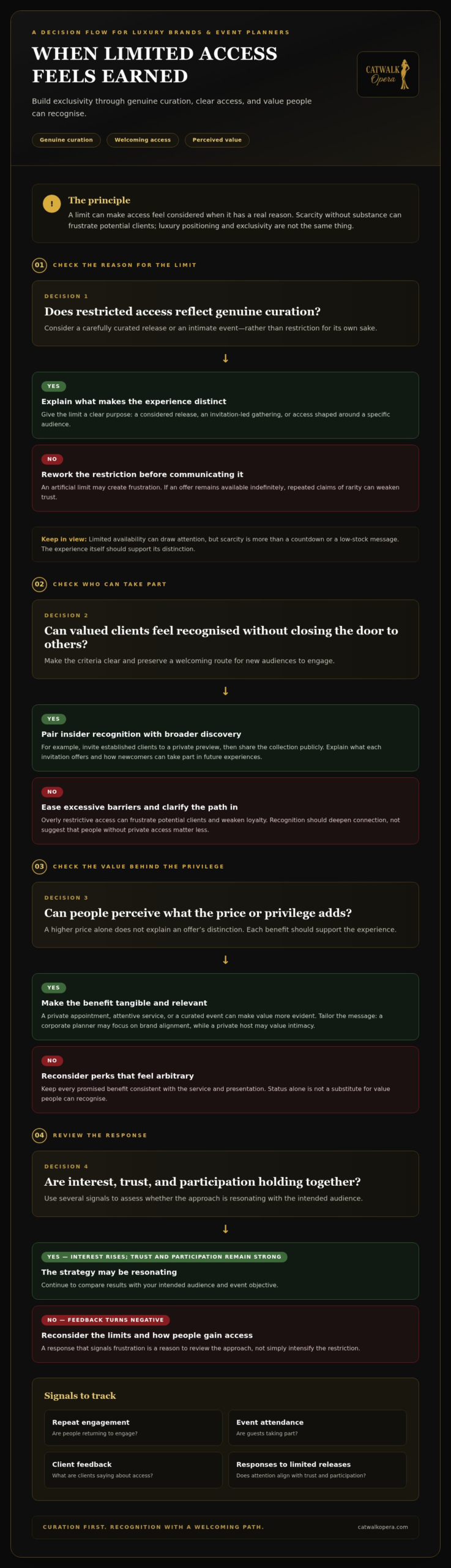
Artificial scarcity restricts access by design, even when a brand could offer more. It can make an experience feel considered, provided the limit reflects genuine curation rather than pressure.
Using Artificial Limits
Artificial scarcity means deliberately restricting availability to make access feel selective. The value lies in giving the limit a real reason, such as a carefully curated release or an intimate event. Luxury positioning communicates quality and status; exclusivity adds restricted access. One can exist without the other.
Supreme products often sell out within minutes, illustrating how limited availability can draw attention. But scarcity is more than a countdown or low-stock message. If an offer remains available indefinitely, repeated claims of rarity can weaken trust. A deliberate limit works best when the experience itself supports a sense of distinction.
Private Experiences and Personalized Service
Private experiences create exclusivity through invitation, shared access, and personal attention. A private event can bring guests closer to a collection, a setting, or a brand’s point of view. A private community can extend that connection beyond one gathering through relevant updates and opportunities shaped around its members.
Personalized service makes recognition tangible. Remembering a guest’s preferences or tailoring communication to their interests can make an interaction feel individual rather than mass-produced. For hosts, the key is making access and attention serve the event’s purpose. A private gathering feels exclusive when its details are designed around the people in the room, just as high-end interior studios like rachelhorn.com tailor residential and resort environments to cultivate a refined, intimate atmosphere.
Examples of Exclusive Brand Atmospheres
Supreme offers one example of scarcity-led attention: its products often sell out within minutes. Limited availability can make each release feel like a moment, rather than an endlessly available transaction. This illustrates one tactic, not a universal formula for every luxury brand.
For an event, consider a runway presentation shaped around a specific audience, with an invitation-led setting and a clear creative point of view. It can feel distinctive without copying a retail drop. A private community offers another model, giving members relevant access while leaving a welcoming path for new audiences to discover the brand.
Restricted access can backfire if it creates excessive frustration or alienates potential customers. Track repeat engagement, event attendance, client feedback, and responses to limited releases to see whether your approach is building loyalty. Compare these signals with your intended audience and event objective. If interest rises while trust and participation remain strong, the strategy may be resonating. If feedback turns negative, reconsider the limits and how people gain access.
Marketing aligned with the target demographic
Exclusive marketing feels personal when its message reflects the audience’s priorities. For planners, the challenge is to connect the invitation, imagery, and experience with the people making the decision. Understanding how to create an atmosphere of exclusivity starts with listening, not assuming what clients value.
Insider Feelings Without Alienation
An insider experience gives selected customers meaningful recognition while preserving a welcoming path for newcomers. This balance matters because overly restrictive access can frustrate potential clients and weaken loyalty. Some luxury brands reserve top-tier products for clients with substantial purchase histories. This works best when access criteria are clear and other customers still have ways to engage.
For example, a fashion house could invite established clients to a private preview, then share the collection publicly. The preview recognises an existing relationship, while the later release invites new customers to discover the designs. Explain what each invitation offers and how newcomers can take part in future experiences. Recognition should deepen connection, not imply that people without private access matter less.
Premium Pricing and Perks
Premium pricing and privileges reinforce exclusivity when they correspond to value customers can perceive. A higher price alone cannot explain an offer’s distinction. A private appointment, attentive service, or curated event can make its value more tangible. For planners, creating an atmosphere of exclusivity also means ensuring each privilege supports the experience rather than feeling like an arbitrary reward.
Consider a luxury event invitation offering early access to a collection and a personal introduction to its design story. These privileges provide context as well as status. Tailor the message to the decision-maker: a corporate planner may focus on brand alignment, while a private host may value intimacy. Keep the promised benefits consistent with the service and presentation.
Shape your communication around actual client interests. Review inquiry questions, customer feedback, and responses to campaign content, then refine the imagery and detail. A runway producer may respond to visuals echoing a collection’s silhouette; a gala host may prioritize the evening’s purpose. Keep website, social, and print materials consistent in appearance and voice. If live artistry suits the event’s identity, curated live performance can complement a fashion-led occasion.
How can businesses make customers feel like insiders without alienating others?
Businesses can foster insider belonging by giving customers a meaningful role, not just a restricted invitation. At a luxury brand dinner, a host might invite returning clients to contribute a question for the designer’s conversation. Their perspective shapes the evening and builds connection through participation. New guests can still share the occasion and discover the creative process firsthand.
Make recognition personal but discreet. A thoughtful place card, a reference to a guest’s interests, or an introduction to a relevant creative partner can signal attention without announcing rank. At a private museum preview, for example, a patron might receive a curator’s note about an artwork connected to their interests. Such gestures create intimacy without turning the room into a hierarchy.
Build shared rituals everyone can understand, even when participation varies. At a fashion presentation, a concise welcome explaining the collection’s inspiration gives every guest a common point of entry. A later conversation might bring selected contributors closer to the creative process. Shared context keeps an insider experience from becoming an opaque code understood only by established clients.
Keep status cues subtle. Distinct wristbands, separate entrances, or public announcements of customer tiers can make recognition feel comparative. Instead, hosts can use introductions and thoughtful seating to encourage meaningful exchanges. At a charity ball, for instance, donors and first-time guests can mingle in the same reception, while attentive conversation helps each person feel welcome.
Evaluate the atmosphere through guests’ actions, not the prestige of the invitation alone. After a hotel salon, observe whether attendees linger, introduce others, or continue discussing the experience. If newcomers seem unsure how to participate, improve the welcome and transitions. A successful insider atmosphere makes returning guests feel valued while giving everyone room to engage naturally.
How can premium pricing and perks reinforce exclusivity?
Premium pricing can signal distinction, but it must correspond to qualities customers can perceive. A couture house, for example, can make its value clearer through exceptional materials, thoughtful presentation, and attentive service. If the price rises while the experience feels unchanged, the signal loses credibility. For planners, the principle is simple: connect every premium decision to a discernible benefit.
Perks make that benefit tangible. A private preview, personal appointment, or tailored welcome can give invited guests a more considered experience than a standard transaction. Each privilege should support the central promise rather than serve as decoration. At a luxury brand launch, early access paired with a knowledgeable introduction can help guests understand the craftsmanship behind a collection.
Design distinction around relevance, not excess. A corporate host may value a dedicated setting for important clients, while a private host may prefer discretion and personal attention. In either case, explain what the privilege offers and why it suits the audience. Avoid benefits that complicate the experience or create expectations the brand cannot sustain. Consistency across the invitation, service, and follow-up makes premium treatment credible.
Pricing decisions should reflect the offer’s curation, delivery, and level of personalization. A bespoke event experience, for instance, involves different considerations from a standard admission or product purchase. Present the value clearly, without relying on status language alone. Then review guest feedback and repeat engagement to see whether the benefits feel meaningful. If you are planning an event where live artistry should contribute to its atmosphere, discuss a bespoke event experience.
Catwalk Opera: Luxury Opening Moment
Catwalk Opera brings live vocal artistry into the visual language of your event, creating an opening shaped by operatic elegance and fashion-forward presentation. The Luxury Opening Moment is a 10-12-minute performance designed for fashion shows, brand launches, and VIP receptions. Led by international soprano Monika Spruch, it is curated to complement the occasion’s atmosphere and creative direction.
For a longer centerpiece or an intimate gathering, the Signature Fashion Opera Experience and Private Royal Recital offer distinct formats for your event.
To discuss a performance for your event, contact Catwalk Opera.
Give Your Next Event a Distinctive Signature
As you plan your next occasion, consider the image or feeling you want guests to remember. A carefully chosen artistic moment can become a cultural statement, giving the event a signature connected to its identity rather than added for effect. That intention can guide staging, visual language, and the performance’s place in the event flow.
Creating an atmosphere of exclusivity means looking beyond who is invited. It also means shaping an experience with a clear point of view, where every creative choice feels deliberate and suited to the occasion. For a fashion-led gathering, that could mean bringing live vocal artistry into conversation with the collection’s aesthetic. For a private celebration, it might mean creating a more intimate sense of occasion.
If you are considering a live performance as part of your event concept, contact Catwalk Opera to discuss your event. A considered creative direction can help your next gathering leave a lasting impression.
Frequently Asked Questions
Why Do Luxury Brands Use These Tactics?
Luxury brands use exclusivity to protect a distinct creative identity and focus attention on what makes an offering recognisable. A heritage atelier, for example, can foreground its signature cut, materials, or hand-finished details instead of competing through frequent discounts. This helps customers understand the design choices behind the brand and gives its products a coherent place within a wider cultural and aesthetic story.
What creates a sense of exclusivity in a brand or experience?
Exclusivity grows from coherence across the details customers encounter. A private gallery evening might pair a carefully chosen setting with lighting, music, table design, and a welcome that express one artistic idea. In high-end environments, firms like pianta-design.com illustrate how tailored interior spaces reinforce this holistic identity. Even small choices, such as a printed menu reflecting the exhibition, can make the experience feel composed. The effect comes from how the details work together, not expense alone.
What are effective ways to use memberships, invitations, and limited access?
Make membership useful through relevant communication, such as advance notice of a designer conversation or an invitation matched to a client’s interests. Make event invitations clear about the occasion, dress expectations, and reply process so guests can respond with confidence. For a private salon, a considered guest list can encourage conversation among people with a shared interest. Review participation afterward to shape future gatherings.
How should scarcity and limited-edition releases be used ethically?
Base a limited release on a genuine creative or production decision, then keep its schedule consistent with that rationale. For example, if a studio creates a small edition because each piece requires a distinct finishing process, explain the context without using it to pressure customers. Avoid tactics that encourage rushed decisions or confusion. After the release, assess customer response and whether the experience upheld the brand’s standards.