The right operatic pop performance for events is shaped by the occasion, the setting and the atmosphere you want guests to remember. Classical opera can lend ceremony and emotional depth to a formal moment; pop-facing crossover brings a familiar, cinematic quality, while Rat Pack songs can add polished warmth to a dinner or reception. The most effective repertoire supports the event flow rather than competing with it.
You may already have a sound in mind, but the same musical style can feel different in a ballroom, at a fashion presentation or during an intimate celebration. The room, audience and purpose of the event all help determine which approach feels right and where music should take focus.
This guide explores how opera, classical crossover, pop and Rat Pack repertoire can suit different event types and occasions. You’ll find practical ways to think about tone, performance setting and musical contrast, then see how bespoke curation can bring those choices together in a distinctive live experience.
Key Takeaways
- Match classical crossover, opera, pop, or Rat Pack repertoire to the mood and formality you want to create.
- Choose songs for their emotional character and familiarity, then shape the sequence to maintain a natural event flow.
- Consider the venue, audience, and performance moment when deciding how the music should complement the setting.
- Align the repertoire with the occasion, whether you are planning a fashion presentation, a gala, a corporate gathering, or a private celebration.
Classical crossover and pop-facing operatic projects
Classical crossover combines classical vocal technique with familiar popular forms, creating a distinctive sound for events. Its character depends on the repertoire and the way the performance is presented.
Crossover Project Styles
Operatic pop brings operatic vocal colour to popular songs, while Rat Pack interpretations recast familiar standards with a classical vocal presence. Luciano Pavarotti’s 1986 hit “Caruso” and Andrea Bocelli’s “Con te partirò,” also known as “Time to Say Goodbye,” helped establish crossover touchstones. Choose a solo singer for a focused musical statement; a duo or group creates vocal interplay and a broader sound. Consider the room, audience, and desired atmosphere.
Repertoire and Vocal Arts
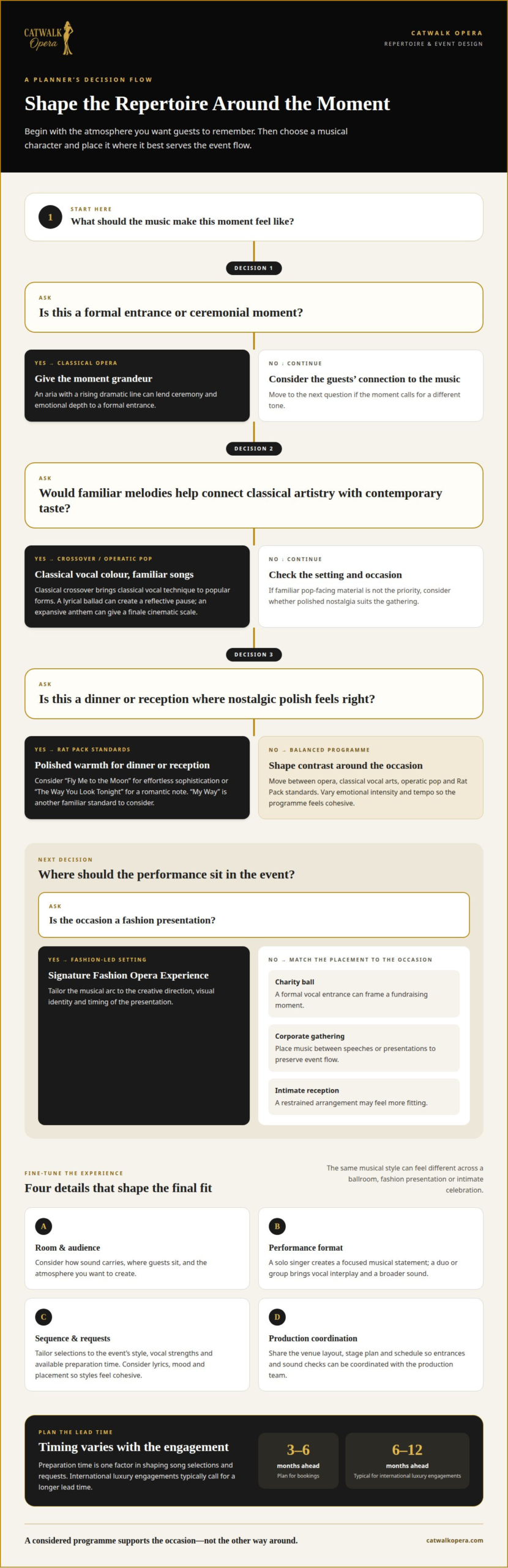
A considered programme can move between opera, classical vocal arts, operatic pop, and Rat Pack standards such as “My Way.” The contrast lets you balance formal virtuosity with songs guests may recognise. Performers can tailor song selections and requests to the event’s style, vocal strengths, and available preparation time. For bookings, plan three to six months ahead; international luxury engagements typically call for six to twelve months.
Performance Package Inclusions
An operatic pop performance package is shaped around the agreed repertoire, format, presentation, and placement within your event flow. Before booking, ask which songs and performance format are included, how requests are handled, and what timing or presentation details need coordination. Clarify how the musical sequence supports your event objective, whether that means an elegant opening or a later dramatic moment. These decisions define the experience without assuming every package follows the same template.
Finding and Comparing Performers
To find performers nearby, search by location and compare examples of their classical, crossover, and popular repertoire. Review vocal style, stage presence, and experience with occasions resembling yours, then discuss the event’s setting and musical priorities. Competition results can offer useful context, but they are only one measure of fit. For example, twelve finalists performed in the Opera Buffs Artists of the Future Competition Finals at Murphy Recital Hall on February 28, 2026; your event’s needs remain central.
Popular opera, pop, and Rat Pack repertoire
Choosing repertoire begins with the atmosphere you want the music to create. For a ceremonial entrance, an aria with a rising dramatic line can lend the moment grandeur; a tender selection can suit a candlelit dinner or intimate reception. Consider whether guests should feel anticipation, warmth, or celebration, then choose music that carries that mood through its melody and vocal character.
Pop-facing arrangements can bring classical vocal colour to melodies guests recognise, creating a bridge between operatic artistry and contemporary taste. Select songs for more than familiarity: lyrical ballads can provide a reflective pause, while expansive anthems give a finale a cinematic scale. A programme with contrasting tempos and emotional textures feels thoughtfully shaped, particularly when music must sit alongside speeches, arrivals, or a presentation.
Rat Pack standards offer a polished, nostalgic character for dinners and receptions. “Fly Me to the Moon” can suggest effortless sophistication, while “The Way You Look Tonight” lends a romantic note to a celebratory occasion. Their familiar phrasing can balance more formal classical selections. Consider the lyrics, mood, and placement of each song so the programme feels cohesive rather than like separate musical styles placed side by side.
Shape the setlist around the occasion’s purpose and sequence. Choose a distinctive opening, build through pieces with varied emotional intensity, and close with a song that feels right for the gathering. A fashion presentation may call for a musical arc that follows the creative direction; the Signature Fashion Opera Experience is tailored to that fashion-led setting. Consider how each selection complements the event’s visual identity and timing.
These styles also have a history of reaching listeners beyond traditional opera settings. Enrico Caruso popularized operatic singing beyond the opera house in the 1910s, showing how repertoire associated with opera can resonate in a wider musical culture. That legacy offers useful context when choosing a programme that brings classical vocal character together with songs guests may already know.
Operatic pop artists and ensembles including Il Divo, Josh Groban, Russell Watson, Katherine Jenkins, and Charlotte Church surged in popularity during the 2000s. Their popularity reflects the appeal of combining operatic vocal expression with accessible repertoire. For an event, that balance can help connect a more formal selection with familiar pop-facing material, while a thoughtful sequence keeps the music aligned with the occasion’s mood.
Event types and performance settings
An operatic pop performance for events should reflect both the venue and the occasion. At a charity ball, a formal vocal entrance can frame a fundraising moment; for a fashion presentation, a striking musical cue can complement the collection’s visual direction. At a corporate gathering, place music between speeches or presentations to preserve the event flow. The performance style should serve the gathering’s purpose.
Venue, sound, and staging needs depend on the room, audience, and format. In a ballroom, artists consider how sound carries across the space and where guests will sit. At an intimate reception, a restrained arrangement may feel more fitting. Share the venue layout, stage plan, and schedule with performers so they can coordinate entrances and sound checks with the production team.
Room details matter. In a private residence, furnishings and room shape affect how live vocals are heard. An outdoor setting calls for attention to stage position, surrounding noise, and weather exposure. At a runway presentation, coordinate the singer’s placement with lighting cues and the models’ sequence. These practical details help determine suitable amplification and staging.
Before signing, review the written agreement’s performance scope, repertoire, timing, payment schedule, cancellation terms, and travel or technical responsibilities. Ensure the contract reflects the agreed date, venue, and format. Clarify how schedule changes are handled, and identify who coordinates sound and staging. Clear terms give planners and artists a shared understanding before event day.
Match the format to the occasion’s scale and purpose. A solo vocalist may create a focused opening at a brand dinner, while a more theatrical presentation can suit a launch with a strong visual concept. Plan the performance around its place in the programme, desired mood, and presentation style. This alignment lets the music feel integral to the setting.
Events and occasions served
Classical vocal performance can shape the atmosphere of a charity ball, corporate gala, ceremony, or formal dinner. At a charity ball, a song placed before a fundraising appeal can lend the moment emotional focus. For a corporate gala, a carefully timed opening can establish a distinguished tone before speeches begin. The occasion’s purpose should guide the repertoire, presentation, and placement within the evening.
Fashion events call for close coordination between music and visual direction. At a runway presentation, consider how the singer’s entrance, costume, and musical phrasing relate to the collection and show sequence. A luxury brand launch can use live vocals as a cultural statement, connecting the performance’s mood with the identity being introduced. Align the performance with lighting and transitions so it feels integrated into the production.
For a private celebration, such as an anniversary dinner, an intimate selection may suit the room better than a dramatic opening. A royal or family gathering can call for a discreet, tailored programme that reflects the hosts’ preferences and the event’s character. In both settings, the audience size, room layout, and timing of toasts or dinner service help determine where classical vocal artistry will have the greatest effect.
Ceremonies and after-dinner programmes benefit from a clear musical purpose. A brief selection can mark an entrance, while a sequence later in the evening can shift the mood from formal to celebratory. Theater-style arrangements suit audiences facing a defined performance area; dinners often call for placement that preserves conversation and sightlines. Decide first whether music should welcome guests, punctuate a key moment, or become the evening’s centerpiece. That event objective gives artists a practical framework for shaping the performance.
The Pop Opera Diva is presented as entertainment for galas, ceremonies, dinners, after-dinner shows, theaters, concerts, and corporate events. This range allows planners to consider the performance at different points in an occasion, from a formal welcome to a later feature. The choice should still follow the event’s purpose and atmosphere, with attention to whether guests are listening closely, dining, or moving between programme moments. A suitable placement can help it feel part of the evening rather than an interruption.
Catwalk Opera
Catwalk Opera helps you shape operatic pop into a considered part of your event’s artistic direction. Led by international soprano Monika Spruch, each performance is curated to complement the occasion, setting, and atmosphere rather than rely on stock selections. This approach can suit a gala, fashion presentation, or intimate royal gathering.
Choose a Luxury Opening Moment for a defining entrance, a Signature Fashion Opera Experience for a fashion-led production, or a Private Royal Recital for an intimate audience. The right format depends on your event objective, the repertoire you have in mind, and how music should fit the evening’s flow.
Share your event concept, venue and preferred musical mood to begin shaping the experience. Contact Catwalk Opera to discuss your event.
Shape the Musical Moment Around Your Event
The most memorable musical choice belongs to the occasion, not simply a playlist. As you refine your event plan, consider what you want guests to feel at the entrance, during a central moment and as the evening draws to a close. That intention gives an operatic pop performance for events its direction, allowing the music and presentation to support the atmosphere you are creating.
Catwalk Opera’s Luxury Opening Moment, Signature Fashion Opera Experience and Private Royal Recital offer distinct formats for shaping the experience. Share your event’s creative direction, setting and musical vision with Catwalk Opera to discuss a fitting approach.
Contact Catwalk Opera about your event and take the next step toward a performance shaped around your occasion. A thoughtful musical moment can give your gathering a signature presence.
Frequently Asked Questions
What types of events hire operatic pop singers?
Operatic pop singers perform at fashion weeks, luxury hotels and resorts, executive functions, cultural events, and private royal gatherings. A hotel might feature a vocalist at a private reception, while a cultural event may use classical crossover to create a refined artistic presence. The repertoire and presentation can be tailored to the occasion’s character, whether the gathering is a formal celebration or a high-profile brand event.